Spanish Imperial Eagle hide
Hides del Tiétar·Buenaventura·Spain
Spanish Imperial Eagle · Cinereous Vulture+12
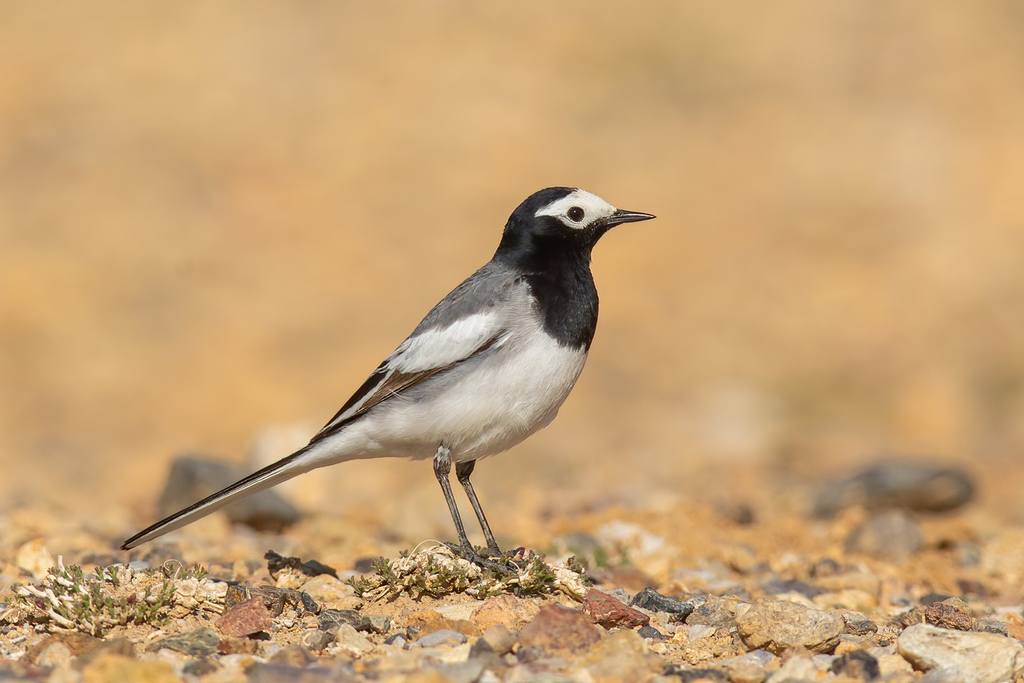
The white wagtail is a slender passerine measuring 16.5 to 19 centimetres in length, with East Asian subspecies reaching up to 21 centimetres. It weighs around 25 grams and is instantly recognisable by its characteristically long tail, which it wags almost constantly—a behaviour that gives both the species and its entire genus their common name. The nominate subspecies displays pale grey upperparts and white underparts, though plumage varies considerably across its numerous subspecies. In Britain and Ireland, the black-backed pied wagtail subspecies predominates, where males show striking black backs while females and juveniles display dark grey. Some subspecies show sexual dimorphism during breeding season, and interestingly, both back and chin colour can change during the pre-basic moult, with black-throated birds developing white chins in winter.
The white wagtail's call is a sharp chissick, slightly softer than that of its pied wagtail cousin. Its song is relatively regular and lacks significant territorial function, as males rely instead on contact calls to attract females.
This species breeds throughout Eurasia, reaching latitudes of 75°N and occupying mountains in Morocco and western Alaska. It inhabits a wide range of open habitats but is notably absent from deserts. Between 9 and 11 subspecies are recognised, each with distinct plumage variations and distributions. In the milder western half of Europe and around the Mediterranean, white wagtails are year-round residents, while northern European breeders migrate to winter grounds around the Mediterranean and across tropical and subtropical Africa. Asiatic populations move to the Middle East, India, and Southeast Asia, with North American birds also wintering in tropical Asia.
The white wagtail is an insectivorous specialist of open country, often found near human habitation and water. It shows a strong preference for bare areas where it can easily see and pursue its prey, and has remarkably adapted to urban environments by foraging on paved surfaces such as car parks. The species nests in crevices within stone walls and similar natural and human-made structures. Its most conspicuous behaviour is near-constant tail wagging, though the precise reasons for this distinctive habit remain poorly understood by researchers.
White wagtails are widely distributed across Europe and Asia, making them accessible to travellers throughout much of the Northern Hemisphere. Resident populations in western Europe and the Mediterranean region can be observed year-round, while migratory populations are best seen during breeding season in their northern ranges. Look for them in open habitats near water, urban parks, and cultivated areas. In Britain and Ireland, the black-backed pied wagtail is particularly common and easy to identify.
The white wagtail's constant tail-wagging provides excellent opportunities to capture characteristic behaviour shots. Photograph birds in open habitats where they forage on the ground, positioning yourself low to capture their interaction with bare earth and paved surfaces. The species' preference for perching on low structures and walls offers good vantage points for approach. Early morning light will best reveal the subtle plumage differences between subspecies, particularly in the pied wagtail's striking black-and-white patterns. Given the bird's maximum lifespan of about 12 years in the wild, individual recognition photography is possible for resident populations.
Nothing matches these filters.
Nothing matches these filters.
No community photos yet. Log in to add the first one.
No community observations of this species yet.
We'd love to hear from you. We'll reply as soon as possible.
Found an error? Have a suggestion? We read every message.
A compact view of how this species lives, moves and responds to its environment.
Select a card to explore the details.
Please confirm the photo rights and credit terms first.
I'm the author of this photo or hold the rights to it, and I keep full ownership. I grant Wild Atlas Guide a free, non-exclusive licence to display it on the site and in Wild Atlas Guide's own channels, including social media, always credited to me by my display name or the Instagram handle I choose to provide. I confirm it does not reveal a sensitive wildlife location or a recognisable person without their permission. I can withdraw future social use for this photo or ask for it to be removed at any time.
Please accept the photo rights and credit terms to continue.
Uploading…
We use cookies to measure traffic and improve Wild Atlas Guide. You decide. Privacy policy