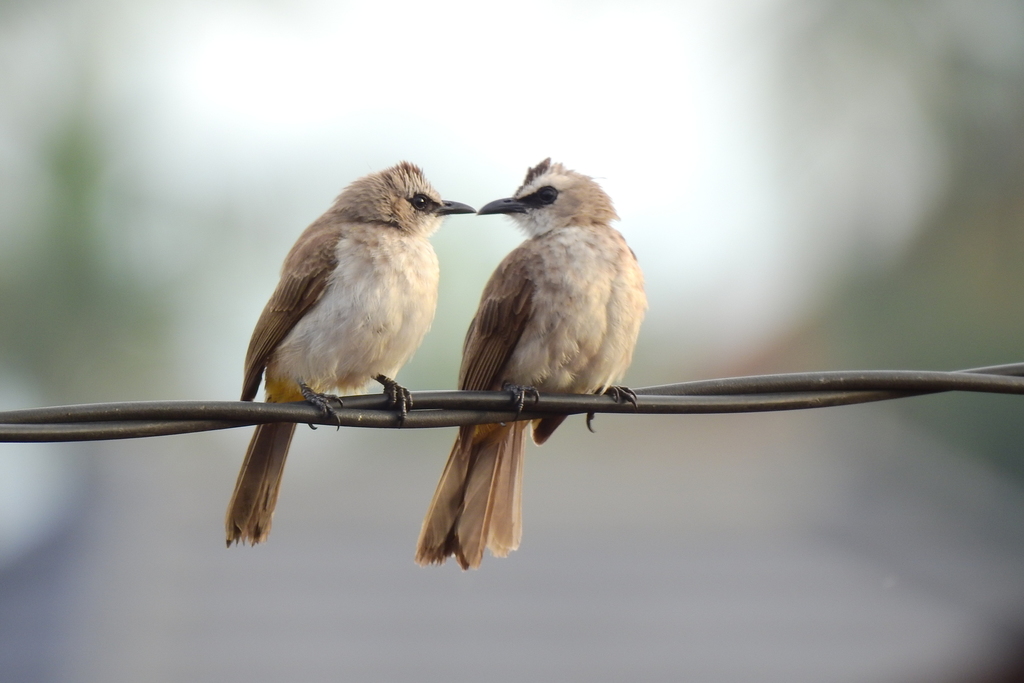
Yellow-vented Bulbul
Photo © ꦥꦤ꧀ꦗꦶꦒꦸꦱ꧀ꦠꦶꦄꦏ꧀ꦧꦂ
Photo © ꦥꦤ꧀ꦗꦶꦒꦸꦱ꧀ꦠꦶꦄꦏ꧀ꦧꦂ — CC BY 4.0 — Source: iNaturalist photo #80949334Identification
The yellow-vented bulbul is a member of the bulbul family, recognizable by its characteristic yellow undertail coverts that give the species its common name. The bird is well-adapted to human environments and commonly seen in cultivated areas across its range, making it one of the most familiar bulbuls to nature travellers in Southeast Asia.
Range & Habitat
This species is a resident breeder found throughout southeastern Asia, ranging from Indochina to the Philippines. Six recognized subspecies are distributed across this vast region: from southern Myanmar and Indochina in the west, through the Malay Peninsula and Indonesian islands including Sumatra, Java, Borneo, and Bali, to the Philippines in the east. The yellow-vented bulbul inhabits a wide variety of open habitats but avoids deep forests, thriving instead in cultivated areas, gardens, and disturbed landscapes where it has become one of the most common birds.
Behaviour & Diet
The yellow-vented bulbul is notably nomadic, regularly roaming from place to place rather than maintaining fixed territories. It is highly adapted to human environments and readily nests in gardens, constructing distinctive cup-shaped nests from grass, leaves, roots, vine stems, and twigs positioned anywhere from low bushes to high trees. These nests are characteristically untidy on the outside but neatly lined with plant fibres; the bird typically lays 2–5 eggs between February and June.
The species has a varied diet comprising berries, small fruits, nectar, young shoots, and insects. This dietary flexibility contributes to its success as a common garden bird throughout its range.
Best Time & Places to See It
The yellow-vented bulbul is a year-round resident throughout its range, making it visible at any time of year. Look for it in cultivated areas, gardens, parks, and open habitats with scattered trees and shrubs. Its abundance in human-modified landscapes means it is easily encountered in agricultural areas and suburban gardens throughout southeastern Asia, from Indochina through Malaysia, Indonesia, and the Philippines.
Photography Tips
The bird's nomadic habits and preference for open habitats make it relatively accessible to photographers, though its tendency to move regularly between locations means patience is required. Focus on gardens and cultivated areas where the species is most common. The distinctive yellow vent is a key field mark worth capturing. Early morning hours typically offer the best light and activity levels for photography in garden settings.
Bako National Park
Batang Gadis National Park
Doi Inthanon National Park
Gunung Ciremai National Park
Gunung Mulu National Park
Kerinci Seblat National Park
Khao Laem National Park
Khao Laem Ya-Mu Ko Samet National Park
Khao Yai National Park
Nothing matches these filters.
No community photos yet. Log in to add the first one.
No community observations of this species yet.