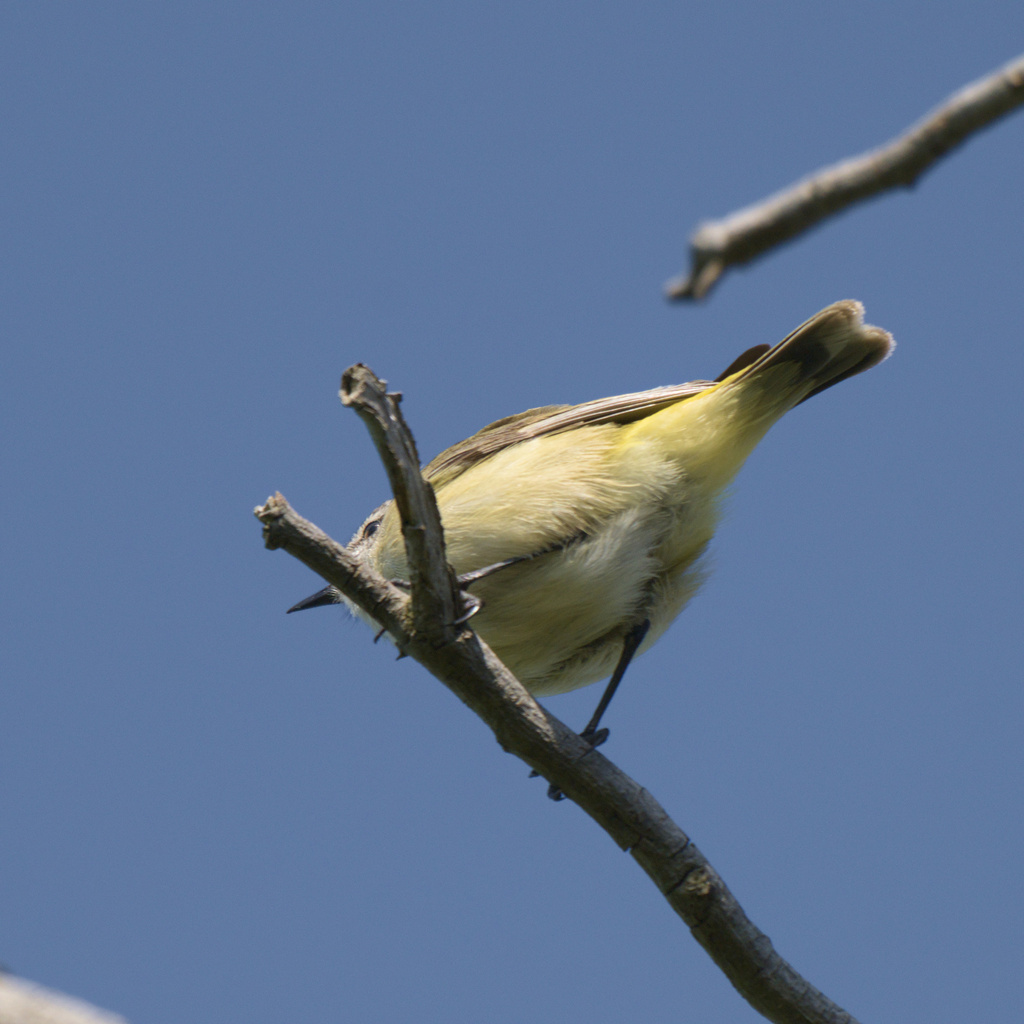
Acantiza culigualda
Photo © Thomas Jaeger
Photo © Thomas Jaeger — CC BY 4.0 — Source: iNaturalist #247292093Identificación
El matorralero de obispillo amarillo es la especie más grande de matorralero, midiendo 9,5–12 cm de largo y pesando apenas 9 g. A pesar de su tamaño diminuto, es inconfundible en el campo gracias a su distintivo obispillo amarillo brillante, característica que le ha valido el nombre coloquial «Trasero de Mantequilla» entre los observadores de aves australianos. El ave tiene la cola corta, pico largo y delgado de color oscuro, frente negra con manchas blancas, cabeza y cuello grises, y una línea blanca llamativa sobre el ojo. Su garganta es blanca, el vientre blanco con parches color gamuza claro bajo las alas, y las alas y la cola son de color gris y negro respectivamente. El plumaje varía ligeramente entre las cuatro subespecies reconocidas.
Distribución y hábitat
Esta especie tiene una distribución amplia en el oeste, sur y este de Australia, así como en Tasmania, aunque está ausente de la costa norte de Australia Occidental, partes del centro de Australia, norte de Queensland y centro y norte del Territorio del Norte. El matorralero de obispillo amarillo es un ave altamente adaptable, inhabita una diversa gama de ambientes que incluyen bosques abiertos y selva, pastizales, sabana y matorrales, lo que la convierte en un ave relativamente común en gran parte del continente.
Comportamiento y alimentación
Los matorraleros de obispillo amarillo son insectívoros, siendo las hormigas, escarabajos, chinches y lerps la mayor parte de su dieta, complementada por arañas, moscas y semillas. Típicamente buscan alimento en pequeños grupos de 3 a 12 individuos y frecuentemente se unen a bandadas mixtas con otras pequeñas aves paseriforme insectívoras como los silvadores menores y currucas punteadas. La especie tiene un canto distintivo descrito como «parloteo musical, dulce, de tono agudo» y es una imitadora consumada, particularmente hábil en imitar los gritos de alarma de los mineros ruidosos. Los matorraleros de obispillo amarillo se reproducen en forma cooperativa, con parejas reproductoras a veces asistidas por uno a tres ayudantes durante la temporada de cría de julio a diciembre.
Mejor época y lugares para observarlo
La temporada de cría de julio a diciembre ofrece buenas oportunidades para observar esta especie, cuando las aves son más activas y vocales. Busque matorraleros de obispillo amarillo en selvas abiertas, pastizales y áreas arbustivas en toda su amplia distribución australiana. Son más fáciles de localizar escuchando sus distintivos cantos de parloteo y escaneando la vegetación baja donde se alimentan en pequeñas bandadas.
Consejos fotográficos
El tamaño compacto del matorralero de obispillo amarillo y su hábito de forrajear en grupos pequeños y activos presentan un desafío para los fotógrafos. El rasgo más distintivo del ave—su obispillo amarillo brillante—se captura mejor cuando el ave está en vuelo o encaramada con su extremo posterior visible. La luz de la mañana temprana ayudará a iluminar los detalles sutiles del plumaje y la mancha amarilla llamativa. La paciencia y una velocidad de obturación rápida son esenciales, ya que estas aves activas rara vez permanecen quietas durante períodos prolongados.
Uluru-Kata Tjuta National Park
Carnarvon National Park
Nerang National Park
Bunya Mountains National Park
Greater Bendigo National Park
Chiltern-Mt Pilot National Park
Ikara-Flinders Ranges National Park
Kinglake National Park
Lower Glenelg National Park
Budj Bim National Park
Springbrook National Park
Lamington National Park
Sydney Harbour National Park
Royal National Park
Little Desert National Park
Belair National Park
Cleland National Park
Lincoln National Park
Coffin Bay National Park
Vulkathunha-Gammon Ranges National Park
Onkaparinga River National Park
Naracoorte Caves National Park
Innes National Park
Lockyer National Park
Sundown National Park
Bald Rock National Park
Girraween National Park
Morton National Park
Lake Eildon National Park
Wilsons Promontory National Park
Fitzgerald River National Park
Great Sandy National Park
Blue Mountains National Park
Kosciuszko National Park
Ku-ring-gai Chase National Park
Barrington Tops National Park
Dorrigo National Park
Mungo National Park
Warrumbungle National Park
Oxley Wild Rivers National Park
New England National Park
Budawang National Park
Ben Boyd National Park
Grampians National Park
Great Otway National Park
Alpine National Park
Mount Buffalo National Park
Murray-Sunset National Park
Port Campbell National Park
Coorong National Park
Kalbarri National Park
Karijini National Park
Nambung National Park
Stirling Range National Park
Freycinet National Park
Aún no hay fotos de la comunidad. Inicia sesión para añadir la primera.
Aún no hay observaciones de la comunidad de esta especie.