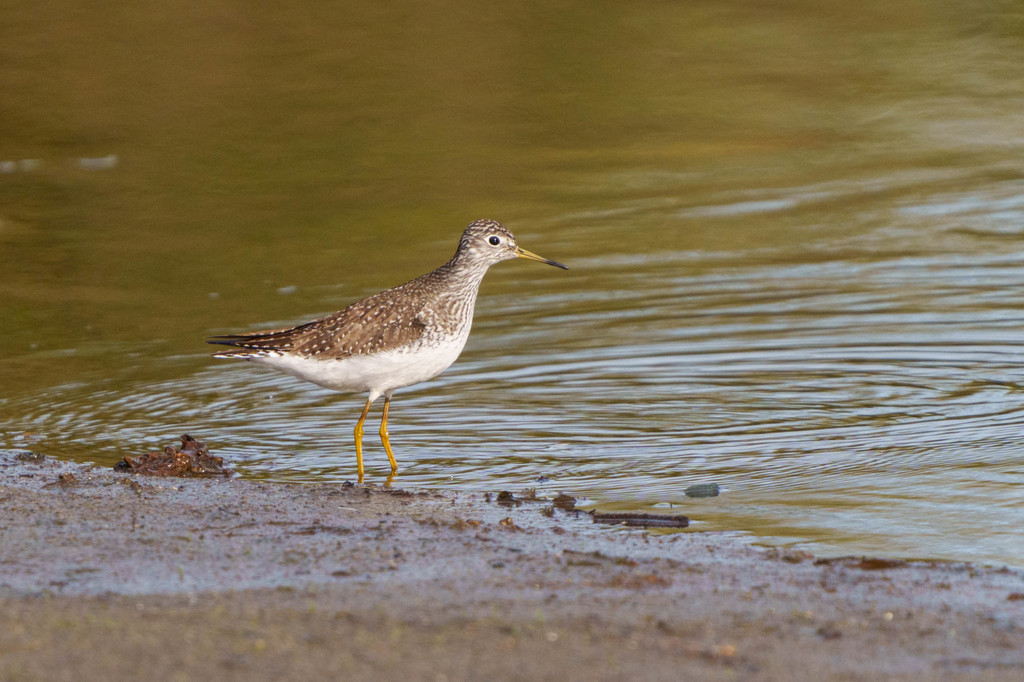
Andarríos solitario
Photo © Pete Lypkie
Photo © Pete Lypkie — CC BY 4.0 — Source: iNaturalist photo #195481029Identificación
El andarríos solitario es un pequeño y rechoncho correlimos de 18–23 cm de largo con una envergadura de hasta 50 cm y un peso de apenas 31–65 gramos. Busca su distintivo dorso verde oscuro que contrasta con la cabeza y el pecho grisáceos, mientras que las partes inferiores son blancas. En vuelo, la especie revela sus características más diagnósticas: alas oscuras tanto por arriba como por abajo, combinadas con la rabadilla y el centro de la cola oscuros—una distinción crucial respecto a su pariente europeo cercano, el andarríos verde, que muestra una rabadilla blanca brillante. Las alas del andarríos solitario son pardas con punteo claro delicado, y presenta un patrón llamativo y contrastante en el cuello y el pecho. Una de las formas más fáciles de identificar esta especie en el campo es por su característico silbido de tres notas emitido en vuelo.
Distribución y Hábitat
Esta especie migradora se reproduce en bosques de Alaska y Canadá, con dos subespecies dividiendo el área de cría: T. s. cinnamomea en Alaska y el occidente de Canadá, y T. s. solitaria desde la Columbia Británica oriental hasta Labrador. Tras la reproducción, los andarríos solitarios migran para invernar en América Central y del Sur, con poblaciones significativas en la cuenca del Amazonas y el Caribe. La especie es un visitante muy raro en el occidente europeo durante verano y otoño.
A diferencia de la mayoría de otros correlimos, el andarríos solitario está fuertemente asociado a hábitats de agua dulce. Prefiere espacios pequeños y confinados como zanjas y márgenes de estanques donde otros limícolas se sentirían expuestos y vulnerables, eligiendo sitios donde una visión clara en todas direcciones no es necesaria.
Comportamiento y Alimentación
Fiel a su nombre, el andarríos solitario no es una especie gregaria y típicamente se encuentra solo durante la migración, aunque ocasionalmente pequeños grupos se reúnen en áreas de alimentación particularmente productivas. Esta especie tiene un hábito reproductivo inusual para los correlimos: pone nidadas de 3–5 huevos en nidos abandonados de pájaros cantores, particularmente los construidos por zorzales. Los pollos son estimulados a abandonar el nido y caer al suelo poco después del nacimiento.
Al alimentarse, los andarríos solitarios trabajan metodicamente los márgenes de estanques y aguas someras, recogiendo pequeños invertebrados del lodo. Su dieta consiste principalmente en larvas y adultos de insectos, incluyendo larvas de mosquito, pequeños dípteros, saltamontes, orugas y escarabajos, complementados por pequeños crustáceos y moluscos como caracoles. Ocasionalmente capturan pequeñas ranas, predominantemente en forma de renacuajo.
Mejor Época y Lugares para Verlo
Los andarríos solitarios se observan mejor durante los períodos de migración. Búscalos alrededor de hábitats de agua dulce incluyendo pequeños estanques, zanjas, marismas y márgenes de agua protegidos donde se alimentan tranquila e desapercibidamente. En América del Norte, búscalos durante la migración primaveral y otoñal en áreas boscosas y de humedales adecuadas. Su preferencia por pequeños sitios de agua dulce confinados significa que pueden encontrarse en lugares donde especies de limícolas más grandes raramente se aventuran.
Consejos para Fotografía
La paciencia es esencial al fotografiar andarríos solitarios, ya que son a menudo solitarios y pueden ser asustadizos. Posiciónate silenciosamente cerca de pequeños estanques o áreas pantanosas y espera a que el ave trabaje a lo largo del margen del agua. El plumaje oscuro de la especie puede ser desafiante de exponer correctamente; asegura luz adecuada en las partes inferiores para capturar el contraste del vientre blanco. En vuelo, la rabadilla y el centro de la cola oscuros son características diagnósticas que vale la pena intentar capturar, junto con los lados inferiores de las alas oscuros. La luz de primera hora de la mañana o última hora de la tarde puede iluminar bellamente los tonos verdes sutiles del dorso.
Tombstone Territorial Park
Acadia National Park
Alaska Maritime National Wildlife Refuge
Alligator River National Wildlife Refuge
Amacayacu National Park
Amazônia National Park
Anavilhanas National Park
Antisana National Park
Arctic National Wildlife Refuge
Nada coincide con estos filtros.
Aún no hay fotos de la comunidad. Inicia sesión para añadir la primera.
Aún no hay observaciones de la comunidad de esta especie.