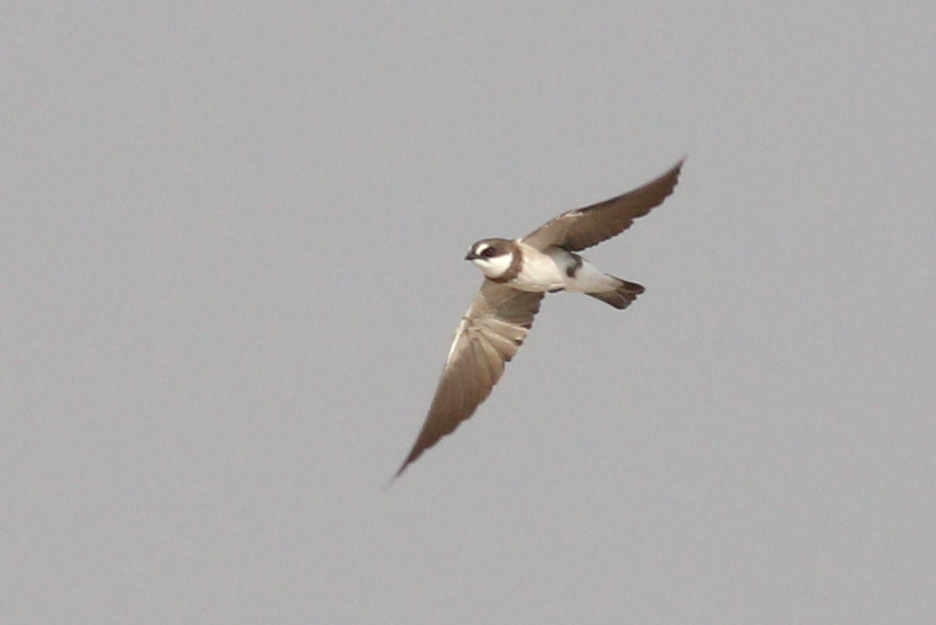
Avión cinchado
Photo © Jan Ebr & Ivana Ebrová
Photo © Jan Ebr & Ivana Ebrová — CC BY 4.0 — Source: iNaturalist photo #116429295The banded martin or banded sand martin (Neophedina cincta) is a small passerine bird in the swallow family Hirundinidae that is endemic to Africa. It is the only species placed in the genus Neophedina. == Taxonomy == The banded martin was described by the French polymath Georges-Louis Leclerc, Comte de Buffon in 1780 in his Histoire Naturelle des Oiseaux from a specimen collected from the Cape of Good Hope. The bird was also illustrated in a hand-coloured plate engraved by François-Nicolas Martinet in the Planches Enluminées D'Histoire Naturelle which was produced under the supervision of Edme-Louis Daubenton to accompany Buffon's text. Neither the plate caption nor Buffon's description included a scientific name but in 1783 the Dutch naturalist Pieter Boddaert coined the binomial name Hirundo cincta in his catalogue of the Planches Enluminées. The banded martin was formerly placed in the genus Riparia. A genetic study found that it belonged to a different clade to other members of the genus, and it was moved to the genus Neophedina that had been introduced in 1922 by the South African zoologist Austin Roberts. The specific epithet cincta is from Latin cinctus meaning "banded". Five subspecies are recognised: N. c. erlangeri (Reichenow, 1905)…
Serengeti National Park
Arusha National Park
Mapungubwe National Park
Chobe National Park
Nxai Pan National Park
Virunga National Park
Bwindi Impenetrable National Park
Kidepo Valley National Park
Murchison Falls National Park
Mgahinga Gorilla National Park
Lake Mburo National Park
Tsavo East National Park
Tsavo West National Park
Amboseli National Park
Kilimanjaro National Park
Mount-Kenya National Park
Tarangire National Park
Kitulo National Park
Ngorongoro Conservation Area
Toro-Semliki Proposed National Park
Queen Elizabeth National Park
Mabamba Swamp
Garden Route National Park
Mokala National Park
Kruger National Park
Agulhas National Park
Sehlabathebe National Park
Bontebok National Park
Augrabies Falls National Park
Addo Elephant National Park
Dorob National Park
Nkasa Rupara National Park
Etosha National Park
Abijata-Shalla Lakes National Park
Bale Mountains National Park
Awash National Park
Makgadikgadi Pans National Park
Nairobi National Park
Lake Nakuru National Park
Aberdare National Park
Samburu National Reserve
Hell’s Gate National Park
Ruma National Park
Aún no hay fotos de la comunidad. Inicia sesión para añadir la primera.
Aún no hay observaciones de la comunidad de esta especie.