Oruguero Cabecinegro
Photo © Afsar Nayakkan
Photo © Afsar Nayakkan — CC BY 4.0 — Source: iNaturalist #151465231Identification
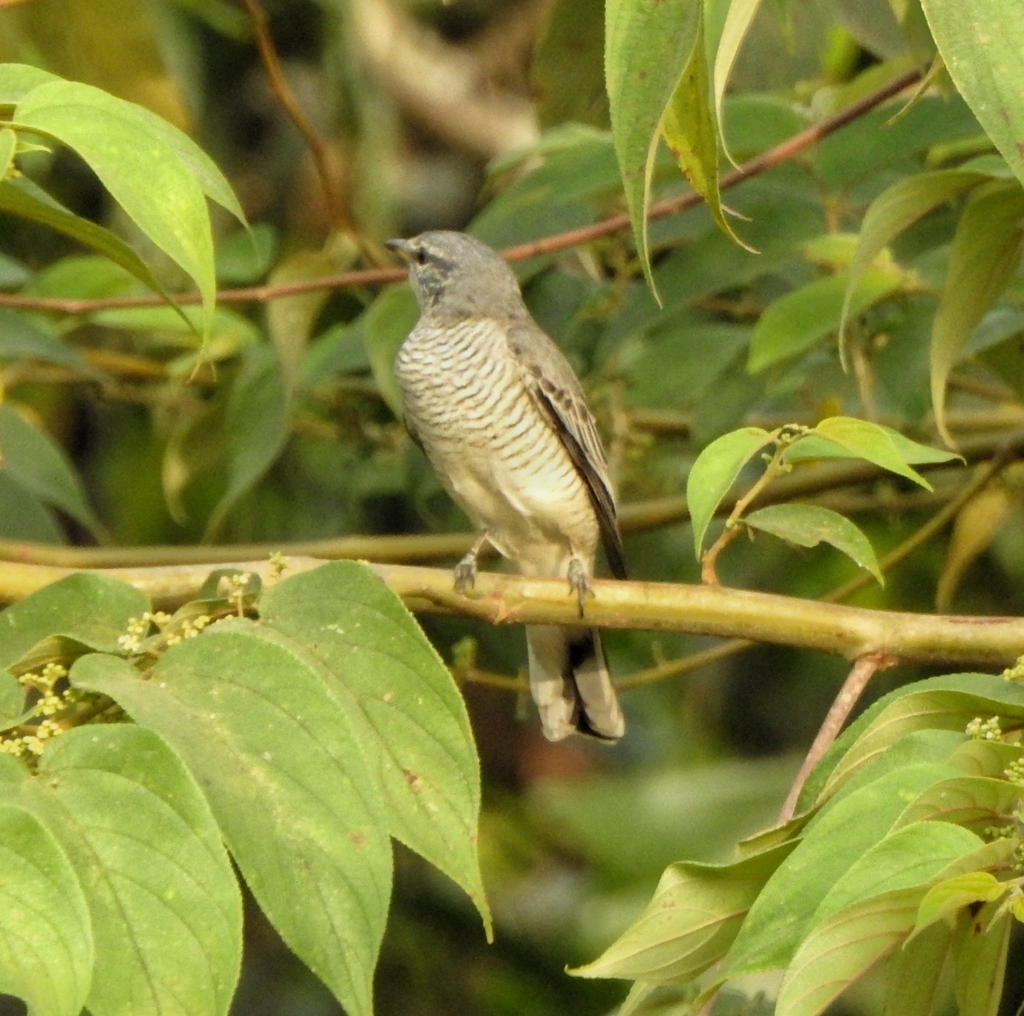
The Black-headed Cuckooshrike is a slender, 18–20 cm passerine with striking sexual dimorphism that makes identification straightforward once you know what to look for. Males are particularly distinctive, displaying a dark slaty-grey hood, neck, and upper breast that contrasts sharply with a pale grey back and white belly. Their wings are blackish with grey edges, and the tail feathers are white-tipped, creating a clean pattern in flight. Females are considerably duller, with brownish-grey upperparts, a whitish supercilium (eyebrow stripe), and heavily barred underparts. Both sexes have a dark grey bill.
Range & habitat
This resident and partially migratory species is distributed across the Indian subcontinent and Southeast Asia, including India, Bangladesh, Sri Lanka, Nepal, Bhutan, and Myanmar. It shows flexible seasonal movement, remaining resident in much of its range but acting as a summer breeding visitor in the Himalayan foothills and North India, often retreating to southern regions or lower altitudes during winter.
The species favors open, dry-deciduous, and semi-evergreen forests, secondary growth, bamboo patches, and importantly, human-modified landscapes including urban gardens, orchards, and agricultural plantations. It typically inhabits lower altitudes but ranges up to 2,100 meters. Rather than dense, thick forests, it prefers open wooded habitats, scrub-jungle, wooded suburban areas, and mixed deciduous woodlands, making it accessible to birdwatchers visiting cultivated regions.
Behaviour & diet
The Black-headed Cuckooshrike is primarily arboreal, methodically foraging in the canopy of tall trees and moving from tree to tree while searching foliage for prey. It frequently joins mixed-species foraging flocks, which is typical cuckooshrike behavior. In flight, it displays a characteristic undulating, "dipping" pattern, and upon landing exhibits the family's distinctive habit of shuffling or rearranging its wings.
Generally quiet, the species produces a song consisting of clear, mellow, whistled notes ("twit-wit-wit-wee-twéé-twéé-twy-twy-twy") and also utters rapid, high-pitched calls. It is primarily insectivorous, actively hunting caterpillars, beetles, ants, and cicadas from the foliage. However, it supplements its diet with fruits, particularly Lantana berries and figs, adding an important frugivorous component to its feeding ecology.
Best time & places to see it
Timing your visit according to regional breeding seasons increases your chances of encountering this species. In South India and Sri Lanka, search during April to May; in North India and Nepal, focus on June to September. Outside breeding season, winter movements bring birds to lower altitudes and southern regions, expanding viewing opportunities.
Look for this species in open wooded areas, gardens, and orchards rather than dense forests. It is common in scrub-jungle, wooded suburban areas, and mixed deciduous woodlands across the Indian subcontinent. Urban gardens and agricultural plantations, particularly those with scattered tall trees, offer accessible viewing opportunities without requiring remote trekking.
Photography tips
Patience is essential when photographing this species, as it is often quiet and can be elusive despite frequenting gardens and orchards. Males are far more photogenic than females, with their striking grey hood and contrasting white belly providing excellent subject matter against foliage. Their undulating flight pattern and characteristic wing-shuffling behavior when landing offer dynamic photographic opportunities if you can anticipate their movements.
Focus on mixed-species foraging flocks, where Black-headed Cuckooshrikes are most active and visible. Early morning sessions in gardens and orchards tend to be most productive. The bird's preference for canopy foraging means you may need to compose upward, so positioning yourself at a slight elevation or near taller trees will improve your angles and reduce harsh backlighting.
Aún no hay fotos de la comunidad. Inicia sesión para añadir la primera.
Aún no hay observaciones de la comunidad de esta especie.