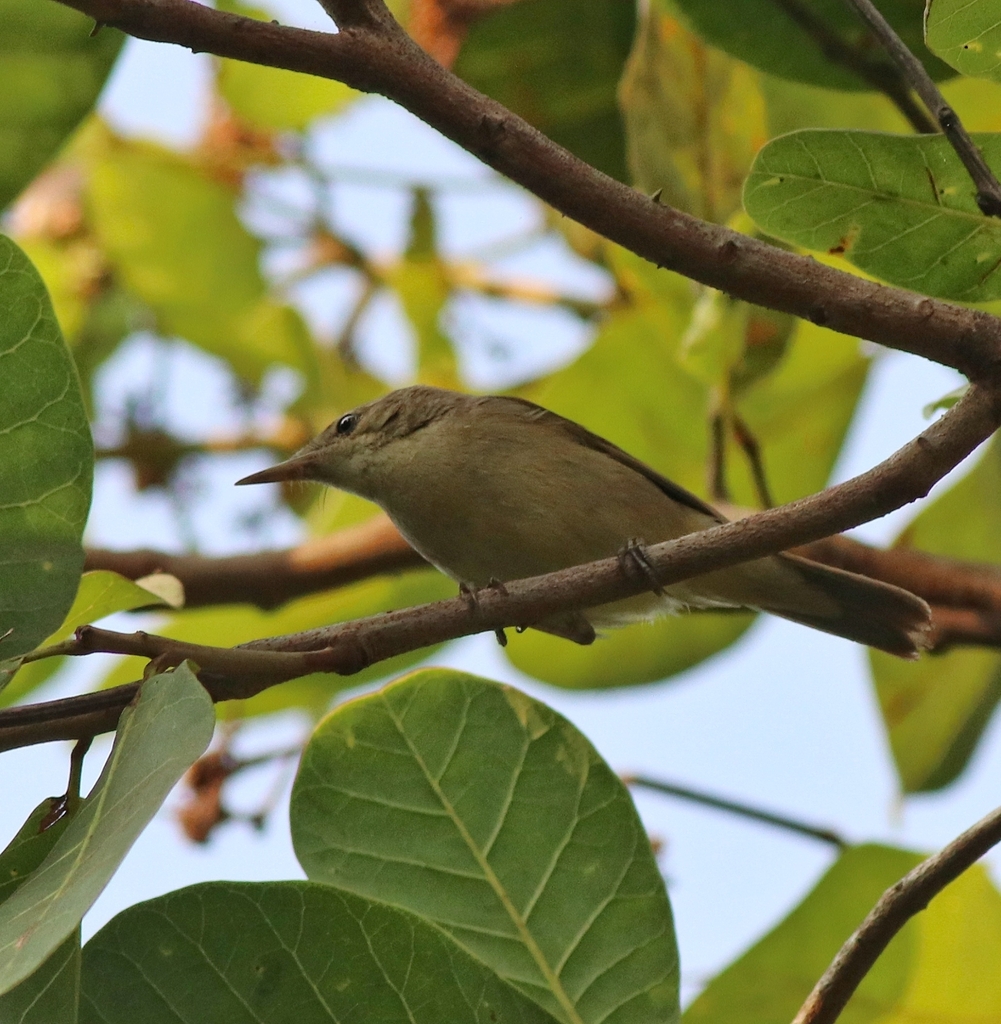
Carricero de Blyth
Photo © Afsar Nayakkan
Photo © Afsar Nayakkan — CC BY 4.0 — Source: iNaturalist #166546590Identificación
El Carricero de Blyth es un pequeño carricero discreto que mide 12–14 cm de largo y pesa 8–16 g. Sus características más distintivas son un pico relativamente largo y grueso de color gris parduzco, un cuerpo esbelto y alas cortas y redondeadas. El plumaje es deliberadamente sobrio: las partes superiores son de color pardo oliváceo, mientras que las inferiores son blancuzcas. Una corta ceja blanquecina recorre desde la base del pico hasta el ojo, contrastando con una línea ocular oscura. Las patas y pies son de color pardo rosáceo, al igual que la base de la mandíbula inferior. En general, la especie carece de los tonos más cálidos que presentan otros carriceros relacionados, lo que la convierte en un reto de identificación para los observadores de aves en campo.
Distribución y Hábitat
Este carricero cría en una vasta área paleártica que se extiende desde el Mar Báltico en Europa Oriental casi hasta el Lago Baikal en Siberia, con una población aislada en Asia Central. Inverna en Asia Meridional, incluidos India, Sri Lanka, Nepal, Bangladesh y Myanmar. Es notable que la especie ha estado expandiendo su rango hacia el oeste en las últimas décadas, alcanzando los Países Bajos (donde crió en 2022) y Escocia (donde se confirmó su cría en 2024), siendo anteriormente un vagabundo raro en Europa occidental.
Durante la época de cría, el Carricero de Blyth prefiere los bordes y claros de bosques caducifolios húmedos, barrancos arbolados, parques y jardines, matorrales y bosques de coníferas. En sus cuarteles de invierno, habita árboles en hábitats tanto húmedos como secos, mostrando mayor flexibilidad de hábitat que durante la época de cría.
Comportamiento y Dieta
El Carricero de Blyth es solitario y territorial durante la cría, con territorios en Finlandia que van de 600 a 1.300 m². La especie es típicamente monógama, aunque se ha registrado poliginia. La cría ocurre entre finales de mayo y julio. Las parejas construyen nidos compactos en forma de taza con material vegetal y telarañas de araña, colocados 20–60 cm sobre el suelo. Se ponen nidadas de 3–6 huevos; ambos padres incuban durante 12–13 días, con los pollos volando a los 11–13 días de edad y permaneciendo dependientes otros 10–22 días. Los machos ocasionalmente abandonan la primera nidada después del vuelo para buscar parejas adicionales.
La especie tiene un canto distintivo y variable que mezcla sonidos ásperos —chasquidos, castañeteos y ronroneos— con silbidos melodiosos e imitación. Su dieta consiste principalmente en insectos capturados de la vegetación, típico de los carriceros insectívoros.
Mejor Época y Lugares para Verlo
Para ver aves en cría, visite regiones paleárticas entre finales de mayo y julio. Finlandia y otras localidades bálticas y escandinavas ofrecen avistamientos fiables durante este período. Los observadores de Europa occidental tienen oportunidades crecientes en los Países Bajos y Escocia tras la reciente expansión del rango. Los avistamientos invernales son posibles en toda Asia Meridional, particularmente en India, Sri Lanka y Nepal donde la especie es más numerosa y predecible.
Consejos de Fotografía
Fotografiar el Carricero de Blyth presenta desafíos debido a su plumaje sobrio y comportamiento furtivo en vegetación densa. Posiciónese cerca de machos territoriales al amanecer durante la época de cría cuando son más vocales y activos. Enfóquese en capturar los caracteres diagnósticos: el pico relativamente largo, la ceja blanquecina y la línea ocular. La preferencia de la especie por los bordes de bosque y claros puede ofrecer oportunidades de perchas ligeramente más abiertas que las especies de carrizales más profundos. Use un teleobjetivo largo y paciencia, ya que el ave rara vez se posa en lugares prominentes.
Kanha Tiger Reserve
Minneriya National Park
Altai Tavan Bogd National Park
Baikal National Park
Bandhavgarh National Park
Bandipur National Park
Banke National Park
Bardiya National Park
Biebrza National Park
Nada coincide con estos filtros.
Aún no hay fotos de la comunidad. Inicia sesión para añadir la primera.
Aún no hay observaciones de la comunidad de esta especie.