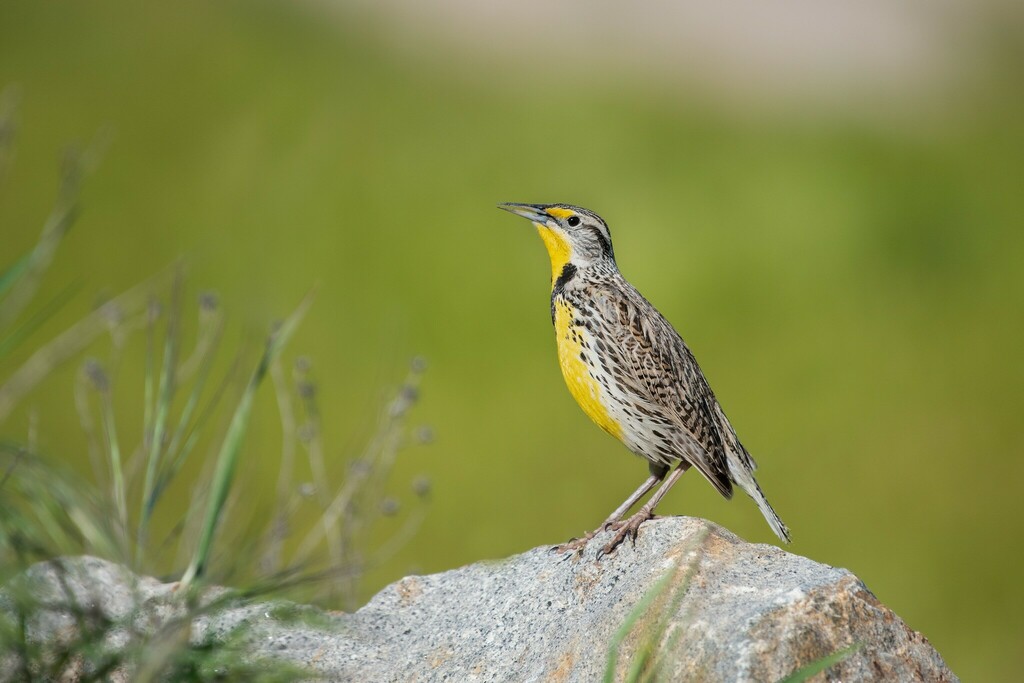
Pradero Occidental
Photo © Adam Jackson
Photo © Adam Jackson — CC0 1.0 — Source: iNaturalist photo #339581656Identificación
El pradero occidental es un pájaro cantor de tamaño mediano que mide aproximadamente 20 cm de largo, con una envergadura de 41 cm y un peso de 89–115 g. Los adultos son inconfundibles: presentan partes inferiores amarillo brillante con una distintiva marca negra en forma de «V» en el pecho, contrastando con los flancos blancos rayados de negro. Las partes superiores son predominantemente pardas con estrías negras, mientras que la cabeza presenta bandas llamativas de pardo claro y negro. Los picos largos y puntiagudos y estas características bandas en la cabeza facilitan su identificación en el campo.
La forma más confiable de distinguir a los praderos occidentales de sus parientes cercanos orientales es por la voz. Los praderos occidentales producen canciones aflautadas, gorjeadas y acuosas que son notablemente más complejas y melodiosas que los simples silbidos de los praderos orientales. A pesar del nombre común que sugiere lo contrario, estas aves no son verdaderos alondras sino que pertenecen a la familia de los ictéridos, los «pájaros negros del Nuevo Mundo».
Distribución y Hábitat
Los praderos occidentales se encuentran en toda América del Norte occidental y central, con poblaciones reproductoras en toda Canadá occidental y el oeste de Estados Unidos al occidente de los Grandes Lagos, extendiéndose hacia el sur hasta el norte de México. La especie es parcialmente migratoria: las aves del norte migran al sur durante el invierno, mientras que las poblaciones del sur son residentes permanentes. El área de invernada se extiende desde las zonas de reproducción hacia el sur y sureste hasta el centro de México y hacia el este hasta el occidente de Florida.
Estas aves prefieren pastizales abiertos, praderas, potreros y campos abandonados para reproducirse. Construyen nidos en el suelo cubiertos con techos de pasto en lugares ocultos dentro de estos hábitats. Donde su distribución se superpone con la del pradero oriental, las aves occidentales prefieren vegetación más delgada y seca, y defienden activamente el territorio contra la otra especie. Las aves también han sido introducidas en la isla hawaiana de Kauai, donde las poblaciones persisten.
Comportamiento y Dieta
Los praderos occidentales son principalmente forrajeadores terrestres que buscan alimento en vegetación baja a semi-baja y frecuentemente sondean con sus picos. Son predominantemente insectívoros, aunque consumen fácilmente semillas y bayas, particularmente en invierno cuando frecuentemente se alimentan en bandadas. Durante la temporada de reproducción, los machos traen alimento al nido donde las hembras lo distribuyen a los polluelos, que se alimentan casi exclusivamente de insectos.
Las hembras construyen nidos en el suelo variables que van desde simples copas hasta estructuras parcialmente techadas con túneles de acceso. Después de que los huevos eclosionan siguiendo un período de incubación de 13–15 días, los polluelos vuelan a los 10–12 días de edad pero requieren aproximadamente 21 días para lograr vuelo sostenido. Las aves jóvenes reciben cuidado parental durante aproximadamente dos semanas después del vuelo. Las parejas intentan una segunda nidada durante la temporada de reproducción, aunque algunos nidos son parasitados por tordo cabecicafé.
Mejor Época y Lugares para Verlo
El mejor momento para encontrar praderos occidentales es durante la temporada de reproducción cuando los machos cantan activamente desde perchas dentro de sus territorios de pastizal. Las aves en la mitad norte del área de reproducción están presentes desde la primavera hasta el otoño, mientras que las poblaciones del sur se pueden encontrar todo el año. El invierno ofrece oportunidades para observar la especie en su área de invernada extendida hacia el sur, donde las aves frecuentemente se reúnen en bandadas de alimentación.
Busca praderos occidentales en pastizales abiertos, praderas, potreros y campos abandonados en toda su distribución en América del Norte occidental y central. En áreas donde ocurren praderos orientales, los pájaros occidentales prefieren vegetación ligeramente más seca. Escucha su distintivo canto aflautado y gorjeado, que te dirigirá confiablemente hacia los machos cantores.
Consejos para Fotografía
El distintivo pecho amarillo con marca negra en forma de «V» y el patrón de cabeza rayada proporcionan excelentes características para la identificación fotográfica. Posiciónate para capturar las partes inferiores amarillo brillante, que contrastan hermosamente contra fondos de pastizal. Las primeras horas de la mañana son ideales para fotografiar a los machos cantores, ya que frecuentemente se posan prominentemente para entregar sus melodiosos cantos gorjeados.
Las aves que anidan en el suelo requieren un enfoque cauteloso; mantén distancia para evitar disturbar las actividades de reproducción. Enfócate en capturar la postura característica y las marcas del ave en lugar de aproximarte a los nidos. El comportamiento de agrupamiento en invierno ofrece oportunidades para fotografiar múltiples aves en situaciones naturales de alimentación. El pico largo y puntiagudo del ave y el patrón de cabeza rayada son características particularmente distintivas que vale la pena destacar en tus imágenes.
Gulf Islands National Park Reserve
Glacier National Park
Kootenay National Park
Mount Revelstoke National Park
Banff National Park
Jasper National Park
Big Bend National Park
Canyonlands National Park
Theodore Roosevelt National Park
Saguaro National Park
Indiana Dunes National Park
Lassen Volcanic National Park
Pinnacles National Park
Joshua Tree National Park
Great Basin National Park
Carlsbad Caverns National Park
Arches National Park
Zion National Park
Mesa Verde National Park
Great Sand Dunes National Park
Capitol Reef National Park
Yosemite National Park
Grand Teton National Park
Yellowstone National Park
Mount Rainier National Park
Crater Lake National Park
Black Canyon of the Gunnison National Park
Rocky Mountain National Park
Redwood National Park
Sequoia National Park
Kings Canyon National Park
Death Valley National Park
Olympic National Park
Waterton Lakes National Park
Grands-Jardins National Park
Yoho National Park
Forillon National Park
Point Pelee National Park
El Vizcaíno
Tutuaca
Badlands National Park
Bryce Canyon National Park
Channel Islands National Park
Glacier National Park
Grand Canyon National Park
Guadalupe Mountains National Park
Hot Springs National Park
Petrified Forest National Park
White Sands National Park
Wind Cave National Park
Kodiak National Wildlife Refuge
Alaska Maritime National Wildlife Refuge
Bosque del Apache National Wildlife Refuge
Wichita Mountains National Wildlife Refuge
Laguna Atascosa National Wildlife Refuge
Santa Ana National Wildlife Refuge
Lower Rio Grande Valley National Wildlife Refuge
Cabeza Prieta National Wildlife Refuge
Kofa National Wildlife Refuge
Havasu National Wildlife Refuge
Imperial National Wildlife Refuge
Malheur National Wildlife Refuge
Klamath Marsh National Wildlife Refuge
Upper Klamath National Wildlife Refuge
Tule Lake National Wildlife Refuge
Sacramento National Wildlife Refuge
San Luis National Wildlife Refuge
Don Edwards San Francisco Bay National Wildlife Refuge
Farallon National Wildlife Refuge
Salton Sea National Wildlife Refuge
Bear River Migratory Bird Refuge
Seedskadee National Wildlife Refuge
National Elk Refuge
Charles M. Russell National Wildlife Refuge
Red Rock Lakes National Wildlife Refuge
Bitter Lake National Wildlife Refuge
Kīlauea Point National Wildlife Refuge
Aún no hay fotos de la comunidad. Inicia sesión para añadir la primera.
Aún no hay observaciones de la comunidad de esta especie.