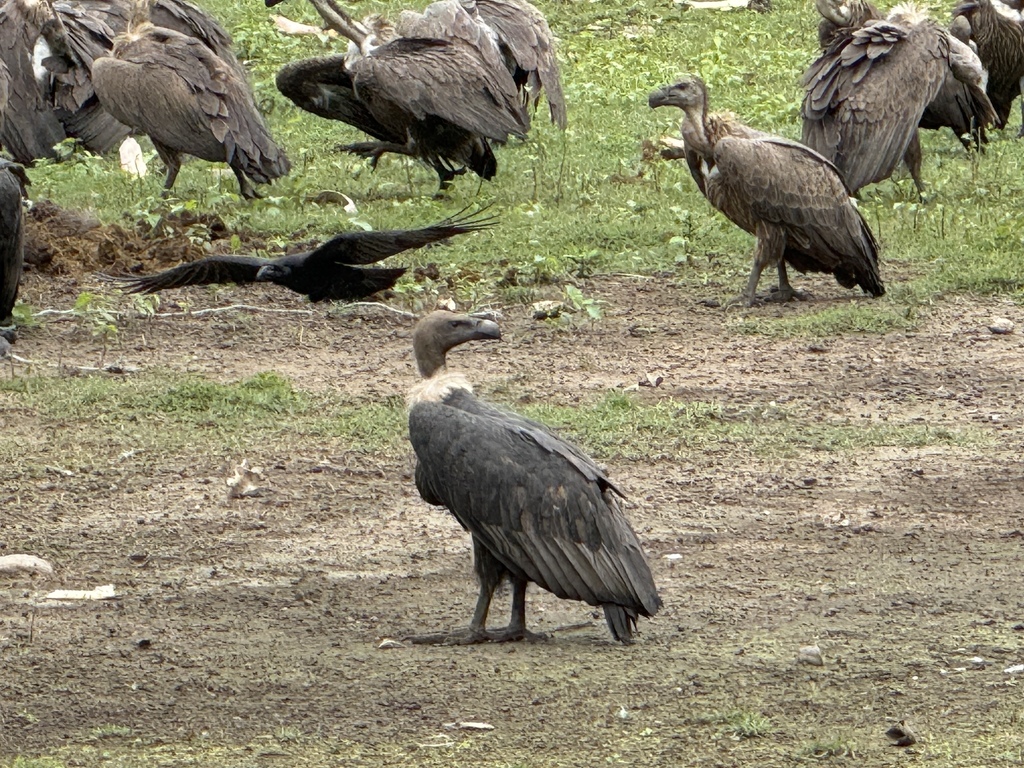
Buitre dorsiblanco bengalí
Photo © Dr. Alexey Yakovlev
Photo © Dr. Alexey Yakovlev — CC BY 4.0 — Source: iNaturalist photo #577159038El buitre dorsiblanco bengalí (Gyps bengalensis) es una especie de ave accipitriforme de la familia Accipitridae. Es la especie de buitre autóctona del subcontinente indio. En esta parte de Asia sustituye al buitre leonado. Actualmente se encuentra en grave peligro de extinción. No se reconocen subespecies.
Indravati National Park
Bijapur, India
+18 aves+1 mamíferos
Where the Indravati River carves through the Eastern Ghats, pristine sal and mixed deciduous forests cloak a rugged landscape of […]
VER PARQUE NACIONALValmiki National Park
Ramnagar, India
+128 aves+30 mamíferos
Where the Himalayan foothills soften into the Ganges plains, dense sal forests rise above meandering rivers and grassland mosaics that […]
VER PARQUE NACIONALKanha Tiger Reserve
Kanha Kisli F.V., India
+126 aves+29 mamíferos
Where sal forests give way to emerald meadows and crystalline streams carve through ancient valleys, one of India’s finest wilderness […]
VER PARQUE NACIONALBandhavgarh National Park
Garhpuri, India
+127 aves+26 mamíferos
Where granite ridges rise dramatically above sal and bamboo forests, one of India’s most pristine tiger reserves unfolds across the […]
VER PARQUE NACIONALPanna National Park
Badgadi Kalan, India
+136 aves+27 mamíferos
Where granite gorges slice through central India’s Vindhyan plateau, a landscape of stark beauty unfolds across nearly six hundred square […]
VER PARQUE NACIONALBandipur National Park
Hirehalli, India
+135 aves+30 mamíferos
Where the Western Ghats descend into the Deccan plateau, ancient deciduous forests blanket a landscape carved by the Nugu River. […]
VER PARQUE NACIONALNagarahole Tiger Reserve
Nalkeri Forest, India
+120 aves+30 mamíferos
Where granite escarpments rise above dense deciduous forests and the Kabini River carves through pristine wilderness, one of India’s most […]
VER PARQUE NACIONALAún no hay fotos de la comunidad. Inicia sesión para añadir la primera.
Aún no hay observaciones de la comunidad de esta especie.