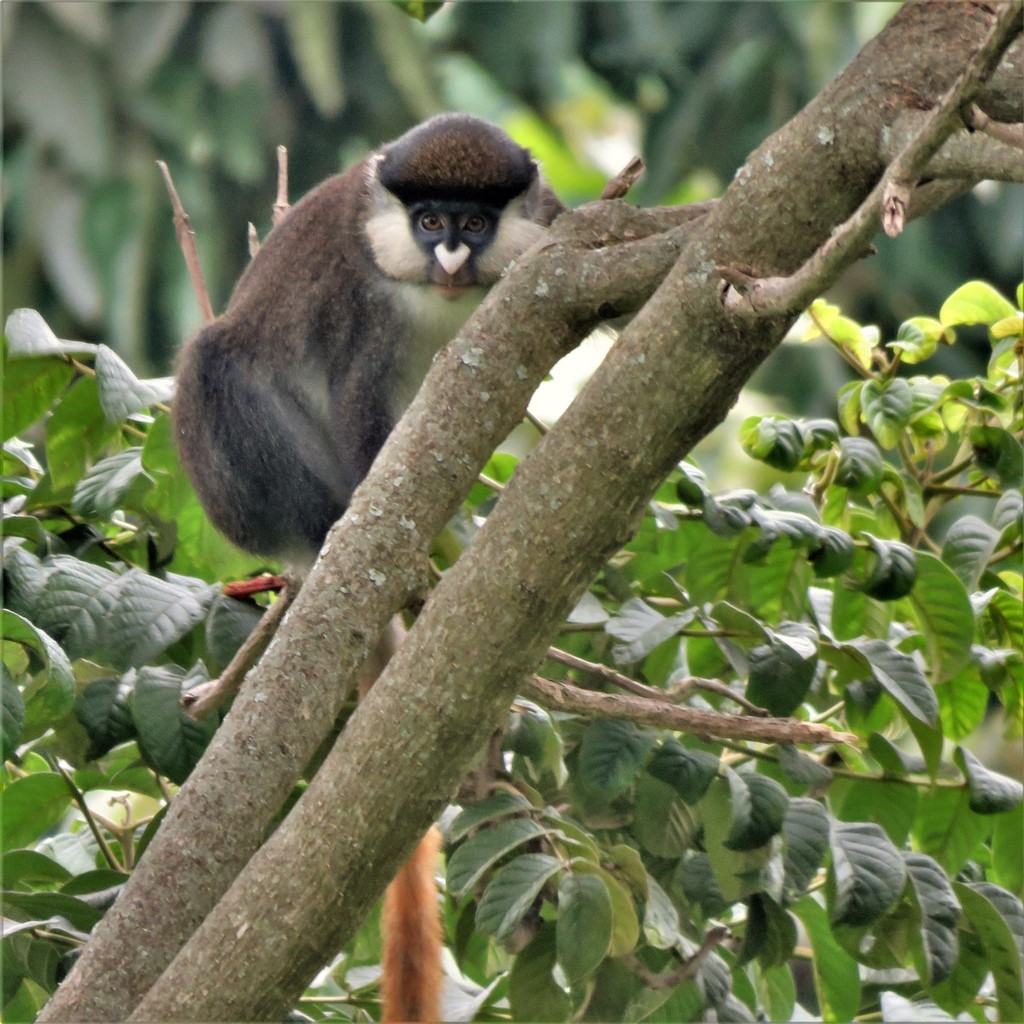
Cercopiteco de cola roja
Photo © Annika Lindqvist
Photo © Annika Lindqvist — CC BY 4.0 — Source: iNaturalist #31139417El cercopiteco de cola roja (Cercopithecus ascanius) es una especie de primate catarrino de la familia Cercopithecidae ampliamente distribuido por los países del África central.
Habita en las selvas lluviosas de tierras bajas, bosques pantanosos, bosques secos, bosques montañosos y árboles altos en las plantaciones. Se le documenta hasta los 2000 metros de elevación.
La longitud de la cabeza y el cuerpo mide de 32 a 62 cm. La cola mide de 53 a 89 cm. El peso es de 3.3 a 4.8 kg. Se mantiene en grupos de 7 a 35 individuos.
Virunga National Park
Uganda
+132 aves+30 mamíferos
Where the Rwenzori Mountains pierce the equatorial sky and volcanic slopes descend toward the Congo Basin, one of Africa’s most […]
VER PARQUE NACIONALBwindi Impenetrable National Park
Kanyashogi, Uganda
+132 aves+29 mamíferos
Steep valleys plunge through a tapestry of montane forest where mist clings to ancient trees and the undergrowth thrums with […]
VER PARQUE NACIONALMurchison Falls National Park
Uganda
+129 aves+30 mamíferos
Where the Victoria Nile surges through a narrow rocky chasm and plummets 43 metres in a thunderous cascade, Uganda’s oldest […]
VER PARQUE NACIONALMgahinga Gorilla National Park
Cyanika, Uganda
+132 aves+30 mamíferos
Where the Virunga volcanic chain rises in southwestern Uganda, montane forest cloaks three dormant peaks in an emerald embrace. The […]
VER PARQUE NACIONALQueen Elizabeth National Park
Uganda
+129 aves+30 mamíferos
Where the Albertine Rift’s dramatic escarpments plunge toward sprawling savanna, one of Africa’s most ecologically diverse landscapes unfolds across southwestern […]
VER PARQUE NACIONALZiwa Rhino and Wildlife Ranch
Nakasongola, Uganda
+131 aves+17 mamíferos
Where papyrus wetlands merge into sprawling savanna, Uganda’s central landscape opens into one of East Africa’s most vital rhino recovery […]
VER SANTUARIO DE VIDA SILVESTREAún no hay fotos de la comunidad. Inicia sesión para añadir la primera.
Aún no hay observaciones de la comunidad de esta especie.