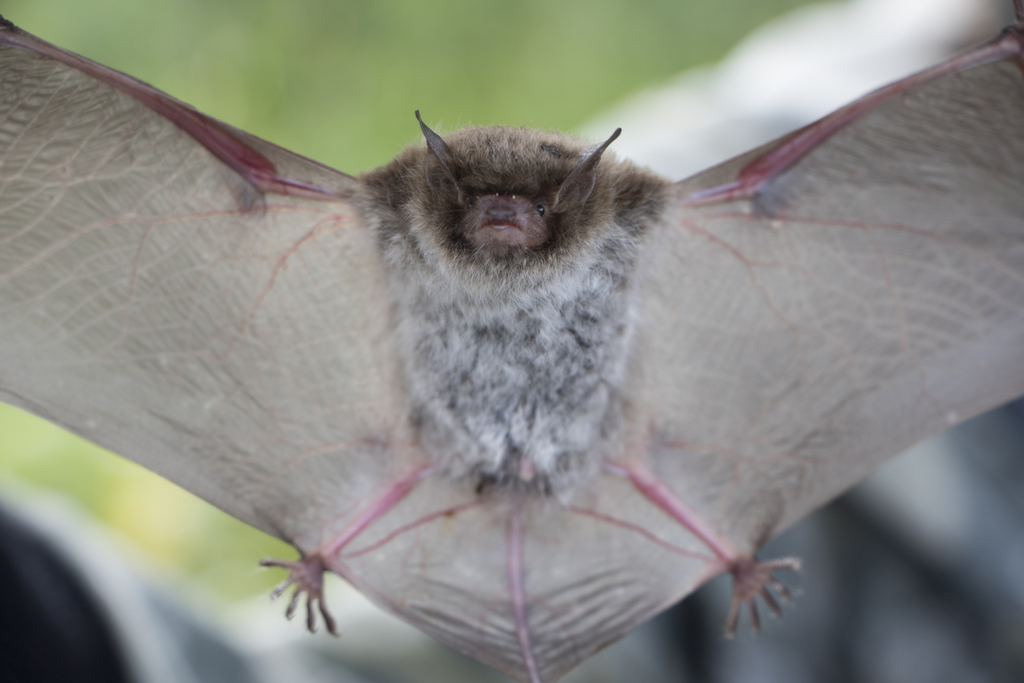
Daubenton’s Myotis
Photo © Полина Полежанкина
Photo © Полина Полежанкина — CC BY 4.0 — Source: iNaturalist photo #398977842Identification
Daubenton's myotis is a small to medium-sized bat, typically 45 to 55 mm long with an average wingspan of 240 to 275 mm and weighing between 7 and 15 grams. The species is characterized by its fluffy fur, which is brownish-grey on the back and silvery-grey on the underside, with juveniles displaying noticeably darker plumage than adults. One of the bat's most distinctive features is its reddish-pink face and nose, contrasted by bare skin around the eyes. The ears are rather short and are typically held at right angles when the bat is agitated. The wings and tail membrane are dark brown.
Range & Habitat
Daubenton's bat has an extensive Eurasian range, occurring from Ireland in the west to Hokkaido, Japan, and Korea in the east. The species is believed to be increasing its numbers in many areas throughout its range. These bats are predominantly woodland dwellers and show a strong preference for roosts close to water sources such as rivers and canals. Summer colonies establish themselves in caves, tunnels, cellars, mines, and underneath bridges—all locations consistently near water. During hibernation, which lasts from September through late March or April, the bats use identical habitat types.
Behaviour & Diet
Daubenton's bat is insectivorous and hunts exclusively using echolocation, emitting calls at frequencies between 32 and 85 kHz, with typical calls peaking at 45 to 50 kHz. These high-frequency sounds, imperceptible to humans, allow the bats to build a detailed "sound picture" of their surroundings. The bats emerge at twilight to hunt for insects over water, with their diet consisting mainly of non-biting midges and other midges, supplemented by small flies, mayflies, and moths. Remarkably, these bats often consume their prey while still in flight. A seven-gram individual can return from a one-hour feeding session weighing 11 grams, representing a dramatic 57% increase in body weight.
Best Time & Places to See It
The best opportunities to observe Daubenton's bat occur during their active season, from late spring through early autumn, particularly during twilight hours when they emerge to hunt over water. Rivers, canals, and other freshwater habitats with nearby woodlands are prime locations. Summer maternity colonies, comprising 40 to 80 females, gather in June and July. Winter observations are considerably more difficult, as the bats enter hibernation from September through late March or April in underground refuges.
Photography Tips
Photographing Daubenton's bat requires patience and specialized equipment, particularly since these are twilight hunters. Position yourself near water sources surrounded by woodland habitat during emerging hours at dusk. The bat's small size (7–15 grams) and swift, erratic flight over water demand fast shutter speeds and responsive autofocus. The distinctive reddish-pink face and silvery-grey underside can make compelling subjects if captured in flight, though the darkness of their activity period presents significant lighting challenges. Night-vision or thermal imaging equipment may be necessary for successful documentation.
Alpilles Regional Nature Park
Avesnois Regional Nature Park
Bannau Brycheiniog National Park
Baronnies Provençales Regional Nature Park
Berwyn National Nature Reserve
Biebrza National Park
Boucles de la Seine Normande Regional Nature Park
Cairngorms National Park
Calanques National Park
Nothing matches these filters.
No community photos yet. Log in to add the first one.
No community observations of this species yet.