Identification
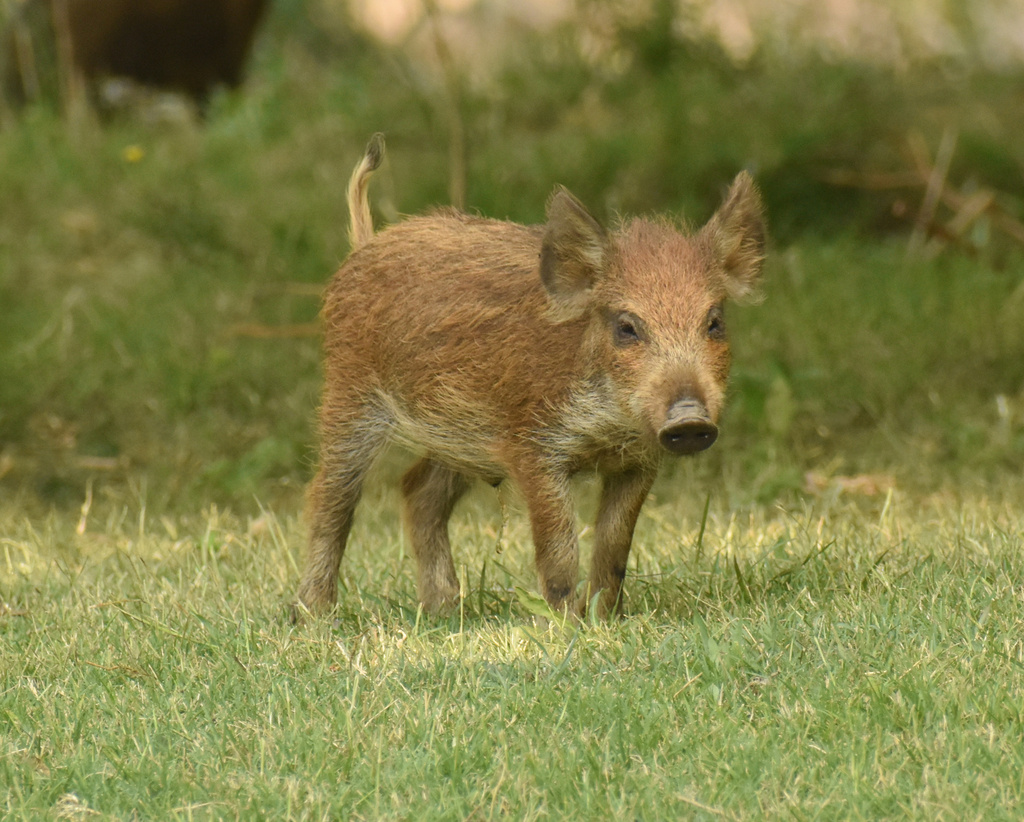
The Eurasian wild pig is a robust suid with considerable regional variation across its range. Up to 16 subspecies are recognized, divided into four regional groups distinguished by skull height and lacrimal bone structure. Western subspecies typically have high skulls and thick underwool, while Indian forms display sparse underwool, long manes, and prominent facial bands. Eastern subspecies are characterized by a distinctive whitish streak from the mouth corners to the lower jaw, while the Indonesian subspecies stands out with its reddish band extending from muzzle to neck sides and sparse body hair. Sexual dimorphism is pronounced: fully grown males are typically solitary and more heavily built than females, which live in family groups.
Range & Habitat
The wild boar is native to much of Eurasia and North Africa, originating in Southeast Asia during the Early Pleistocene. It has since been introduced to the Americas and Oceania, making it one of the widest-ranging mammals in the world. The species demonstrates remarkable adaptability to diverse habitats, which, combined with its wide distribution and high population numbers, has secured its status as Least Concern on the IUCN Red List. However, it has become an invasive species in parts of its introduced range, particularly in the Americas and Australia.
Behaviour & Diet
Wild boars live in matriarchal societies composed of related females and their young of both sexes. Adult males are generally solitary outside the breeding season. The wolf serves as the main natural predator throughout most of its range, though tigers and Komodo dragons fill this ecological role in the Far East and Lesser Sunda Islands respectively. The species has a lengthy history of association with humans, serving as the ancestor of most domestic pig breeds and as a significant game animal for thousands of years. Recent decades have seen wild boars interbreeding with feral pigs, producing hybrids that have become serious pests in the Americas and Australia.
Best Time & Places to See It
Given the species' vast range across Eurasia and North Africa, opportunities for viewing wild boars vary considerably by region and subspecies. Its adaptability to diverse habitats means populations can be encountered in many different environments. Photographers and naturalists should consult local guides familiar with regional subspecies distributions and seasonal patterns to maximize sighting chances.
Photography Tips
Capturing images of wild boars can be challenging due to their often-solitary nature and wariness. The regional variation among subspecies offers rich photographic opportunities—focus on distinctive features such as skull profile, mane development, facial markings, and underwool density to document subspecific differences. The matriarchal groups of females and young provide excellent opportunities for behavioral and family-group photography, while solitary males offer dramatic portrait possibilities. Early morning and evening activity patterns should guide your fieldwork timing.