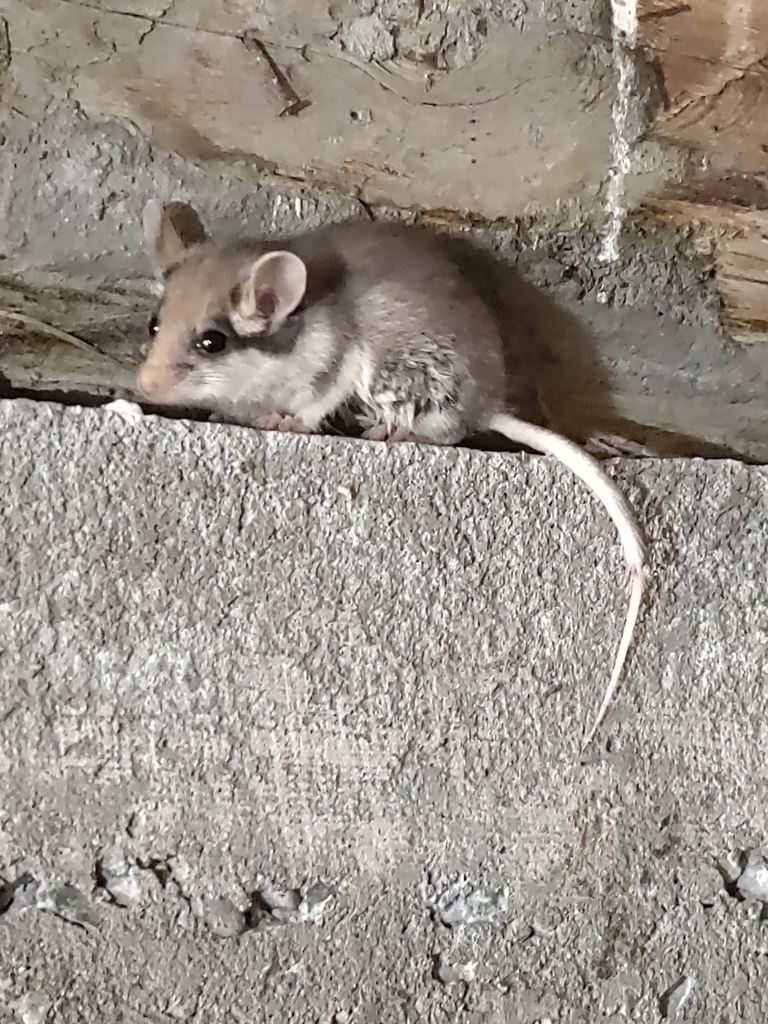
European Garden Dormouse
Photo © Sandrine D'Hooge
Photo © Sandrine D'Hooge — CC BY 4.0 — Source: iNaturalist photo #218733417Identification
The European garden dormouse is a small, agile rodent measuring 10–15 cm in head and body length, with a distinctive 8–14.5 cm tail topped by a white tassel. It weighs between 60–140 g, making it a delicate creature easily overlooked in the field. Its fur is short and typically gray or brown above, contrasting with a whitish underside. The most striking facial features are its large, rounded ears and bold black eye markings that give it an endearing appearance.
Range & Habitat
Despite its common name, the garden dormouse is primarily a forest dweller, though it also inhabits fruit-growing regions across Europe. The species is particularly common in southern Europe but extends its range northward into areas such as the Alps, Bavarian Forest, and Ore Mountains. Once widespread in northern Europe, populations have declined significantly; in the Netherlands, for example, only nine individuals were found in 2007 in two Limburg woodlands where the species was formerly common. Recent camera-trap surveys in Switzerland have documented the first confirmed sightings in over a century, suggesting that habitat restoration efforts may be creating new opportunities for this species to persist.
Behaviour & Diet
Garden dormice are nocturnal creatures, spending daylight hours in tree nests—sometimes shared with other individuals. They are highly omnivorous and notably carnivorous for dormice, consuming a seasonally variable diet. Spring brings leaves and flowers; summer yields berries and fruit. Throughout their active period, they hunt arthropods including insects, millipedes, and gastropods like snails and slugs. They occasionally prey on adult birds, reptiles, amphibians, and small mammals, with some predation likely representing scavenging. Mating occurs from April to June, when females announce receptiveness through loud squeaking. After a 23-day gestation, litters of three to seven young are born blind and hairless, opening their eyes at around 18 days. Young remain dependent for two months before becoming independent, though sexual maturity is not achieved until the following year. Life expectancy is approximately five years.
Best Time & Places to See It
The garden dormouse's nocturnal nature makes observing it challenging for field naturalists. The active season extends from spring through autumn, with greatest activity during breeding season (April–June) when vocalizing females may be more detectable. Forested regions in the Alps and central European highlands offer the best prospects, particularly in areas with mixed woodland and fruit cultivation. Early mornings and dusk may occasionally yield sightings as animals return to or depart from nests.
Photography Tips
Photographing this secretive species demands patience and specialized equipment. Night vision or thermal imaging technology is nearly essential for capturing behavioral shots. Focus on photographing nests and nocturnal activity rather than expecting daytime encounters. Wide-angle habitat shots documenting forest structure and fruiting trees can effectively illustrate the species' ecological requirements. Given the species' conservation challenges, ethical wildlife photography prioritizing animal welfare is paramount.
Alpilles Regional Nature Park
Avesnois Regional Nature Park
Baronnies Provençales Regional Nature Park
Cabo de Gata-Níjar Natural Park
Cadí Moixeró Natural Park
Calanques National Park
Camargue Regional Nature Park
Capçaleres del Ter i del Freser Natural Park
Caps et Marais d’Opale Regional Nature Park
Nothing matches these filters.
No community photos yet. Log in to add the first one.
No community observations of this species yet.