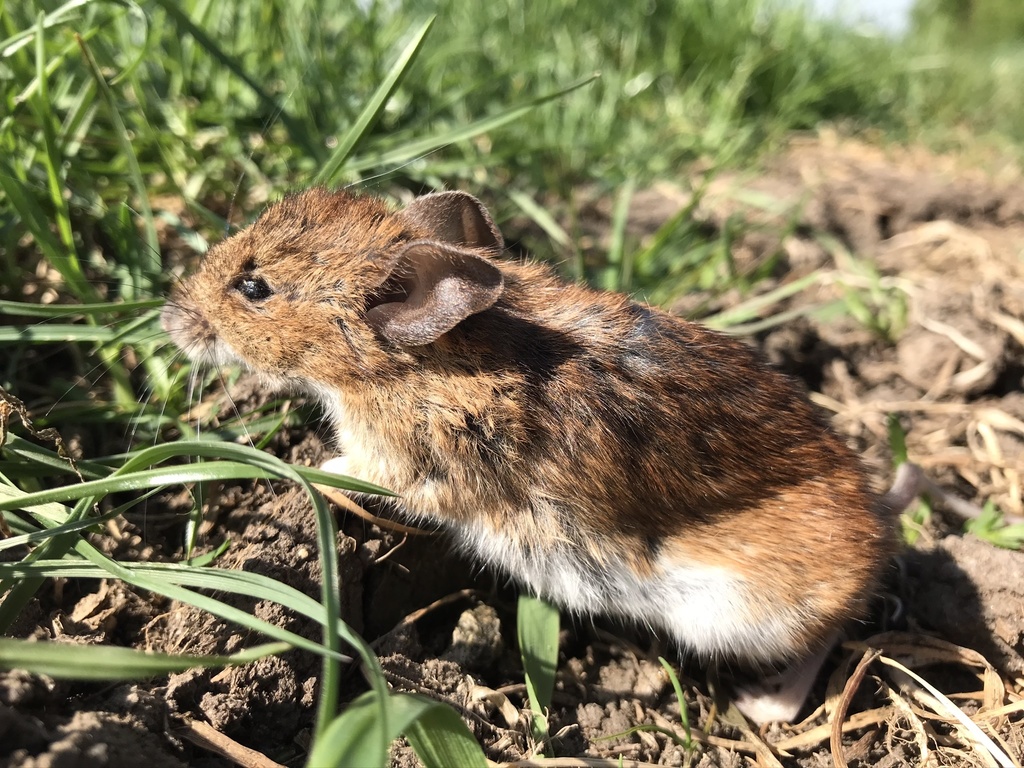
Long-tailed Field Mouse
Photo © Mike Youdale
Photo © Mike Youdale — CC0 1.0 — Source: iNaturalist photo #68107929Identification
The long-tailed field mouse is a small rodent measuring around 90 mm in length and weighing approximately 23 g. It is closely related to the yellow-necked mouse but can be distinguished by the absence of a yellow band around the neck, slightly smaller ears, and a generally more compact build. Also known as the wood mouse, common field mouse, or European wood mouse, this species is one of Europe's most widespread and intensively studied rodents.
Range & Habitat
This highly adaptable species ranges across most of Europe, from Scandinavia in the north to Ukraine in the east, and is also found in northwestern Africa and on many Mediterranean islands. Wood mice inhabit forests, grasslands, and cultivated fields, with a preference for hedgerows over dense woodland. During winter months, they tend to seek out more wooded areas and may shelter in buildings during harsh seasons, where they burrow extensively and build nests from plant material.
Behaviour & Diet
Almost entirely nocturnal and terrestrial, wood mice are primarily seed eaters, favoring seeds from oak, beech, ash, lime, hawthorn, and sycamore trees. When seeds are plentiful, they cache them in burrows and nests for later consumption. During late spring and early summer, when seeds are scarce, they supplement their diet with small invertebrates such as snails and insects. As seasons change, they also consume berries, fruits, fungi, and roots. Rather than hibernating during winter, wood mice may enter torpor—a state of reduced physiological activity—during severe cold. A distinctive survival adaptation allows them to shed the end of their tail if caught by a predator, though regrowth is rare.
Best Time & Places to See It
Observing wood mice in the field is challenging due to their strictly nocturnal habits and small size. However, they are common across their range and may be encountered during night surveys in hedgerows, field margins, and woodland edges. Signs of their presence—such as cached seeds, burrows, and gnawed vegetation—are often easier to spot than the animals themselves. Spring through autumn offers the best opportunity for observation, as activity levels are higher during the breeding season (February to October).
Photography Tips
Photographing wild wood mice requires patience and specialized equipment. Night-vision or thermal imaging technology is essential given their nocturnal behavior. Setting up camera traps in areas of known activity—particularly near burrows and along hedgerow boundaries—offers the best chance of capturing images. Wide-angle lenses work well for documenting habitat and burrow systems, while macro capability helps capture fine details of the fur and distinctive features. Early morning or dusk may occasionally yield sightings, particularly of females foraging during daylight to meet increased food demands while nursing young.
Alpilles Regional Nature Park
Avesnois Regional Nature Park
Bannau Brycheiniog National Park
Bardenas Reales
Baronnies Provençales Regional Nature Park
Bosc de Virós
Boucles de la Seine Normande Regional Nature Park
Burren National Park
Cadí Moixeró Natural Park
Nothing matches these filters.
No community photos yet. Log in to add the first one.
No community observations of this species yet.