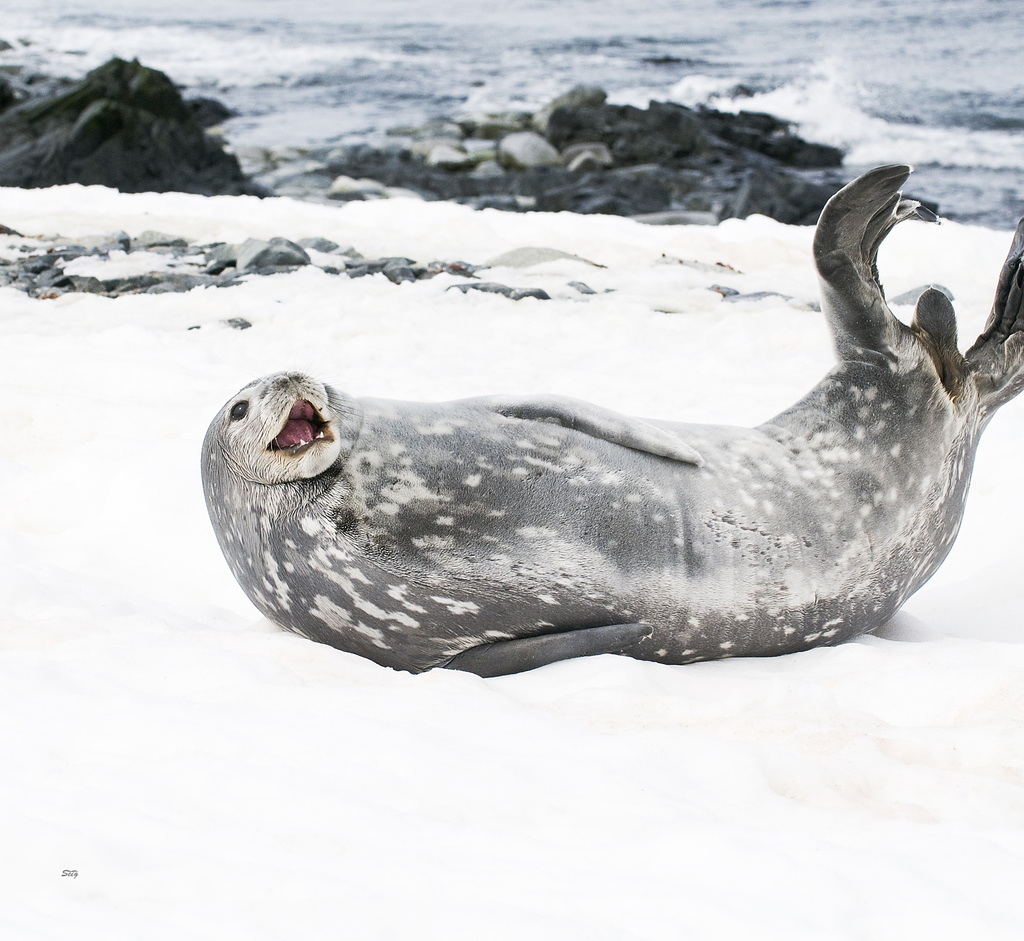
Weddell Seal
Photo © Seig
Photo © Seig — CC BY 4.0 — Source: iNaturalist #31826089The Weddell seal (Leptonychotes weddellii) is a relatively large and abundant true seal with a circumpolar distribution surrounding Antarctica. The Weddell seal was discovered and named in the 1820s during expeditions led by British sealing captain James Weddell to the area of the Southern Ocean now known as the Weddell Sea. The life history of this species is well documented since it occupies fast ice environments close to the Antarctic continent and often adjacent to Antarctic bases. It is the only species in the genus Leptonychotes. == Description == Weddell seals measure about 2.5–3.5 m (8 ft 2 in – 11 ft 6 in) long and weigh 400–600 kg (880–1,320 lb). They are amongst the largest seals, with a rather bulky body and short fore flippers relative to their body length. Males weigh less than females, usually about 500 kg (1,100 lb) or less. Male and female Weddell seals are generally about the same length, though females can be slightly larger. However, the male seal tends to have a thicker neck and a broader head and muzzle than the female. A molecular genetic-based technique has been established to confirm the sex of individuals in the laboratory. The Weddell seal face…
Brown Bluff
Cuverville Island
Danco Island
Deception Island
Half Moon Island
Lemaire Channel
Neko Harbour
Paradise Bay
Paulet Island
Nothing matches these filters.
No community photos yet. Log in to add the first one.
No community observations of this species yet.