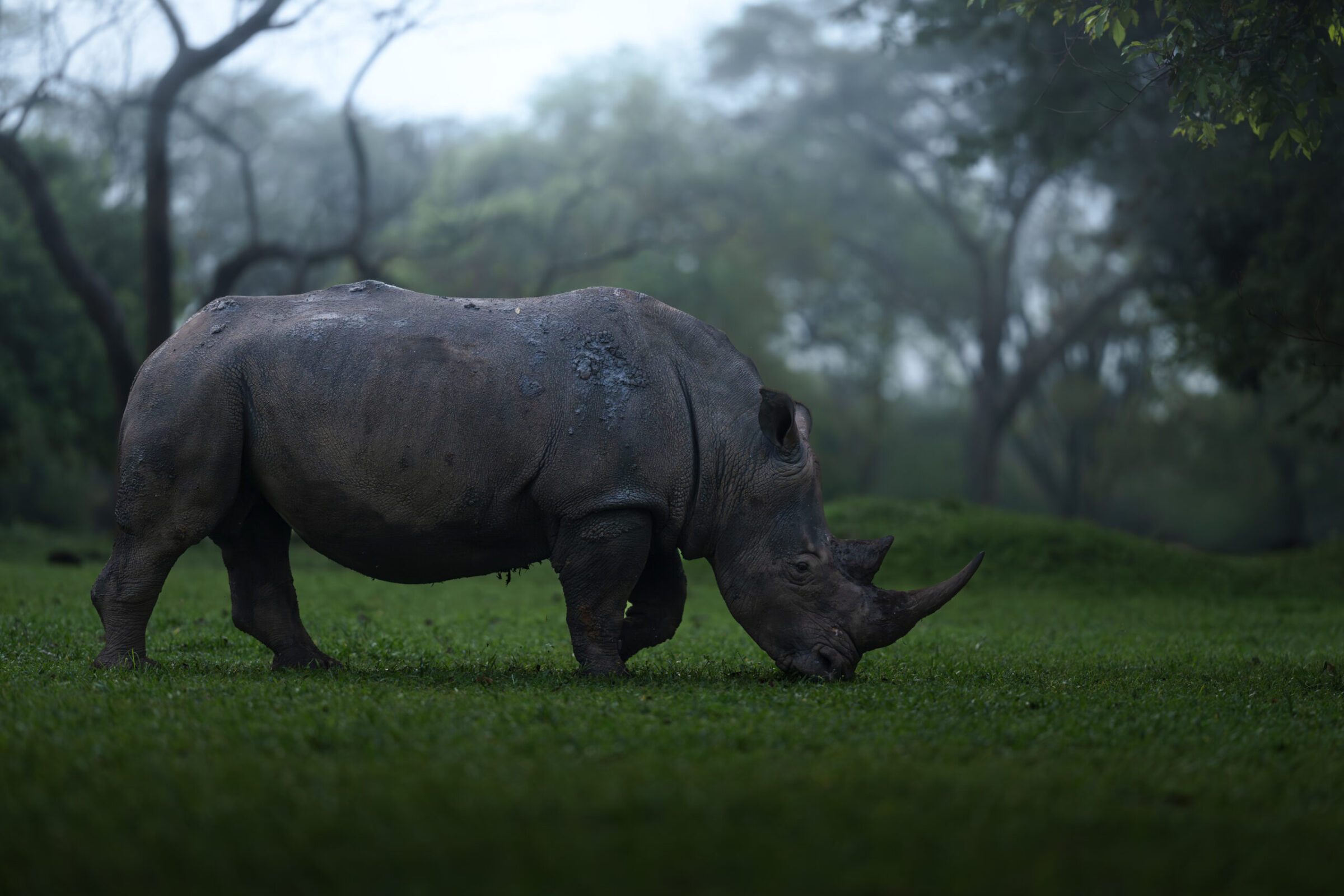
White Rhinoceros
Photo © wildatlasguide
Photo © wildatlasguide — Used with permissionIdentification
The white rhinoceros is the largest extant species of rhinoceros, distinguished by its notably wide, square-shaped mouth—an adaptation for grazing that sets it apart from the narrow-lipped black rhinoceros. The name "white rhino" likely derives from a mistranslation of the Dutch word "wijd" (meaning "wide"), referring to this characteristic broad mouth rather than the animal's colour. An alternative, more descriptive name is the square-lipped rhinoceros, though it sees less common use. The species is also the most social of all rhino species, making it distinctive in behaviour as well as appearance.
Range & Habitat
The white rhinoceros exists as two subspecies with starkly different conservation statuses. The southern white rhinoceros is found primarily in South Africa, which hosts the majority of wild individuals, with smaller reintroduced populations in Namibia, Botswana, Zimbabwe, Uganda, Eswatini, and Mozambique. Additionally, populations have been introduced to Kenya and Zambia outside their historical range. The northern white rhinoceros was formerly found across East and Central Africa south of the Sahara, though it is now critically endangered and possibly extinct in the wild.
Behaviour & Diet
White rhinoceroses are grazers, feeding on grasslands and savanna woodlands. Despite their massive size, they are surprisingly swift and agile animals, capable of running up to 40 mph (64 km/h) in short bursts and maintaining speeds of 30–31 mph (48–50 km/h) for extended periods with good stamina. This combination of speed and endurance is remarkable for an animal of their bulk. The species is the most social of all rhino species, a behavioural trait that distinguishes them from their more solitary relatives.
Best Time & Places to See It
South Africa is the primary location for viewing white rhinoceroses in the wild, home to the vast majority of the estimated 17,464 southern white rhinos remaining as of end 2023. Smaller populations can also be found in Namibia, Botswana, Zimbabwe, Uganda, Eswatini, Mozambique, Kenya, and Zambia. The northern subspecies is critically endangered with only two known females surviving in captivity following the death of the last wild male in March 2018, making sightings of this subspecies in the wild extremely unlikely.
Photography Tips
Photographers should be prepared to capture the white rhino's distinctive broad, square mouth, which is key to identifying this species. Given their surprising speed and agility, be ready to photograph them in motion—they can maintain substantial speeds for extended periods. Their social nature offers opportunities to capture group interactions and behaviour, unlike more solitary rhino species. The grasslands and savanna woodlands they inhabit provide varied lighting and compositional possibilities throughout the day.
Murchison Falls National Park
Uganda
+608 birds+33 mammals
Where the Victoria Nile compresses through a narrow gorge and explodes across a 45-meter precipice, the landscape speaks in thunder. Murchison Falls National Park sprawls across…
VIEW NATIONAL PARKNgorongoro Conservation Area
Tanzania
+626 birds+55 mammals
Volcanic calderas and open grassland dominate this high plateau in northern Tanzania, where the landscape rises above 2,000 metres and ancient geological forces have shaped both…
VIEW WILDLIFE MANAGEMENT AREAPilanesberg National Park
Moses Kotane Local Municipality, South Africa
+364 birds+49 mammals
Granite peaks and volcanic ridges rise unexpectedly from the savanna floor across this 734-square-kilometre expanse in the North West province, creating a landscape of profound ecological…
VIEW NATIONAL PARKMokala National Park
Siyancuma Local Municipality, South Africa
+246 birds+35 mammals
Across the semi-arid savanna of the Northern Cape, where red earth meets sparse acacia woodland and open grassland punctuated by rocky outcrops, lies a landscape shaped…
VIEW NATIONAL PARKKruger National Park
Ba-Phalaborwa Local Municipality, South Africa
+540 birds+91 mammals
Across the low-lying savanna of northeastern South Africa unfolds one of Africa's largest and most ecologically intact protected areas, where acacia woodlands merge into mopane scrub…
VIEW NATIONAL PARKAddo Elephant National Park
Sundays River Valley Local Municipality, South Africa
+388 birds+55 mammals
Where the Eastern Cape's semi-arid scrublands meet transitional woodland, Addo sprawls across 13,478 square kilometres of one of southern Africa's most biodiverse landscapes. The terrain rises…
VIEW NATIONAL PARKIthala Game Reserve
uPhongolo Local Municipality, South Africa
+328 birds+26 mammals
Rolling thornbush savanna and acacia woodland dominate the landscape of this 494-square-kilometre national park in KwaZulu-Natal's uPhongolo Local Municipality, where granite outcrops punctuate grassland plateaus and…
VIEW NATIONAL PARKMarakele National Park
Modimolle Local Municipality, South Africa
+341 birds+36 mammals
Granite ridges and sprawling grasslands dominate this 1,176-square-kilometre reserve in Limpopo's heartland, where bushveld transitions between rocky outcrops and open savanna. The park's rugged topography creates…
VIEW NATIONAL PARKZiwa Rhino and Wildlife Ranch
Nakasongola, Uganda
+359 birds+11 mammals
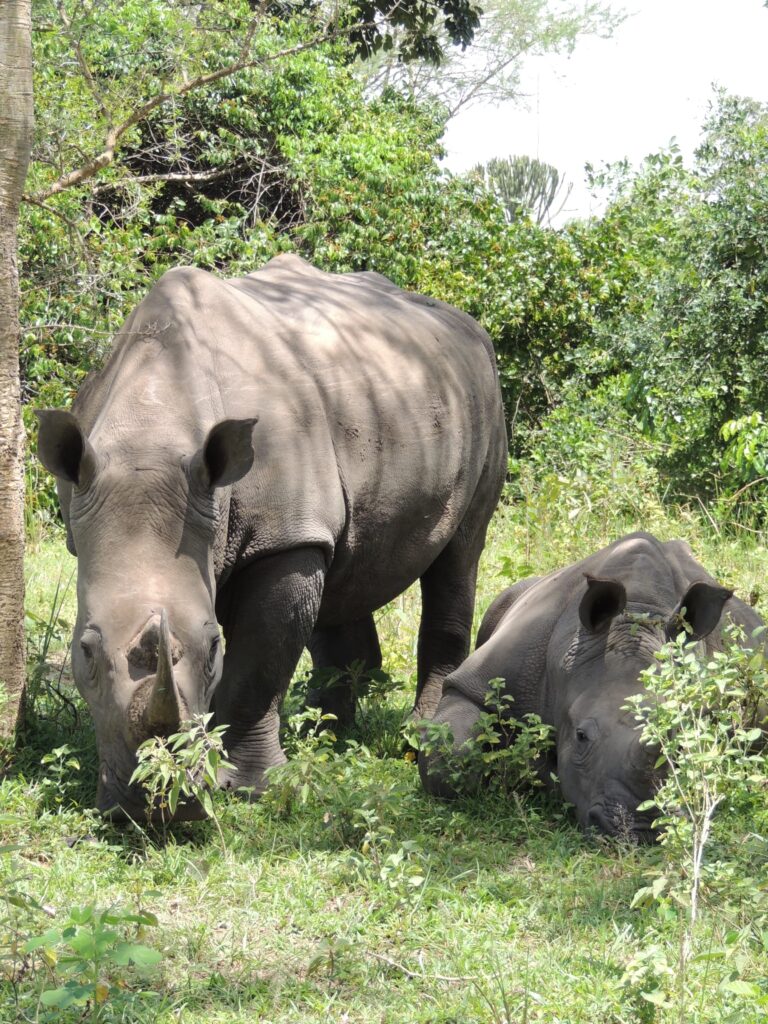
Where papyrus wetlands merge into sprawling savanna, Uganda's central landscape opens into one of East Africa's most vital rhino recovery zones. Ziwa Rhino and Wildlife Ranch…
VIEW WILDLIFE SANCTUARYEtosha National Park
Namibia
+356 birds+58 mammals
Across northern Namibia's stark semi-arid plateau, a vast shallow depression transforms seasonally into one of Africa's most dramatic wildlife theaters. Etosha National Park, encompassing more than…
VIEW NATIONAL PARKWaterberg Plateau National Park
Okambukonde, Namibia
+198 birds+27 mammals
Where ancient sandstone cliffs rise 200 metres above the surrounding bushveld, a fortress of geology creates one of southern Africa's most compelling ecosystems. The plateau's steep…
VIEW NATIONAL PARKNairobi National Park
Nairobi, Kenya
+515 birds+35 mammals
Just minutes from Kenya's capital, where the Nairobi River winds through acacia woodland and open grassland, lies one of Africa's most paradoxical wildlife sanctuaries. The park's…
VIEW NATIONAL PARKLake Nakuru National Park
Nakuru West, Kenya
+494 birds+32 mammals
Alkaline waters ringed by acacia woodland and grassland create one of East Africa's most distinctive wetland ecosystems, where the interplay of geology and climate sustains a…
VIEW NATIONAL PARKAberdare National Park
Mweiga ward, Kenya
+394 birds+30 mammals
Where the central highlands of Kenya rise to their elemental grandeur, the Aberdare range unfolds across Nyeri County as a montane stronghold of cool, misty forest…
VIEW NATIONAL PARKMeru National Park
Igembe Central, Kenya
+408 birds+38 mammals
Granite outcrops and acacia woodland rise across the northern reaches of Meru, where semi-arid savanna transitions into drier scrubland under the fierce equatorial sun. The park's…
VIEW NATIONAL PARKRuma National Park
Suba, Kenya
+250 birds+8 mammals
Where the Winam Gulf narrows toward the Kenyan mainland, Ruma National Park rises as a sanctuary of evergreen woodland set within the humid tropics of Homa…
VIEW NATIONAL PARK