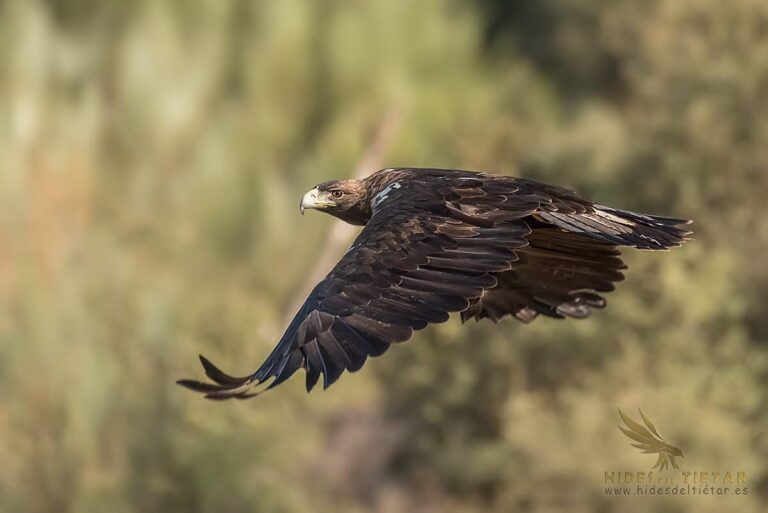
Spanish Imperial Eagle hide
Hides del Tiétar·Buenaventura·Spain
Spanish Imperial Eagle · Cinereous Vulture+12
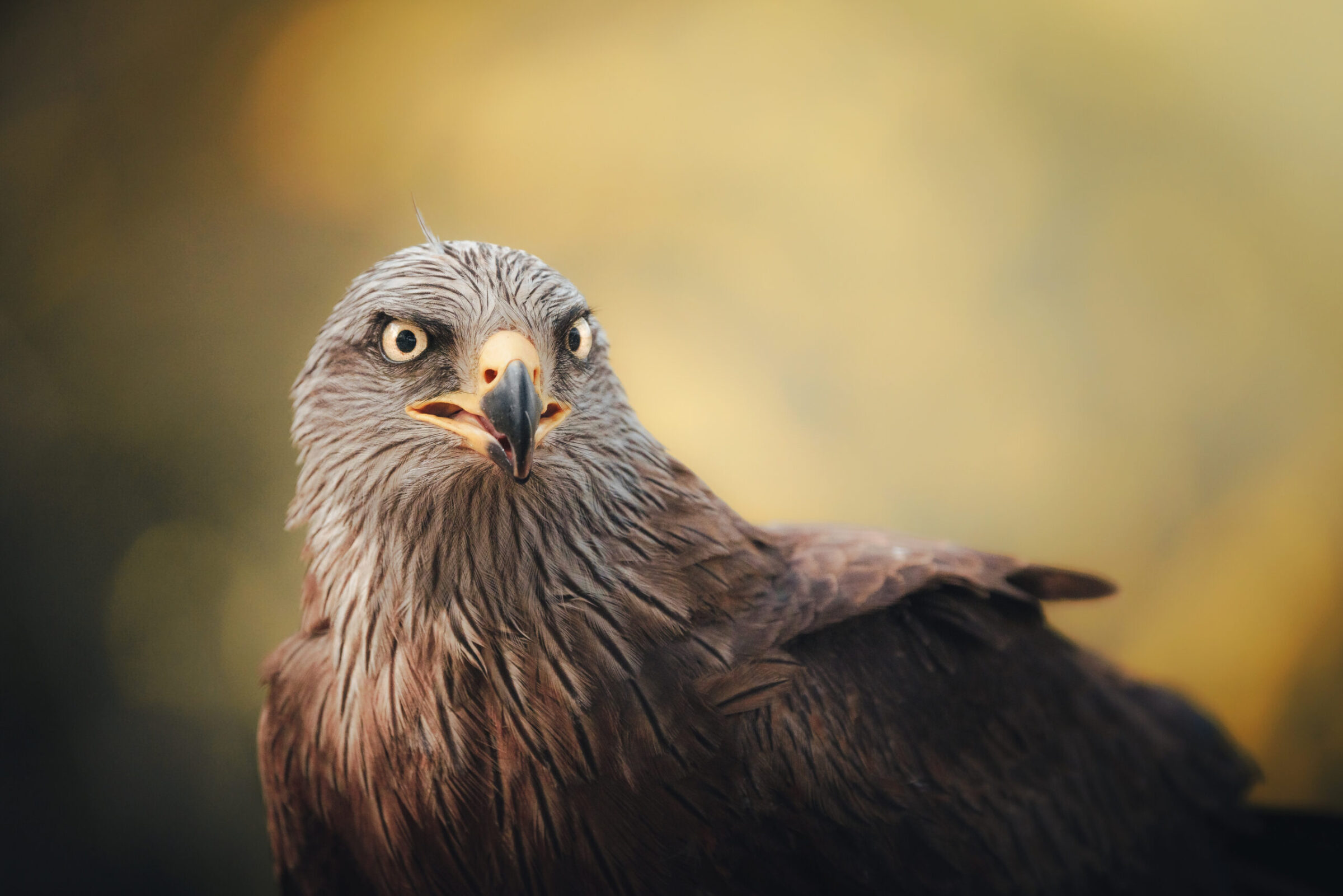
The black kite is a medium-sized bird of prey with distinctive features that make it relatively easy to identify in flight. Its angled wings and characteristic forked tail are the most recognizable marks. The plumage is generally dark brown, with a paler head and neck; the patch behind the eye appears noticeably darker. The outer flight feathers are black with dark cross-bars and mottled bases, while the lower body is pale brown, becoming lighter towards the chin. Body feathers have dark shafts, creating a streaked appearance overall.
Black kites can be distinguished from red kites by their slightly smaller size, less forked tail, and generally dark plumage without any rufous coloring. They weigh approximately 735 grams on average, with a wingspan around 150 centimeters. Both sexes have similar plumage, though females are slightly larger than males. The bird has yellow legs and cere (the area around the eye), a black bill, and black claws. A distinctive shrill whistle followed by a rapid whinnying call makes them vociferous and easy to locate by ear.
The black kite is thought to be the world's most abundant species of Accipitridae, with a global population estimated up to 6.7 million individuals. It is widely distributed through temperate and tropical parts of Eurasia and parts of Australasia and Oceania. Five subspecies are recognized, with different populations showing varying migratory patterns. Temperate populations tend to be migratory, while tropical populations are typically resident.
The European populations are small, but the South Asian population is comparatively very large. The small Indian kite subspecies (M. m. govinda) is found throughout the Indian subcontinent and Southeast Asia and can frequently be seen circling and soaring in urban areas. The fork-tailed kite (M. m. affinis) inhabits northeastern and eastern Australia. Some populations have experienced dramatic declines or fluctuations, though the species remains widespread across its range.
Unlike many other birds of prey, black kites are opportunistic hunters and more likely to scavenge than hunt live prey. They spend much of their time gliding in thermals, soaring effortlessly while searching for food. This energy-efficient hunting strategy allows them to cover vast areas while conserving energy, making them a common sight in suitable habitats throughout their range.
The black kite is highly vocal, with a distinctive shrill whinnying call that makes it easy to locate even when obscured by heat haze or distance. They are particularly conspicuous in urban and semi-urban areas across their range, where they take advantage of food waste and other opportunities provided by human settlements.
The best time and place to observe black kites depends on which subspecies and population you wish to see. In South Asia, the small Indian kite (M. m. govinda) is resident year-round and easily observed circling and soaring in urban areas throughout the Indian subcontinent and into Indochina and the Malay Peninsula. In temperate regions of Europe and central Asia, migratory populations can be encountered during spring and autumn migration periods, with birds moving to tropical regions in winter. In Australia, the fork-tailed kite (M. m. affinis) is resident in northeastern and eastern regions.
Black kites are most visible during daylight hours when they are actively soaring on thermals. Early morning and late afternoon often provide the best viewing opportunities, when thermal activity is strongest and the birds are most active. Urban and semi-urban settings, particularly near water sources or waste disposal areas, are reliable locations to find them.
The black kite's distinctive silhouette in flight—characterized by its angled wings and forked tail—makes it an excellent subject for flight photography. Photograph them soaring on thermals during clear, sunny days when they are most active. Their habit of spending extended periods gliding provides ample opportunity for obtaining sharp images, though a telephoto lens will be necessary to capture good detail from a distance.
Pay attention to lighting conditions that emphasize the contrast between the dark outer flight feathers and the paler body plumage. The distinctive head markings, particularly the dark patch behind the eye, are best captured when the bird is photographed from the side. In urban settings where birds are less wary, closer approach is often possible, allowing for more detailed portraits showing the yellow cere and legs, and black bill and claws.
Nothing matches these filters.
Nothing matches these filters.
Nothing matches these filters.
We'd love to hear from you. We'll reply as soon as possible.
Found an error? Have a suggestion? We read every message.
A compact view of how this species lives, moves and responds to its environment.
Select a card to explore the details.
Please confirm the photo rights and credit terms first.
I'm the author of this photo or hold the rights to it, and I keep full ownership. I grant Wild Atlas Guide a free, non-exclusive licence to display it on the site and in Wild Atlas Guide's own channels, including social media, always credited to me by my display name or the Instagram handle I choose to provide. I confirm it does not reveal a sensitive wildlife location or a recognisable person without their permission. I can withdraw future social use for this photo or ask for it to be removed at any time.
Please accept the photo rights and credit terms to continue.
Uploading…
We use cookies to measure traffic and improve Wild Atlas Guide. You decide. Privacy policy