Identification
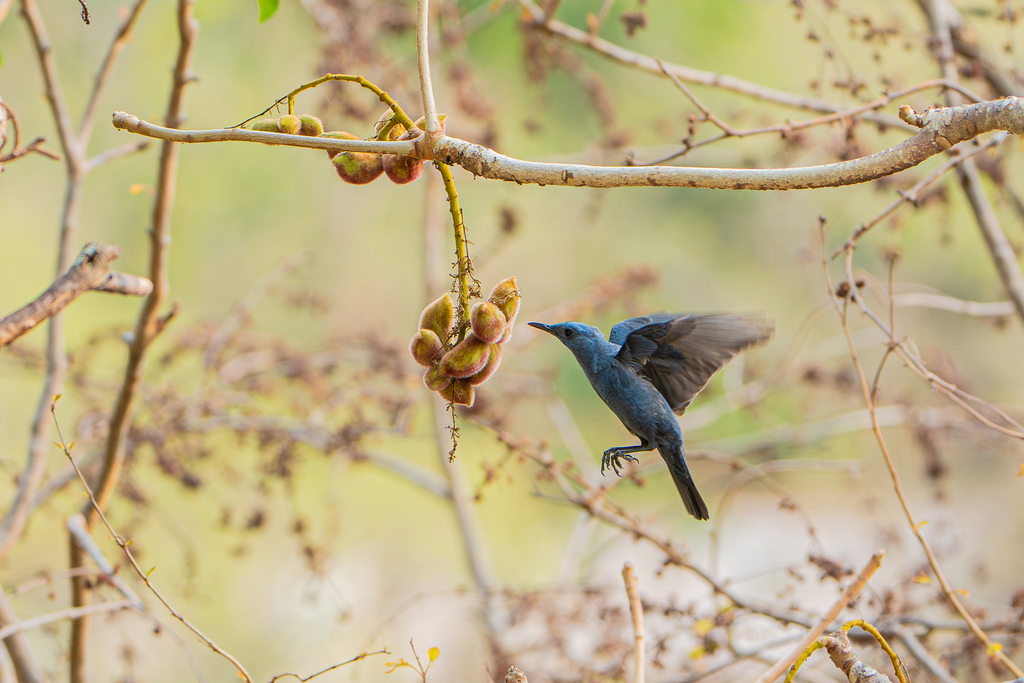
The blue rock thrush is a starling-sized bird, 21–23 cm in length, with a distinctive long, slim bill. The breeding male of the nominate subspecies is unmistakable: entirely blue-grey plumage except for darker wings. Females and immatures are far less striking, showing dark brown upperparts with paler brown, scaly underparts. The male of the eastern subspecies M. s. philippensis displays rufous-chestnut plumage from the mid-breast down to the undertail coverts. Unlike the closely related common rock thrush, the blue rock thrush lacks reddish outer tail feathers.
The male's clear, melodious song is louder and richer than that of its rock thrush relatives, incorporating whistles, trills, and burry notes. European and Asian populations both employ short and long song variants with similar structure, though the long song is more frequent in Asian birds.
Range & Habitat
The blue rock thrush breeds across southern Europe, northwest Africa, and from Central Asia to northern China and Malaysia. European, North African, and Southeast Asian populations are largely resident, though some undergo altitudinal movements. Asian populations outside these ranges are more migratory, wintering in sub-Saharan Africa, India, and Southeast Asia. The species is a very uncommon visitor to northern and western Europe.
This bird shows a strong preference for rocky cliffs and exposed rock faces. Breeding density can reach approximately 8 pairs per square kilometre, with individual territories averaging around 2.87 hectares. Habitat structure—particularly the availability of rocky terrain—is crucial to the species' presence.
Behaviour & Diet
The blue rock thrush is a solitary species, as its scientific name suggests. Males are highly vocal during breeding season, singing from prominent perches on rock faces. The species typically lives 5–10 years in the wild. Asian populations show clear migratory behaviour, arriving in spring and departing in autumn.
Like other Old World flycatchers, this species forages for invertebrates, though specific dietary details are limited in available sources. Their preference for vertical rock faces suggests they hunt among cliff crevices and rocky outcrops.
Best Time & Places to See It
In Europe and North Africa, the blue rock thrush is resident year-round, making it viewable throughout the year in suitable habitat. Spring and early summer offer the best birdwatching opportunities, as males sing actively from exposed rock perches during breeding season. The species is the official national bird of Malta, making it a priority for birders visiting that country.
For Asian populations, timing is critical: spring arrival and before autumn departure offer the best chances. Rocky cliffs with exposed faces are essential habitat. South Korean locations such as Hongdo Island have hosted migratory populations, with birds arriving in spring.
Photography Tips
The blue rock thrush's preference for rocky cliffs and exposed faces makes photography challenging but rewarding. The bright blue plumage of breeding males is striking against grey stone, so shoot during golden hour to maximize colour separation. Patience is essential: males return to favoured singing perches, allowing photographers to position themselves accordingly.
For females and immatures, darker brown plumage requires careful exposure metering to avoid underexposure. The bird's long, slim bill is a key identifying feature worth capturing in close-up portraits. In Asian subspecies, the contrasting rufous-chestnut underparts of males offer excellent compositional opportunities against rocky backgrounds.