Identification
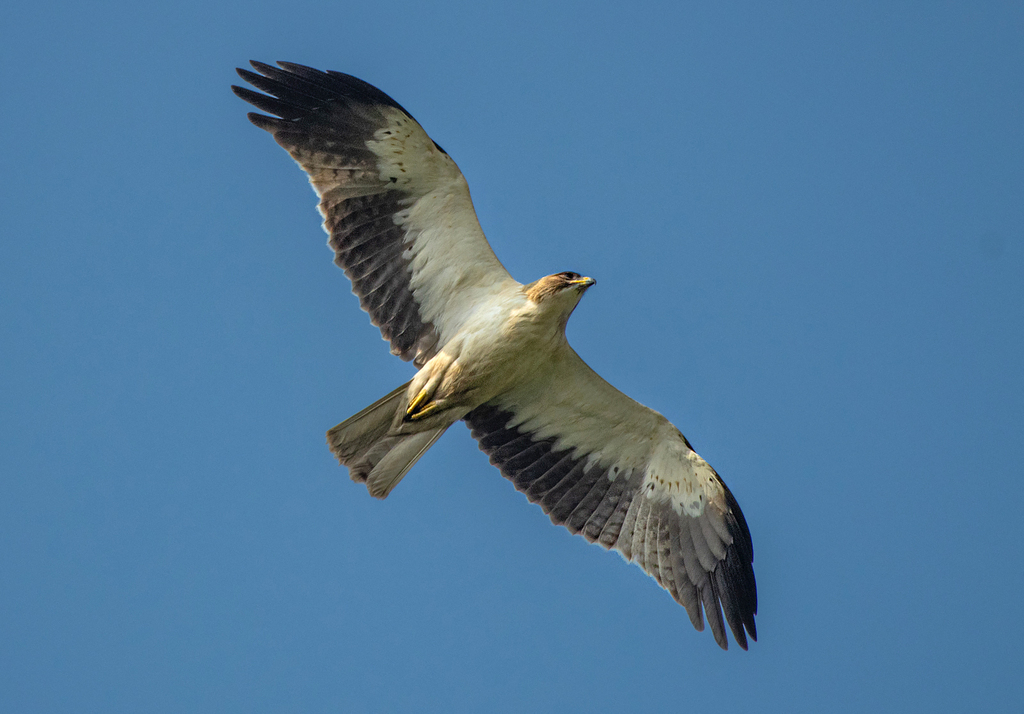
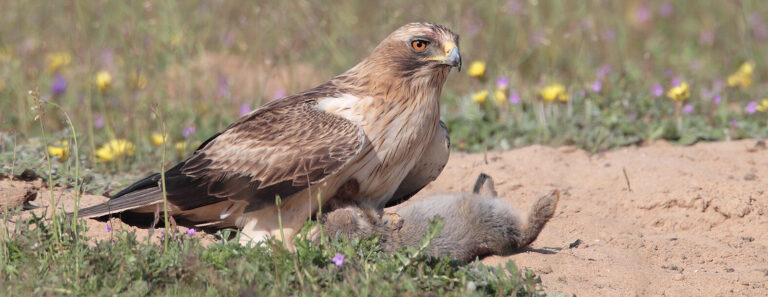
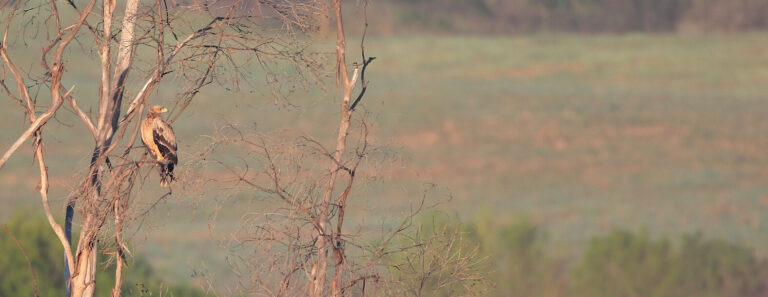
The booted eagle is a small eagle, measuring 40 cm in length with a wingspan of 110–132 cm. Males weigh approximately 510–770 g, while females are noticeably heavier at 840–1,025 g. The species displays two relatively distinct plumage forms that follow a Mendelian inheritance pattern, with the paler allele being dominant. Pale individuals are mainly light grey with a darker head and darker flight feathers, while the dark morph exhibits mid-brown plumage with dark grey flight feathers. The dark colour morph represents about 20% of the population in South Africa but is much more common in eastern populations such as Russia. Booted eagles are typically seen in pairs or as solitary individuals and produce a shrill kli-kli-kli call.
Range & Habitat
The booted eagle has breeding populations across both the northern and southern hemispheres, including southern Europe, North Africa, and across Asia, as well as in western South Africa and Namibia. Northern populations are migratory, spending November to February in Sub-Saharan Africa and South Asia, while the small southern African populations are sedentary. The species favours wooded, often hilly countryside with some open areas, breeding in rocky, broken terrain. Migrants will use almost any habitat except dense forest, with Palearctic populations typically nesting in coniferous or deciduous woodlands and often in trees.
In South Africa, booted eagles are most common in the low stature shrublands of the Fynbos and Karoo, particularly in the ecotone between these two biomes. Unlike their Northern Hemisphere counterparts, southern African birds typically breed strictly on rocky cliffs in ravines and gorges, though evidence of tree nesting in species such as Euphorbias has been documented.
Behaviour & Diet
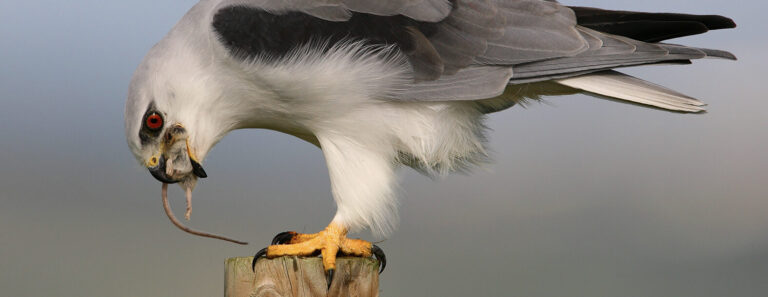
The booted eagle typically flies at relatively low heights, making it conspicuous in its habitat. It hunts on the wing, stooping quickly with wings folded in and feet extended to catch its prey. The species hunts small mammals, reptiles, and birds; in Southern Africa, birds are the most common prey, with studies from south-western South Africa showing they consume birds, lizards, and rodents.
This eagle breeds by laying 1–2 eggs in a nest built from sticks and lined with green leaves, either in a tree or on a crag, or by taking over the disused nest of another large bird such as a black kite or grey heron. The female incubates the egg for around 45 days and is fed by the male. After hatching, she guards the nest and young while the male provides all the food. The chick fledges after 70–75 days.
Best Time & Places to See It
For observers in the northern range, booted eagles are present during the breeding season, with migrants arriving in their wintering grounds in Sub-Saharan Africa and South Asia from November to February. In south-western South Africa, the resident breeding population arrives in early August, with eggs laid in September and birds departing in March. The species is most easily observed in open, hilly terrain and in the transition zones between different habitat types, particularly in the Fynbos and Karoo regions of South Africa and in the low stature shrublands of Namibia.
Photography Tips
The booted eagle's relatively low flight height makes it conspicuous and accessible for photography compared to many other raptors. Photographers should be aware of the two plumage morphs, as the dark morph can potentially be confused with other local medium-sized birds of prey. Look for the distinctive silhouette during soaring and hunting flights, particularly over open, hilly countryside. The contrast between the pale and dark morphs provides excellent opportunities for studying individual variation within the species, and patient observation in suitable habitat during breeding season or migration periods will reward photographers with excellent flight and hunting sequence photographs.