Common Blackbird
Turdus merula
Photo © Codrin Bucur
Photo © Codrin Bucur — CC BY 4.0 — Source: iNaturalist photo #186757278ABOUT
Subspecies of Common Blackbird
Western European BlackbirdCanarian BlackbirdAzores BlackbirdSoutheastern European BlackbirdNorthwestern african blackbirdLevant blackbirdEurasian Blackbird (Central Asian)
Identification
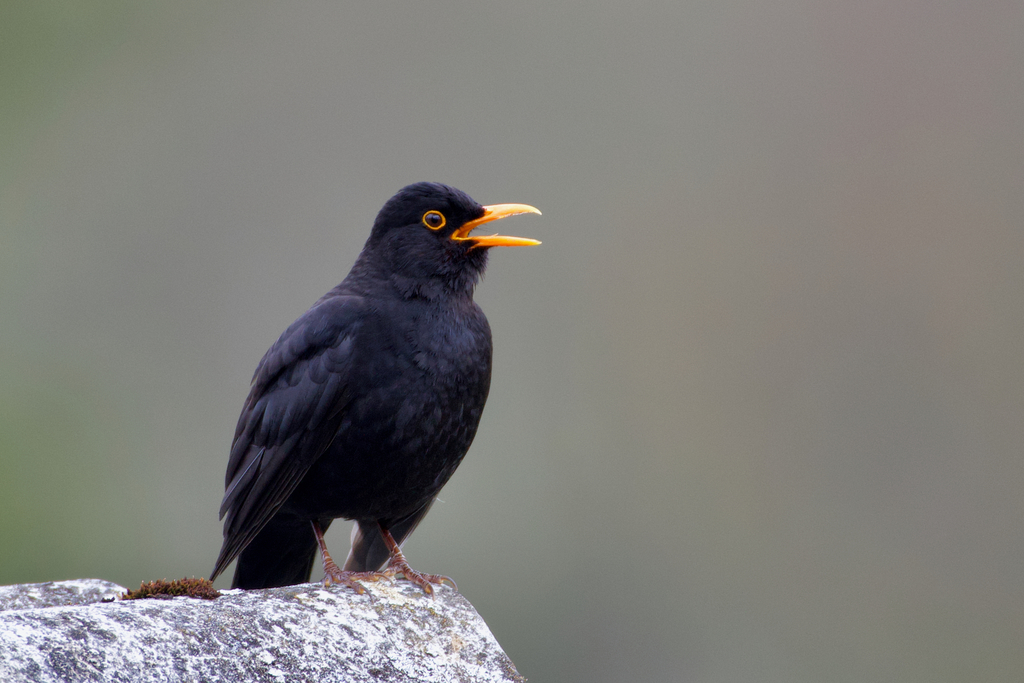
The common blackbird is instantly recognizable, particularly the adult male of the nominate subspecies found throughout most of Europe. Males are entirely black except for a striking yellow eye-ring and bright yellow bill, creating a bold contrast that makes them unmistakable in the field. Adult females and juveniles are more subtly plumaged, displaying mainly dark brown coloration. The species is a member of the true thrush family, characterized by a rounded head, longish pointed wings, and—most distinctively—a rich, melodious song that makes the bird as memorable to the ear as it is to the eye.
Range & Habitat
The common blackbird breeds across a vast range spanning Europe, western Asia, and North Africa, from Iceland and the British Isles east to the Ural Mountains and north to around 70°N, where it becomes fairly scarce. The species has also been introduced to Australia and New Zealand. Several geographical subspecies are recognized across this range, with subtle variations in plumage darkness and size. Depending on latitude, individual populations may be resident year-round, partially migratory, or fully migratory, with northern birds wintering throughout Europe, around the Mediterranean, and in North Africa.
The blackbird favors woods and gardens as breeding habitat, where it constructs distinctive neat, cup-shaped nests bound together with mud.
Behaviour & Diet
Both male and female blackbirds are strongly territorial during the breeding season and employ distinctive threat displays to defend their territories. In contrast, they become notably more gregarious during migration and in wintering areas. Pairs that establish territories in sufficiently temperate climates often remain in their territory throughout the year, maintaining their bonds across seasons.
The blackbird is omnivorous, with a diverse diet reflecting its adaptability. It forages for a wide range of insects and earthworms, supplementing these protein sources with berries and fruits, particularly during autumn and winter months. This dietary flexibility contributes to the species' success across its extensive range.
Best Time & Places to See It
As a common and conspicuous species, the blackbird is readily encountered throughout its range in appropriate habitats. Breeding birds are present in woods and gardens during spring and summer, making this the best season to observe territorial males singing from prominent perches. During migration periods and in wintering areas, the species becomes more gregarious and easier to locate in groups. The species' abundance and visibility have made it a subject of numerous literary and cultural references, particularly relating to its celebrated song.
Photography Tips
The male's striking all-black plumage with yellow facial markings and bill offers excellent contrast for photography, particularly in good light. Position yourself to capture the characteristic bright yellow eye-ring and bill, which are key identification features. Early morning is ideal for capturing males in song, perched on exposed branches. Females and juveniles require more patience due to their darker, less contrasting plumage, but present rewarding photographic opportunities in dappled woodland light. The species' confident, conspicuous behavior makes it relatively approachable compared to many woodland birds.
HIDES
Sort by
50 €/ person
Book now
75 €/ personfrom 65 €
Book now
80 €/ person
Book now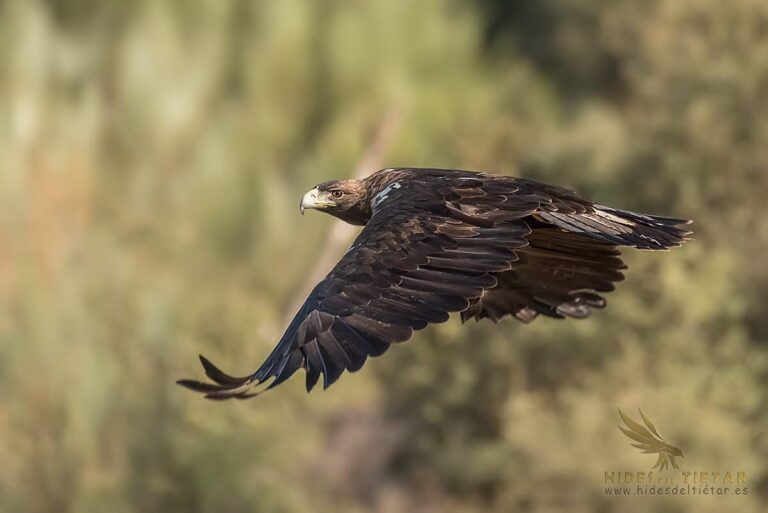
Spanish Imperial Eagle hide
Hides del Tiétar·Buenaventura·Spain
Spanish Imperial Eagle · Cinereous Vulture+12
2 max.
135 €/ personfrom 120 €
Book nowNothing matches these filters.
HOTSPOTS
Country
Type
Sort by
National Park
Abel Tasman National Park
New Zealand
+96 birds+9 mammals
National Park
Abruzzo, Lazio and Molise National Park
Pescasseroli·Italy
+139 birds+18 mammals
National Park
Aggtelek National Park
Szin·Hungary
+119 birds+13 mammals
Natural Park
Alpilles Regional Nature Park
Saint-Rémy-de-Provence·France
+219 birds+37 mammals
National Park
Alta Murgia National Park
Bari·Italy
+168 birds+6 mammals
National Park
Aoraki / Mount Cook National Park
New Zealand
+59 birds+6 mammals
National Park
Appennino Lucano Val d’Agri Lagonegrese National Park
Spinoso·Italy
+121 birds+3 mammals
National Park
Appennino Tosco-Emiliano National Park
Ventasso·Italy
+86 birds+8 mammals
National Park
Arthur’s Pass National Park
Canterbury·New Zealand
+73 birds+7 mammals
Nothing matches these filters.
COMMUNITY
Share your photo of this species
Sort by
No community photos yet. Log in to add the first one.
0
Observed by
0
Hotspots reported
0
Countries
No community observations of this species yet.