Identification
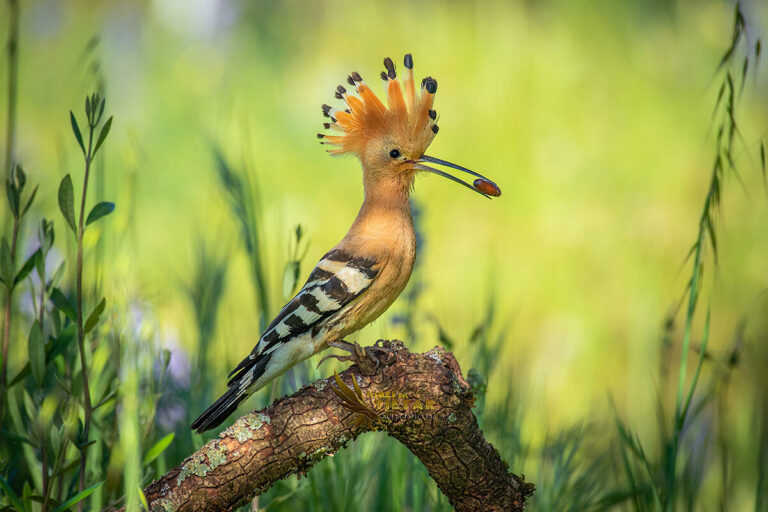
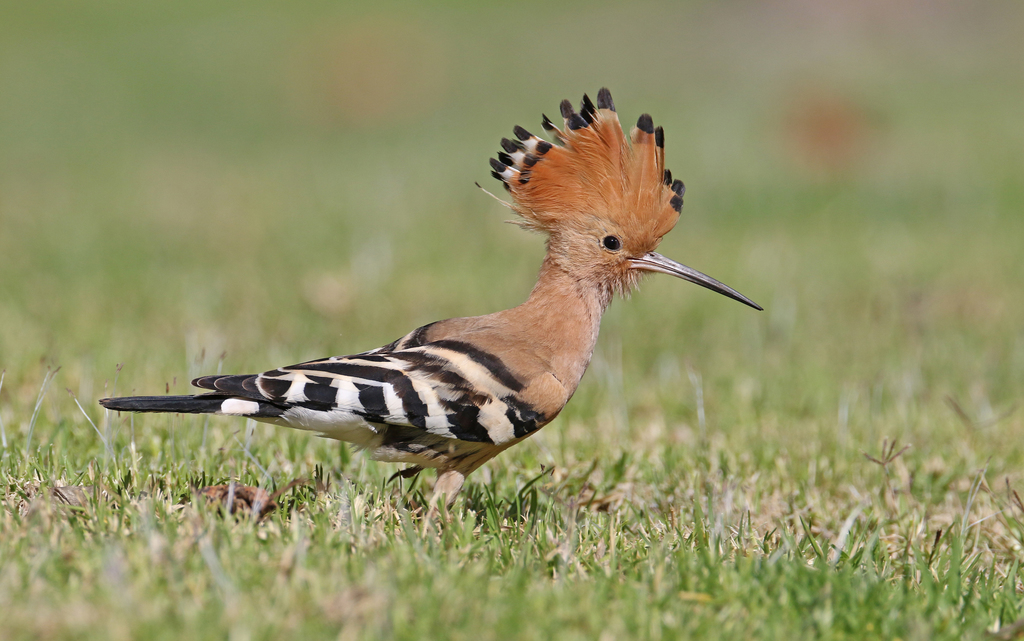
The Common Hoopoe is one of the most distinctive birds you'll encounter in the field. A medium-sized bird measuring 25–32 cm in length, it is unmistakable with its striking cinnamon-coloured plumage contrasted by bold black and white wings and a broad white band across the black tail. Its most characteristic feature is a tall, erectile crest that rises prominently from the crown. The long, narrow, downcurved bill is black with a fawn base and perfectly adapted for probing into soil. In flight, the hoopoe displays a characteristic undulating pattern, like a giant butterfly, caused by the wings half-closing at the end of each beat.
The species is highly vocal, producing its distinctive soft, trisyllabic "oop-oop-oop" call, which likely inspired both its English and scientific names. When alarmed, birds utter rasping croaks and hisses, while females produce wheezy notes during courtship feeding.
Range & Habitat
The Common Hoopoe is widespread across Europe, Asia, and North Africa, with populations extending into northern Sub-Saharan Africa. Northern and European populations are migratory, typically wintering in the Sahel belt of sub-Saharan Africa, while African populations remain sedentary year-round. These birds are primarily nocturnal migrants. In recent years, records have expanded northward, with notable increases in sightings across northern Europe and Ireland, particularly during warm, dry summers.
Hoopoes require two key habitat features: bare or lightly vegetated ground for foraging and vertical surfaces with cavities for nesting. This flexibility allows them to thrive in diverse ecosystems including heathland, wooded steppes, savannas, grasslands, and forest glades. They have even been recorded at high altitudes during Himalayan migrations, reaching approximately 6,400 metres.
Behaviour & Diet
The Common Hoopoe is a solitary forager that typically feeds on the ground by striding across open terrain and periodically pausing to probe deeply with its full bill length. Its diet consists primarily of insects, with a preferred prey size of 20–30 mm, including crickets, locusts, beetles, earwigs, cicadas, and ants. The bird's powerful head musculature allows it to extract insect larvae and pupae from soil, and it will also probe leaf piles, lever stones, and flake bark in search of food. Occasionally, hoopoes pursue swarming insects in flight, utilising their strong, rounded wings for manoeuvrability. Small reptiles, frogs, seeds, and berries supplement the diet.
A distinctive behaviour is the hoopoe's sunbathing posture, in which it spreads its wings and tail low against the ground while tilting its head upward. The bird frequently takes dust and sand baths to maintain its plumage.
Best Time & Places to See It
The best opportunities to see Common Hoopoes depend on your location. In Europe and northern Asia, spring and summer are optimal, as migratory populations return to breeding grounds during warm, dry seasons that provide abundant grasshoppers and other insects. African regions offer year-round viewing of sedentary populations. Recent records suggest that Ireland, particularly the southwest, and other northern European locations have seen increased sightings, especially during favourable climatic conditions.
Look for hoopoes in open or lightly vegetated habitats such as grasslands, heathland, and savanna-like terrain where they can forage effectively. Early morning or late afternoon often provides the best viewing conditions, as these are active foraging periods.
Photography Tips
The hoopoe's distinctive plumage and postures offer excellent photographic opportunities. The bird's characteristic undulating flight and low, butterfly-like wingbeats are worth capturing, as is the erected crest when the bird is alert or perched. The striking contrast between cinnamon underparts and black-and-white wings photographs beautifully in good light.
Focus on ground-level shots when the hoopoe is foraging, as this is where it spends much of its time probing and searching for insects. The sunbathing posture—wings spread low, head tilted upward—is a memorable and photogenic behaviour. A telephoto lens will help you maintain distance while capturing fine detail of the plumage and the long, curved bill. Patience is rewarded, as hoopoes are relatively approachable when absorbed in feeding.