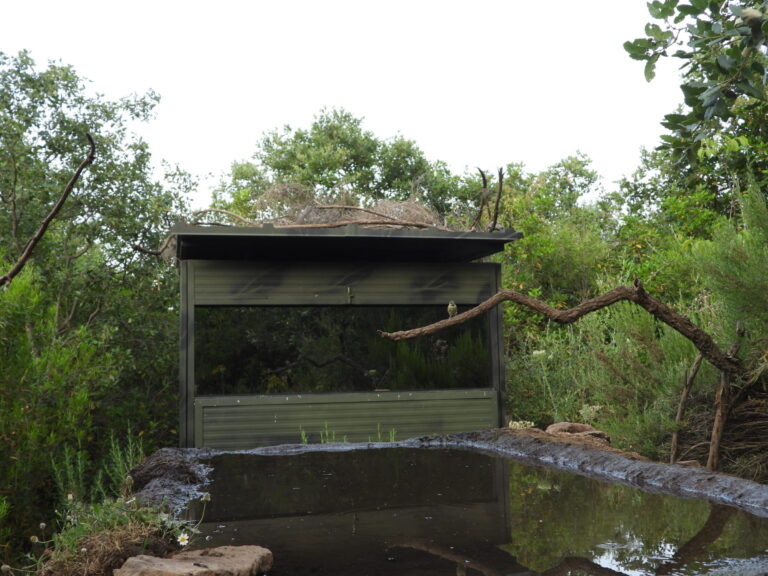
Hide el Venero de los Rabilargos
Great Spotted Woodpecker · Iberian Magpie+33
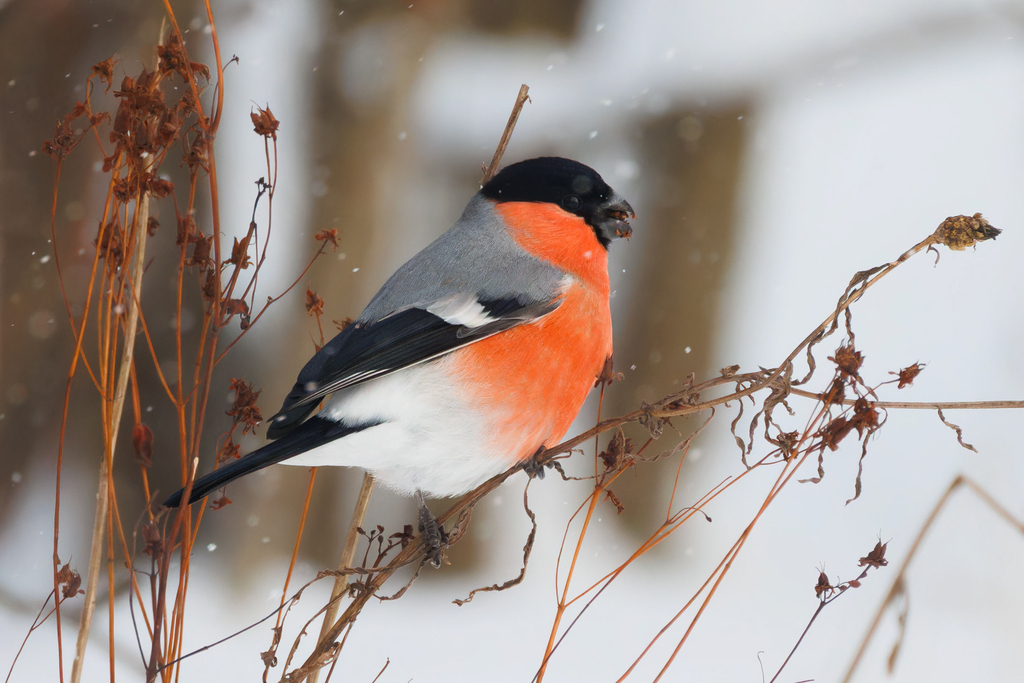
The Eurasian bullfinch is a compact, bull-headed finch with distinctive plumage that makes it unmistakable in the field. Its upper parts are grey, with a black cap and face in adults (greyish-brown in juveniles), striking white rump and wing bars, and characteristically short, thick black bill. The most striking feature is sexual dimorphism: adult males display a rich red chest and underparts, while females and young birds have grey-buff feathers instead. This plumage difference is retained year-round, as males do not adopt duller autumn plumage like some other finches.
The Eurasian bullfinch breeds across Europe and temperate Asia, with ten recognized subspecies distributed from the British Isles to Siberia, the Far East, and Japan. It is primarily resident throughout its range, though northern populations migrate further south during winter months. Ten subspecies are recognized, ranging from P. p. pileata in the British Isles to P. p. rosacea in Sakhalin and other populations across Siberia and into East Asia.
This species favors mixed woodland with coniferous elements for breeding, including parkland and gardens. It shows a preference for mature stands of scrub and tall bushes or trees, particularly for nesting sites that exceed four metres in height and width.
Outside the breeding season, the Eurasian bullfinch is notably unobtrusive and does not form large flocks, typically appearing as solitary pairs or family groups. The bird's vocalizations include a song containing fluted whistles often described as "mournful," though it is only audible at close range—a weak, scratchy warble alternating with soft whistles. Its usual call is a quiet, low, melancholy whistled "peeu" or "pew." Remarkably, tamed bullfinches can be taught to repeat specific melodies.
The bullfinch's diet consists mainly of seeds and buds from fruit trees, supplemented by ash and hawthorn seeds in autumn and early winter. Adults feed chicks with invertebrates. This seed-eating habit has historically made the species a pest in orchards, leading to widespread bounty programs across England for centuries. Modern populations favor kale, quinoa, and millet where wild bird cover is planted near tall hedges or woodland.
Breeding occurs from early May through mid-July, with birds producing two or three broods per season. Nesting success increases progressively from spring through summer and into August. Winter months offer opportunities to observe migratory northern populations as they move south. Mixed woodlands, parkland, and gardens throughout Europe and temperate Asia provide the best viewing habitat, with particular attention to areas with mature scrub and tall hedgerows.
The bullfinch's striking plumage and sexual dimorphism make it a rewarding photographic subject. The contrast between males' rich red underparts and black-and-white markings is particularly striking. Early morning light in woodlands and gardens will best illuminate the white rump and wing bars visible in flight. Exercise patience when photographing, as this is an unobtrusive species; approaching quietly near tall bushes and hedgerows increases chances of close encounters. The bird's relatively small flock size means it is typically encountered in pairs or small family groups rather than larger gatherings, allowing for intimate portrait opportunities.
Nothing matches these filters.
Nothing matches these filters.
Nothing matches these filters.
We'd love to hear from you. We'll reply as soon as possible.
Found an error? Have a suggestion? We read every message.
A compact view of how this species lives, moves and responds to its environment.
Select a card to explore the details.
Please confirm the photo rights and credit terms first.
I'm the author of this photo or hold the rights to it, and I keep full ownership. I grant Wild Atlas Guide a free, non-exclusive licence to display it on the site and in Wild Atlas Guide's own channels, including social media, always credited to me by my display name or the Instagram handle I choose to provide. I confirm it does not reveal a sensitive wildlife location or a recognisable person without their permission. I can withdraw future social use for this photo or ask for it to be removed at any time.
Please accept the photo rights and credit terms to continue.
Uploading…
We use cookies to measure traffic and improve Wild Atlas Guide. You decide. Privacy policy