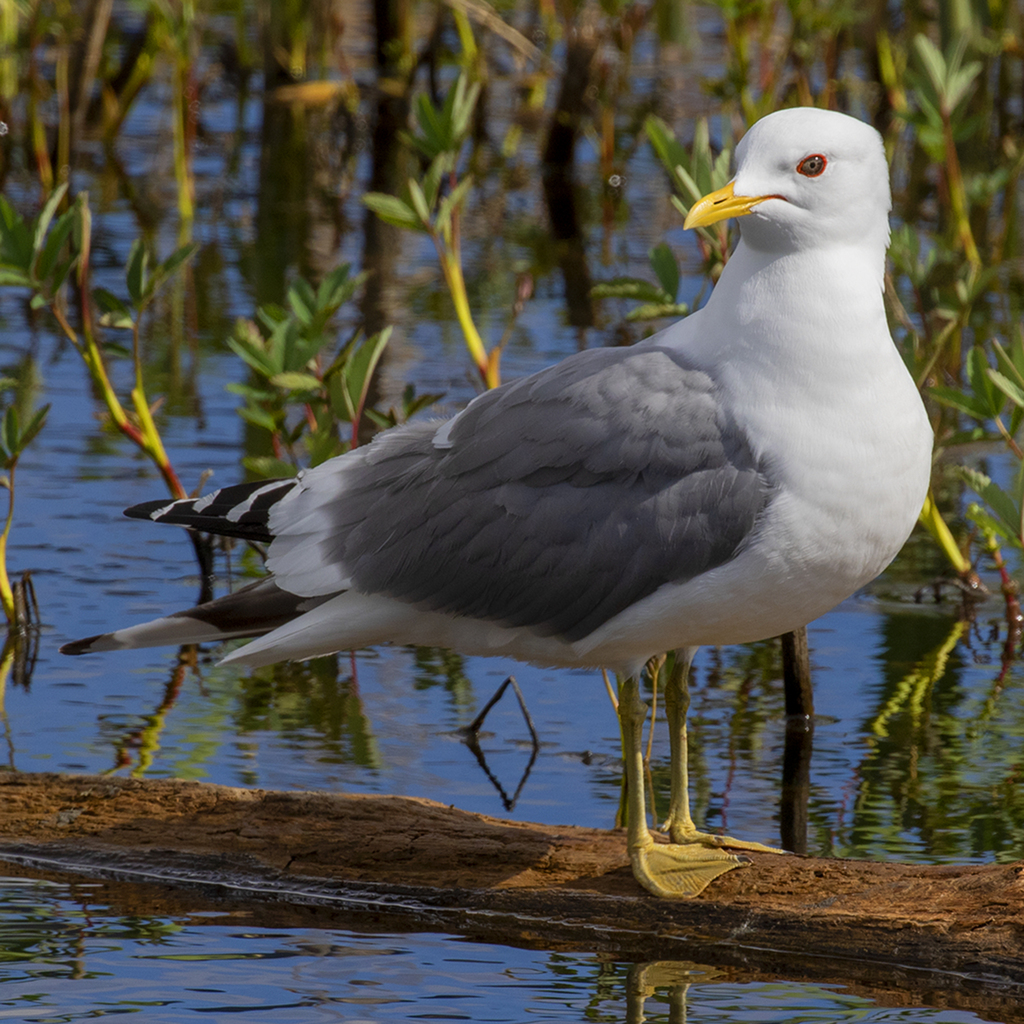
Gaviota de Alaska
Photo © Dan Vickers
Photo © Dan Vickers — CC BY 4.0 — Source: iNaturalist #256103376Identificación
La gaviota piquicorta es una gaviota pequeña que mide 40–45 cm de largo con una envergadura de 100–120 cm. Su rasgo más distintivo es su pico relativamente corto y sus alas notablemente largas y estrechas, que le confieren una apariencia elegante y aerodinámica en vuelo comparada con otras gaviotas. Los adultos en plumaje nupcial exhiben la cabeza blanca y limpia, ojos pálidos rodeados de piel orbital roja, y patas y pico amarillo brillante sin ninguna marca oscura. En plumaje invernal, aparecen manchas pardas en la cabeza, la piel orbital se vuelve grisácea, y el pico se opaca con una marca oscura tenue.
En vuelo, busca puntos blancos conspicuos o "espejos" en las dos plumas primarias más externas. Entre las primarias internas, las "puntas de lengua" blancas crean un patrón distintivo de "sarta de perlas" que conduce a un borde posterior blanco y ancho. Estas marcas de campo la distinguen de la gaviota común, que tiene un pico más grande, alas más cortas, puntas alares negras más extensas y típicamente carece de las prominentes puntas de lengua blancas. Los ejemplares jóvenes tardan tres años en adquirir el plumaje nupcial completo, pasando por diversas etapas intermedias con tonos parduzcos y adquiriendo gradualmente el plumaje blanco de la cabeza y el cuerpo.
Distribución y Hábitat
La gaviota piquicorta se reproduce en colonias a lo largo de áreas costeras y humedales continentales, con su distribución concentrada en Alaska y el noroeste de Canadá. Durante el invierno, la mayoría de los individuos migran hacia el sur a lo largo de la costa del Pacífico, alcanzando el Valle de Sacramento y ocasionalmente llegando tan lejos como Baja California, las Montañas Rocosas del Norte y Ontario. La especie es una visitante muy rara en el este de América del Norte y solo ocasionalmente llega al este de Asia como ave vagabunda.
Esta gaviota prefiere hábitats de humedales tanto costeros como continentales durante la temporada de reproducción, mostrando flexibilidad en la selección de hábitat. Aunque los avistamientos en Europa siguen siendo rarísimos, la especie ocasionalmente aparece lejos de su distribución normal.
Comportamiento y Alimentación
Las gaviotas piquicortas son reproductoras coloniales, reuniéndose en grupos a lo largo de las costas y humedales del noroeste de América del Norte. La especie es migratoria, con rangos de reproducción e invernada claramente diferenciados. Sus alas largas y su estructura aerodinámica sugieren un vuelo activo y ágil en comparación con especies de gaviotas más robustas, permitiéndoles forrajear efectivamente en sus hábitats variados. Como otras gaviotas, son alimentadoras oportunistas, aunque los detalles dietéticos específicos permanecen menos documentados que en especies de gaviotas más grandes.
Mejor Época y Lugares para Observarla
Para observar gaviotas piquicortas, visita Alaska y el noroeste de Canadá durante la temporada de reproducción cuando los individuos se reúnen en colonias costeras e interiores. El avistamiento invernal a lo largo de la costa del Pacífico desde la Columbia Británica hacia el sur hasta California ofrece las mejores oportunidades, particularmente alrededor del Valle de Sacramento donde las poblaciones se concentran. Los puertos, bahías y humedales de la costa del Pacífico son ubicaciones confiables durante estos meses.
Consejos de Fotografía
Fotografía adultos en plumaje nupcial para capturar el contraste llamativo del plumaje blanco, la piel orbital roja y el pico y patas amarillo brillante. En vuelo, enfócate en capturar los espejos blancos en las primarias externas y el patrón distintivo de "sarta de perlas" en las primarias internas—estas marcas de campo diagnósticas hacen excelentes sujetos fotográficos. Las alas proporcionalmente más largas y el pico más corto de la especie comparados con gaviotas comunes fotografían distintivamente; captura comparaciones lado a lado si es posible. Los individuos invernales con cabezas moteadas y picos opacos ofrecen un interés fotográfico diferente del plumaje nupcial impecable.
Gulf Islands National Park Reserve
Banff National Park
Jasper National Park
Kenai Fjords National Park
Katmai National Park
Pinnacles National Park
Glacier Bay National Park
Gates of the Arctic National Park
Denali National Park
Redwood National Park
Olympic National Park
Wrangell-Saint Elias National Park
Nááts’Įhch’Oh National Park Reserve
Nahanni National Park
Wood Buffalo National Park
Yoho National Park
Kluane National Park and Reserve
Gwaii Haanas National Park Reserve and Haida Heritage Site
St. Paul Island
Tombstone Territorial Park
Channel Islands National Park
Kobuk Valley National Park
Lake Clark National Park
Arctic National Wildlife Refuge
Kodiak National Wildlife Refuge
Kenai National Wildlife Refuge
Alaska Maritime National Wildlife Refuge
Yukon Delta National Wildlife Refuge
Togiak National Wildlife Refuge
Izembek National Wildlife Refuge
Becharof National Wildlife Refuge
Koyukuk National Wildlife Refuge
Selawik National Wildlife Refuge
Havasu National Wildlife Refuge
Malheur National Wildlife Refuge
San Luis National Wildlife Refuge
Don Edwards San Francisco Bay National Wildlife Refuge
Farallon National Wildlife Refuge
Salton Sea National Wildlife Refuge
Bear River Migratory Bird Refuge
Aún no hay fotos de la comunidad. Inicia sesión para añadir la primera.
Aún no hay observaciones de la comunidad de esta especie.