Suirirí de Java
Photo © Rejoice Gassah
Photo © Rejoice Gassah — CC BY 4.0 — Source: iNaturalist #70385537Identificación
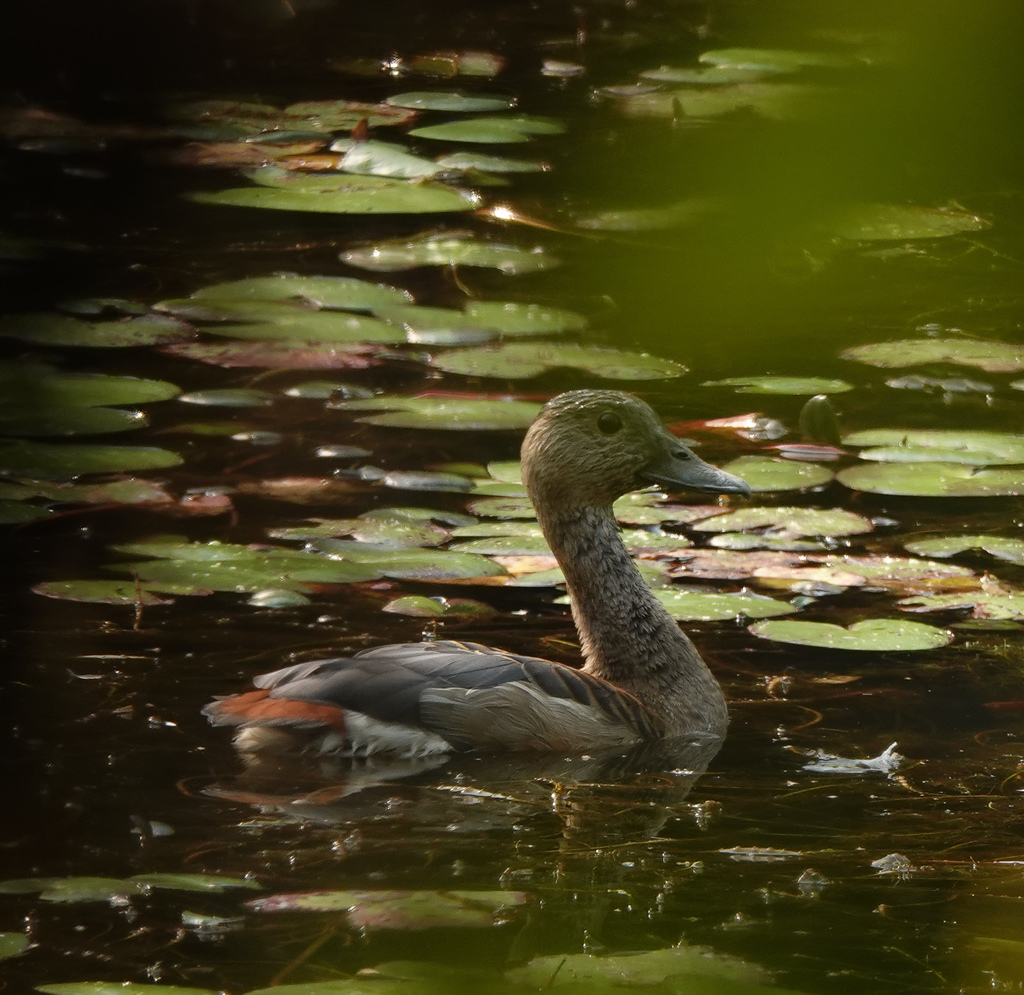
El pato silbador menor es un ave acuática inconfundible de cuello largo y plumaje castaño rojizo, con alas anchas bien visibles en vuelo. La marca de campo más confiable es su obispillo castaño, que lo distingue de su pariente mayor, el pato silbador leonado, que presenta un obispillo blanco cremoso. La coronilla es oscura y el anillo ocular es anaranjado a amarillo. Ambos sexos presentan plumaje similar. En vuelo, estos patos sostienen característicamente la cabeza por debajo del nivel del cuerpo y vuelan lentamente con aleteos rápidos, produciendo un ruidoso y repetitivo llamado sibilante de dos notas que inspiró nombres locales como «silí» y «silhahí» en India. Producen silbidos muy prominentes durante el vuelo.
Distribución y Hábitat
El pato silbador menor es una especie principalmente residente ampliamente distribuida en los humedales de tierras bajas del subcontinente indio y el Sudeste Asiático, con poblaciones que se extienden a islas como las Andamán, Nicobar y Maldivas. Las aves de más al norte pueden invernar más al sur en respuesta a cambios en el clima y disponibilidad de agua. Habitan humedales de agua dulce con buena cobertura de vegetación y se encuentran comúnmente descansando durante el día en las orillas o incluso en el mar abierto en áreas costeras. A veces se observan grandes números en humedales urbanos, particularmente durante el invierno en lugares como Calcuta y Goa.
Comportamiento y Dieta
Los patos silbadores menores son altamente gregarios y notablemente alimentadores nocturnos, descansando frecuentemente durante las horas de luz en bandadas alrededor de lagos y arrozales inundados. Poseen una capacidad notable para posarse en árboles y a veces anidan en cavidades arbóreas. Su dieta consiste principalmente en plantas acuáticas y granos de cultivo de arroz, complementados con peces pequeños, ranas, moluscos, gusanos y otros invertebrados. Tanto chapotean como se sumergen en el agua y frecuentemente caminan sobre tierra.
La reproducción ocurre durante el monzón o la estación lluviosa, con puestas típicamente entre 7 y 12 huevos blancos incubados por ambos progenitores. Los nidos pueden ubicarse en cavidades arbóreas revestidas de ramitas y pasto, en horquetas de árboles o a veces en nidos reutilizados de milanos o garzas. Los huevos eclosionan después de aproximadamente 22–24 días, y puede criarse más de una nidada en una sola temporada. Los pollos a veces son transportados en el lomo de sus padres.
Mejor Época y Lugares para Observarlo
El pato silbador menor se encuentra durante todo el año en su área de distribución, aunque los meses de invierno traen mayores concentraciones a humedales urbanos. Las áreas de humedales urbanos en Calcuta y Goa son lugares particularmente productivos durante el invierno. Búscalos durante las últimas horas de la tarde y atardecer cuando se activan para alimentarse nocturnamente. Durante el día, explora las orillas y aguas abiertas de lagos y arrozales, donde descansan en bandadas. La estación del monzón es óptima para observar el comportamiento reproductivo.
Consejos de Fotografía
El obispillo castaño es la característica identificadora clave a capturar, así que apunta a tomas de perfil que muestren claramente las coberteras supracaudales. La fotografía en vuelo es gratificante, ya que las alas anchas y la característica postura con cabeza por debajo del cuerpo son distintivas y fotogénicas. El anillo ocular anaranjado-amarillo proporciona detalle para retratos en primer plano. Sus hábitos nocturnos significan que la luz del alba y del atardecer frecuentemente ofrecen las mejores condiciones. Dado que son gregarios, a menudo puedes encuadrar múltiples individuos, capturando su comportamiento social. La paciencia es esencial, ya que descansan durante gran parte del día, pero su tendencia a posarse en árboles ofrece oportunidades compositivas únicas comparadas con otros patos.
Lunugamvehera National Park
Sri Lanka
+129 aves+30 mamíferos
Where scrubland meets open water beneath the dry zone sky, one of Sri Lanka’s most underrated wilderness sanctuaries reveals itself […]
VER PARQUE NACIONALMinneriya National Park
Sri Lanka
+123 aves+30 mamíferos
Dawn breaks over a sprawling tapestry of dry deciduous woodland and freshwater marshland where ancient granite outcrops punctuate the landscape […]
VER PARQUE NACIONALWasgamuwa National Park
Sri Lanka
+122 aves+30 mamíferos
Dawn breaks over a landscape where ancient riverine forests meet sprawling grasslands, carved through by the Mahaweli River’s serpentine passage […]
VER PARQUE NACIONALAngamedilla National Park
Polonnaruwa, Sri Lanka
+122 aves+30 mamíferos
Where granite outcrops rise dramatically from dry deciduous forest, Sri Lanka’s central highlands reveal one of the island’s most rugged […]
VER PARQUE NACIONALMaduru Oya National Park
Sri Lanka
+123 aves+30 mamíferos
Granite monoliths rise abruptly from dense dry lowland forest in Sri Lanka’s eastern interior, creating a mosaic of rocky outcrops, […]
VER PARQUE NACIONALOrang National Park
Rangagarapathar, India
+147 aves+15 mamíferos
Dawn breaks across the floodplains of Assam, where the Brahmaputra River sprawls into a mosaic of grasslands, riverine forests, and […]
VER PARQUE NACIONALIndravati National Park
Bijapur, India
+18 aves+1 mamíferos
Where the Indravati River carves through the Eastern Ghats, pristine sal and mixed deciduous forests cloak a rugged landscape of […]
VER PARQUE NACIONALValmiki National Park
Ramnagar, India
+128 aves+30 mamíferos
Where the Himalayan foothills soften into the Ganges plains, dense sal forests rise above meandering rivers and grassland mosaics that […]
VER PARQUE NACIONALRanthambhore National Park
Sawai Madhopur, India
+126 aves+25 mamíferos
Where granite fortresses rise from the Aravalli Hills, a sprawling mosaic of dry deciduous forest, grassland, and ten interconnected lakes […]
VER PARQUE NACIONALEravikulam National Park
Devikulam, India
+127 aves+30 mamíferos
Where the Western Ghats rise into perpetual mist, rolling grasslands stretch across the high plateaus of Kerala’s southern reaches. This […]
VER PARQUE NACIONALPhou Khao Khouay National Protected Area
Thaphabath District, Tailandia
+64 aves
Dawn breaks over limestone karsts that rise like sentinels above dense monsoon forest, their weathered peaks crowned in mist. Phou […]
VER PARQUE NACIONALPhou Xieng Thong National Protected Area
Khong Chiam District, Tailandia
+81 aves+3 mamíferos
Where limestone karsts pierce a tapestry of dry deciduous forest, Thailand’s Phou Xieng Thong National Protected Area unfolds across rugged […]
VER PARQUE NACIONALMu Ko Ang Thong National Park
Tailandia
+105 aves+18 mamíferos
Limestone karsts pierce an emerald sea, their weathered peaks rising abruptly from turquoise waters where mangrove forests cling to tidal […]
VER PARQUE NACIONALKhao Laem Ya-Mu Ko Samet National Park
Mueang Rayong District, Tailandia
+132 aves+30 mamíferos
Where limestone cliffs plunge into crystalline waters and coastal forests merge with rocky outcrops, a mosaic of Thailand’s most pristine […]
VER PARQUE NACIONALKanha Tiger Reserve
Kanha Kisli F.V., India
+126 aves+29 mamíferos
Where sal forests give way to emerald meadows and crystalline streams carve through ancient valleys, one of India’s finest wilderness […]
VER PARQUE NACIONALTadoba National Park
Palasgaon Singru, India
+133 aves+25 mamíferos
Where sal forests meet open grasslands and rocky outcrops rise from red laterite soil, central India’s landscape unfolds in raw, […]
VER PARQUE NACIONALBandhavgarh National Park
Garhpuri, India
+127 aves+26 mamíferos
Where granite ridges rise dramatically above sal and bamboo forests, one of India’s most pristine tiger reserves unfolds across the […]
VER PARQUE NACIONALPanna National Park
Badgadi Kalan, India
+136 aves+27 mamíferos
Where granite gorges slice through central India’s Vindhyan plateau, a landscape of stark beauty unfolds across nearly six hundred square […]
VER PARQUE NACIONALKaziranga National Park
Kohora, India
+129 aves+30 mamíferos
Dawn breaks over the floodplains of the Brahmaputra, where tall grasslands stretch endlessly beneath monsoon-heavy skies. This sprawling wilderness of […]
VER PARQUE NACIONALKeoladeo National Park
Shreenagar Rural, India
+135 aves+19 mamíferos
Where shallow wetlands shimmer beneath vast Rajasthani skies, one of Asia’s finest bird sanctuaries pulses with extraordinary life. This former […]
VER PARQUE NACIONALPeriyar National Park
Mlappara, India
+131 aves+30 mamíferos
Dawn breaks over mist-shrouded ridges where the Western Ghats tumble toward Kerala’s spice-scented lowlands. Here, ancient tropical forests envelope a […]
VER PARQUE NACIONALBandipur National Park
Hirehalli, India
+135 aves+30 mamíferos
Where the Western Ghats descend into the Deccan plateau, ancient deciduous forests blanket a landscape carved by the Nugu River. […]
VER PARQUE NACIONALNagarahole Tiger Reserve
Nalkeri Forest, India
+120 aves+30 mamíferos
Where granite escarpments rise above dense deciduous forests and the Kabini River carves through pristine wilderness, one of India’s most […]
VER PARQUE NACIONALPenang National Park
Balik Pulau, Malasia
+125 aves+30 mamíferos
Granite peaks rise abruptly from the Andaman Sea where tropical rainforest clings to steep slopes in one of Malaysia’s oldest […]
VER PARQUE NACIONALWay Kambas National Park
Lampung Timur, Indonesia
+148 aves+28 mamíferos
Swamps and dipterocarp forests interweave across Sumatra’s southeastern lowlands, creating a mosaic of habitats that few conservation areas in Southeast […]
VER PARQUE NACIONALGir National Park
Asundrali, India
150+ aves+12 mamíferos
Dry deciduous forests cloak the rolling hills of western Gujarat where the Gir landscape rises as a final sanctuary for […]
VER PARQUE NACIONALAún no hay fotos de la comunidad. Inicia sesión para añadir la primera.
Aún no hay observaciones de la comunidad de esta especie.