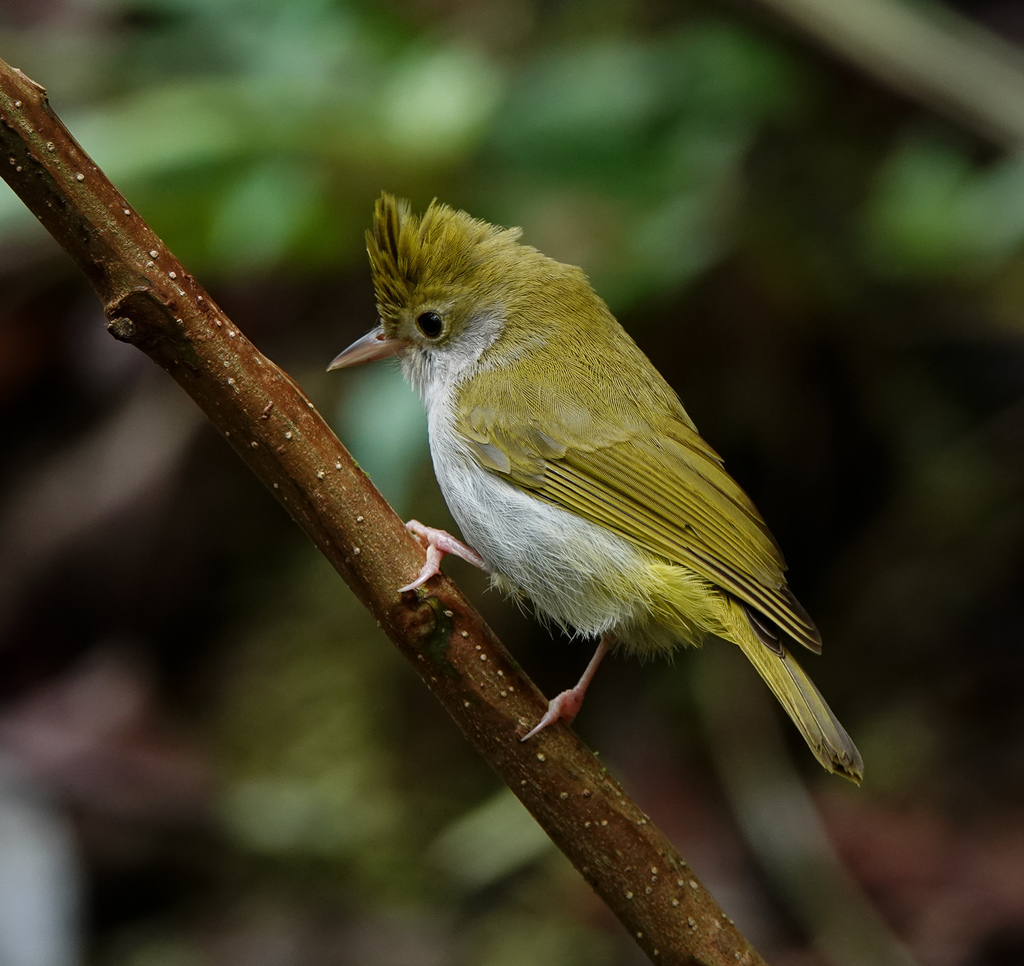
Yuhina Ventriblanca
Photo © Rejoice Gassah
Photo © Rejoice Gassah — CC BY 4.0 — Source: iNaturalist #105145510Identificación
El erpornis ventriblanco es un pequeño pájaro cantor con cresta distintiva y una apariencia llamativa que combina características de varias familias de aves. Su característica más prominente es la cresta conspicua en la cabeza, que le confiere una silueta inconfundible. Las partes superiores del ave—incluyendo la cabeza crestada, dorso, alas y cola—son de color marrón oliváceo u dorado, mientras que las partes inferiores son de un blanco puro, proporcionando un excelente contraste. En su coloración, morfología y hábitos acrobáticos, este ave guarda una semejanza notable con los vireos, aunque la cresta prominente la diferencia claramente y ha causado históricamente confusión sobre sus verdaderas relaciones taxonómicas.
Una de las características anatómicas más interesantes del erpornis es su musculatura bien desarrollada para el "gaping"—la apertura forzada del pico. Esta adaptación le permite desprender corteza de los árboles en busca de insectos, una técnica de alimentación especializada que refleja su nicho ecológico dentro del dosel forestal. El tamaño compacto del ave y su estructura ágil la adaptan perfectamente a su estilo de vida arbóreo.
Distribución y Hábitat
El erpornis ventriblanco tiene una distribución extensa por el sur y sudeste asiático, con poblaciones registradas en Bangladesh, Bután, Brunei, Camboya, China, India, Indonesia, Laos, Malasia, Míanmar, Nepal, Singapur, Taiwán, Tailandia y Vietnam. Esta amplia distribución refleja su exitosa adaptación a los hábitats adecuados en toda la región, con poblaciones particularmente significativas en China y Taiwán.
Esta especie es estrictamente un ave de los bosques montanos húmedos subtropicales y tropicales. Prefiere el dosel forestal y los niveles intermedios, donde forrajea entre el follaje y las ramas. La necesidad de bosques montanos húmedos significa que la altitud y los niveles de humedad son factores clave para determinar dónde los viajeros encontrarán esta especie dentro de su amplio rango geográfico.
Comportamiento y Alimentación
El erpornis ventriblanco es un forrajeador acrobático que activamente rebusca insectos de la corteza, ramas y follaje mientras se mueve por el dosel forestal. Sus músculos de "gaping" bien desarrollados le permiten desprender corteza de los árboles, dándole acceso a insectos escondidos bajo la superficie. Esta técnica de alimentación especializada lo convierte en un miembro valioso de los bandadas mixtas que comúnmente se desplazan por los bosques montanos asiáticos.
El comportamiento del ave refleja su estrecha relación con los vireos, demostrando el mismo estilo de forrajeo activo y propositivo característico de esa familia. Típicamente permanece en los niveles superiores del bosque, haciendo que su observación y fotografía sean desafiantes pero gratificantes para los observadores de aves dedicados.
Mejor Época y Lugares para Observarlo
El erpornis ventriblanco es común en gran parte de su amplio rango, aunque los patrones estacionales específicos no están detallados en las fuentes disponibles. Los viajeros deben enfocarse en los bosques montanos húmedos subtropicales y tropicales dentro de su distribución, con poblaciones particularmente accesibles probables en destinos ornitológicos establecidos en Taiwán, Tailandia y el sur de China, donde se estima que la especie ocurre en números sustanciales.
La UICN clasifica esta especie como de "Preocupación Menor", reflejando su rango muy amplio y su estatus común en gran parte de su hábitat. Este favorable estado de conservación significa que los viajeros que busquen esta especie pueden hacerlo con confianza de que las poblaciones se mantienen saludables y estables.
Consejos de Fotografía
Fotografiar al erpornis ventriblanco requiere paciencia y atención al nivel del dosel, ya que el ave típicamente forrajea en las porciones superiores del bosque. La cresta prominente del ave y su coloración contrastante—partes superiores marrón oliváceo contra partes inferiores blancas—proporcionan excelentes sujetos fotográficos cuando la luz adecuada penetra el bosque. Las primeras horas de la mañana frecuentemente proporcionan las mejores condiciones de iluminación en ambientes de bosque montano.
El comportamiento acrobático de alimentación del ave ofrece oportunidades de fotografía dinámica. Posiciónate donde puedas observar bandadas alimentándose, y prepárate para movimientos rápidos mientras el ave rebusca insectos de la corteza y el follaje. Un lente teleobjetivo es esencial dado la preferencia del ave por el dosel, y seguir los movimientos del ave a través del follaje denso pondrá a prueba tanto tu equipo como tu técnica.
Langtang National Park
Valmiki National Park
Phou Khao Khouay National Protected Area
Khao Yai National Park
Khao Laem National Park
Mount Nanling Forest Park
Kaziranga National Park
Bako National Park
Taman Negara National Park
Taman Negara Bukit Lambir National Park
Gunung Mulu National Park
Hainan Tropical Rainforest National Park
Wuyishan National Park
Xishuangbanna National Nature Reserve
Gaoligong Mountain National Nature Reserve
Aún no hay fotos de la comunidad. Inicia sesión para añadir la primera.
Aún no hay observaciones de la comunidad de esta especie.