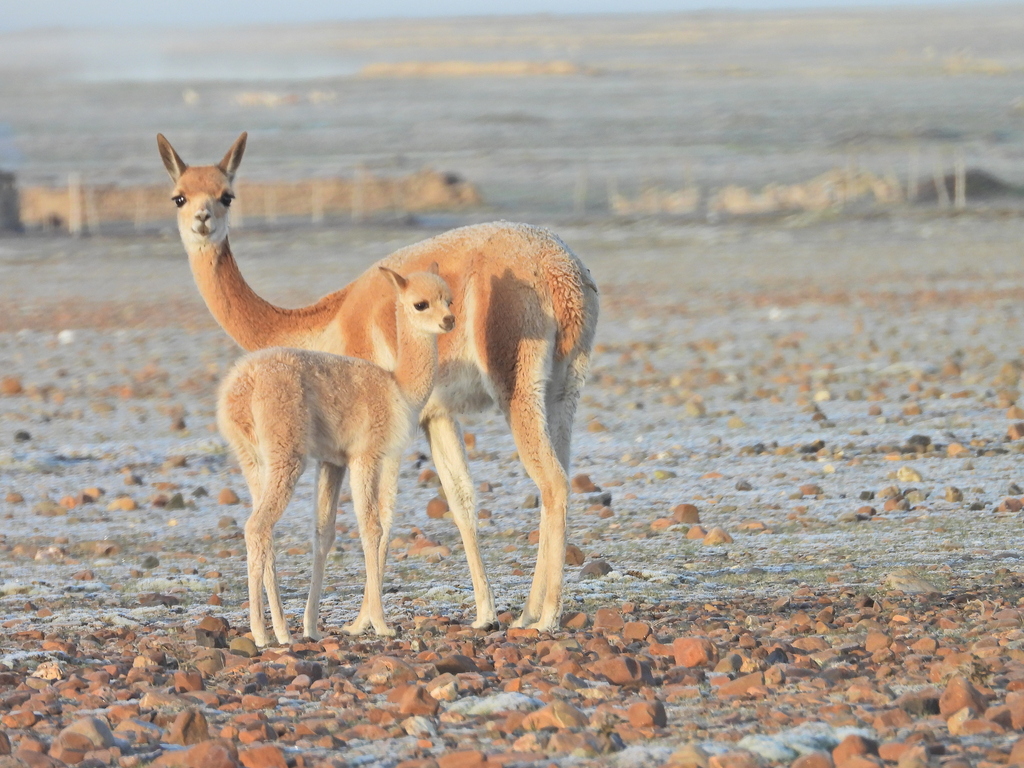
Vicuña
Photo © Humber Alberto
Photo © Humber Alberto — CC BY 4.0 — Source: iNaturalist photo #260856321Identificación
La vicuña es uno de los dos camélidos silvestres de América del Sur y el pariente más pequeño y delicado del guanaco. Su longitud corporal varía entre 1,45 y 1,60 metros, con una altura de cruz de 75 a 85 centímetros y un peso de 35 a 65 kilogranos. El rasgo más distintivo del animal es su lujoso pelaje lanudo: marrón leonado en el dorso, con un vistoso pelaje blanco en la garganta y el pecho, notablemente largo y esponjoso. La cabeza de la vicuña es ligeramente más corta que la del guanaco, mientras que sus orejas son proporcionalmente más largas, lo que le confiere una apariencia característicamente alerta.
Distribución y Hábitat
Las vicuñas se encuentran restringidas a los Andes centrales de América del Sur, en Perú, noroeste de Argentina, Bolivia, norte de Chile y una población más pequeña introducida en el centro de Ecuador. Habitan elevaciones alpinas extremas entre 3.200 y 4.800 metros, donde se alimentan de pastos duros de bajo valor nutritivo y Festuca durante las horas de luz en las llanuras herbosas, retirándose a las laderas por la noche. El ambiente es inhóspito: la atmósfera delgada permite un sol diurno intenso y temperaturas relativamente cálidas, pero las temperaturas descienden bajo cero cada noche. El grueso y suave pelaje de la vicuña es una notable adaptación evolutiva que atrapa aire caliente cerca del cuerpo, permitiendo la supervivencia en estas condiciones extremas. Los pumas, culpeos y perros domésticos son los principales depredadores del animal.
Comportamiento y Alimentación
Las vicuñas son animales tímidos, fácilmente asustadizos, con una audición extraordinaria. Viven en grupos basados en estructuras familiares que típicamente consisten en un macho, 5 a 15 hembras y sus crías, defendiendo cada grupo un territorio de aproximadamente 18 kilómetros cuadrados—un tamaño que fluctúa según la disponibilidad de alimento. Son animales notablemente limpios, depositando siempre sus excrementos en lugares designados. Su dieta consiste principalmente en pastos bajos que crecen en matas al nivel del suelo. Las vicuñas lamen frecuentemente piedras calcáreas y agua salada para obtener minerales esenciales.
El apareamiento ocurre en marzo y abril, seguido de un período de gestación de 11 meses. Las hembras dan a luz una sola cría, que se amamanta durante aproximadamente diez meses y se independiza entre los 12 y 18 meses de edad. Los machos jóvenes forman grupos de célibes mientras que las hembras jóvenes buscan asociarse con otros grupos de hembras, un comportamiento que previene la consanguinidad y reduce la competencia entre miembros de la familia.
Mejor Época y Lugares para Verla
La recuperación de la vicuña desde su casi extinción ofrece auténticas oportunidades para viajeros interesados en la vida silvestre. Las poblaciones protegidas pueden observarse en Perú, Bolivia, Argentina y Chile en toda la cordillera andina. La conservatoria Pampa Galeras–Barbara D'Achille en la provincia de Lucanas, Ayacucho, Perú, representa un hito en conservación donde las vicuñas han sido protegidas desde los años sesenta y pueden ser avistadas. Las horas diurnas en las llanuras herbosas ofrecen las mejores oportunidades de observación, ya que las vicuñas se alimentan durante el día antes de retirarse a las laderas al anochecer.
Consejos de Fotografía
Fotografía las vicuñas durante las horas de luz cuando se alimentan activamente en las llanuras herbosas abiertas—el paisaje de alta montaña proporciona telones de fondo naturales dramáticos. Recuerda que las vicuñas son animales tímidos con audición aguda y se alarman fácilmente por los intrusos, por lo que la paciencia y la distancia son esenciales. Utiliza un objetivo teleobjetivo para capturar detalles sin perturbar a estos animales. El contraste entre el dorso marrón leonado y el pecho y la garganta blancos crea oportunidades compositivas llamativas, especialmente bajo la luz clara e intensa de los Andes altos donde la atmósfera delgada proporciona visibilidad excepcional y saturación de color.
Full-day Birds of the desert
Antisana National Park
Cotopaxi National Park
Huascarán National Park
Salar del Huasco National Park
Lauca National Park
Reserva Nacional las Vicuñas
Los Cardones National Park
Aún no hay fotos de la comunidad. Inicia sesión para añadir la primera.
Aún no hay observaciones de la comunidad de esta especie.