European Badger
Meles meles
Photo © Grzegorz Grzejszczak
Photo © Grzegorz Grzejszczak — CC BY-SA 4.0 — Source: iNaturalist photo #35370374ABOUT
Subspecies of European Badger
Common European BadgerSwedish BadgerNorwegian Badger
Identification
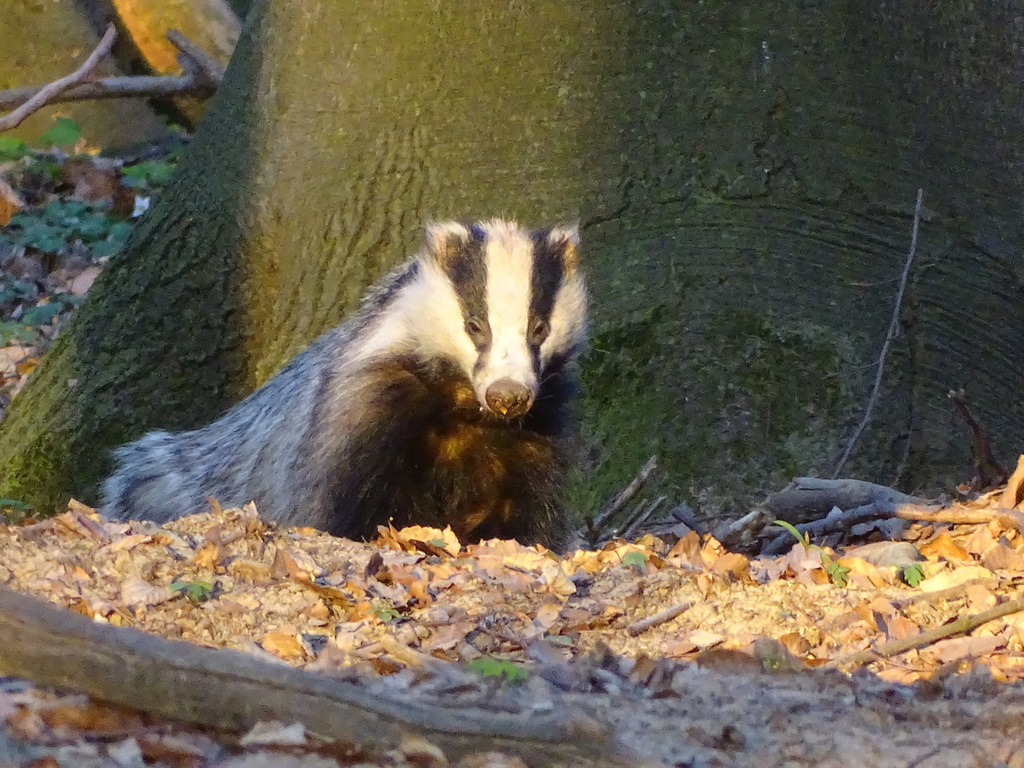
The European badger is a powerfully built animal that is instantly recognisable by its distinctive appearance. It has a small head, stocky wedge-shaped body, short tail, and small black eyes. The coat is characteristically marked with black, white, brown, and grey fur, with a striking white mark on the forehead that resembles a badge—a feature that may have inspired the animal's English name. The badger's robust build reflects its adaptation as a powerful digger.
Size varies seasonally, ranging from 7–13 kg in spring to 15–17 kg in autumn as the animal builds reserves before winter. Males are known as boars, females as sows, and young animals as cubs. In the UK, the European badger is the only extant badger species, where it is simply called "the badger."
Range & Habitat
The European badger is native to Europe and West Asia, with populations also found in parts of Central Asia. Several subspecies are recognised across this wide range, with the nominate subspecies predominating throughout most of Europe. The species is classified as least concern on the IUCN Red List, with a large and stable population that is thought to be increasing in some regions.
Behaviour & Diet
European badgers are nocturnal and highly social animals, spending their days sleeping in burrows called setts. These underground homes are architectural marvels, featuring multiple chambers and entrances with extensive passage systems measuring 35–81 metres in length. Badger families may use the same setts for decades, and the animals are notably particular about cleanliness, regularly bringing in fresh bedding and removing soiled material. They use designated latrines situated outside their setts or along travel routes.
Despite being classified as carnivorans, European badgers are actually omnivores with a varied diet that includes earthworms, large insects, small mammals, carrion, cereals, and tubers. Females give birth to litters of up to five cubs in spring; the young are weaned after a few months but typically remain within the family group. Badgers may share their burrows with other species such as rabbits, red foxes, and raccoon dogs, though they can be ferocious when provoked.
Best Time & Places to See It
As nocturnal animals, badgers are best observed at dusk or during the night. Look for evidence of their presence around sett entrances, where fresh bedding material and well-worn paths indicate active occupation. Strategic positioning near known setts during early evening offers the best chance of observation, though patience and stillness are essential. Spring offers opportunities to see cubs emerging from setts as they begin to explore above ground.
Photography Tips
Photographing badgers requires patience and respect for their nocturnal habits. Use a headlamp with a red filter to avoid startling the animals, and position yourself downwind of sett entrances. Fast film or high ISO settings will be necessary in low light conditions. A telephoto lens allows you to maintain distance while capturing detailed images of their distinctive facial markings and behaviour. Early spring provides excellent opportunities for photographing family groups with cubs, though always prioritise the animals' welfare over the photograph.
HIDES
Country
Sort by
Bear photo hunting for photographers
CroMedo Bearwatching·Čabar·Croatia
Brown Bear · Western Roe Deer+3
21 max.Apr–Oct
240 €/ personfrom 180 €
Book now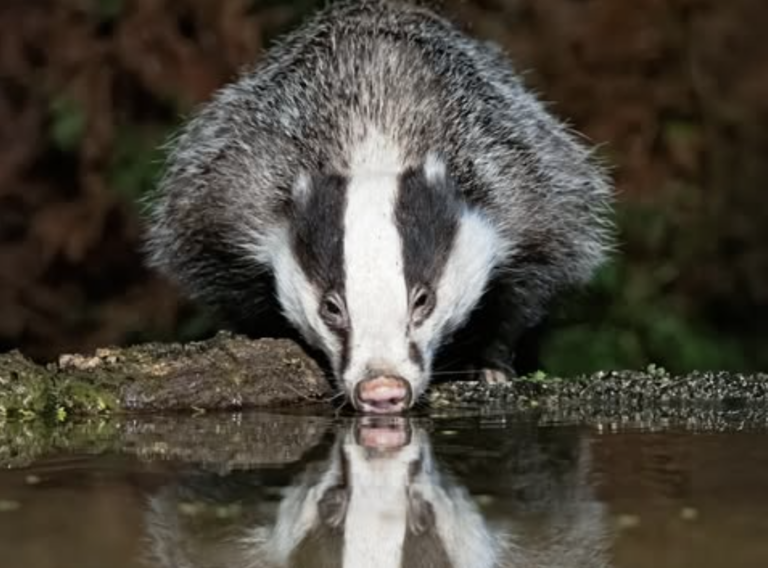
80 €/ person
Book nowNothing matches these filters.
STAYS
Sort by
Nothing matches these filters.
HOTSPOTS
Country
Type
Sort by
National Park
Abruzzo, Lazio and Molise National Park
Pescasseroli·Italy
+139 birds+18 mammals
Natural Park
Alpilles Regional Nature Park
Saint-Rémy-de-Provence·France
+219 birds+37 mammals
National Park
Alta Murgia National Park
Bari·Italy
+168 birds+6 mammals
National Park
Appennino Tosco-Emiliano National Park
Ventasso·Italy
+86 birds+8 mammals
Natural Park
Avesnois Regional Nature Park
Saint-Hilaire-sur-Helpe·France
+206 birds+40 mammals
National Park
Bannau Brycheiniog National Park
Powys·United Kingdom
+178 birds+36 mammals
Desert & Arid Lands
Bardenas Reales
Arguedas·Spain
+234 birds+10 mammals
Natural Park
Baronnies Provençales Regional Nature Park
Sahune·France
+135 birds+30 mammals
National Park
Białowieża National Park
Bialowieza·Poland
+177 birds+23 mammals
Nothing matches these filters.
COMMUNITY
Share your photo of this species
Sort by
No community photos yet. Log in to add the first one.
0
Observed by
0
Hotspots reported
0
Countries
No community observations of this species yet.