Identification
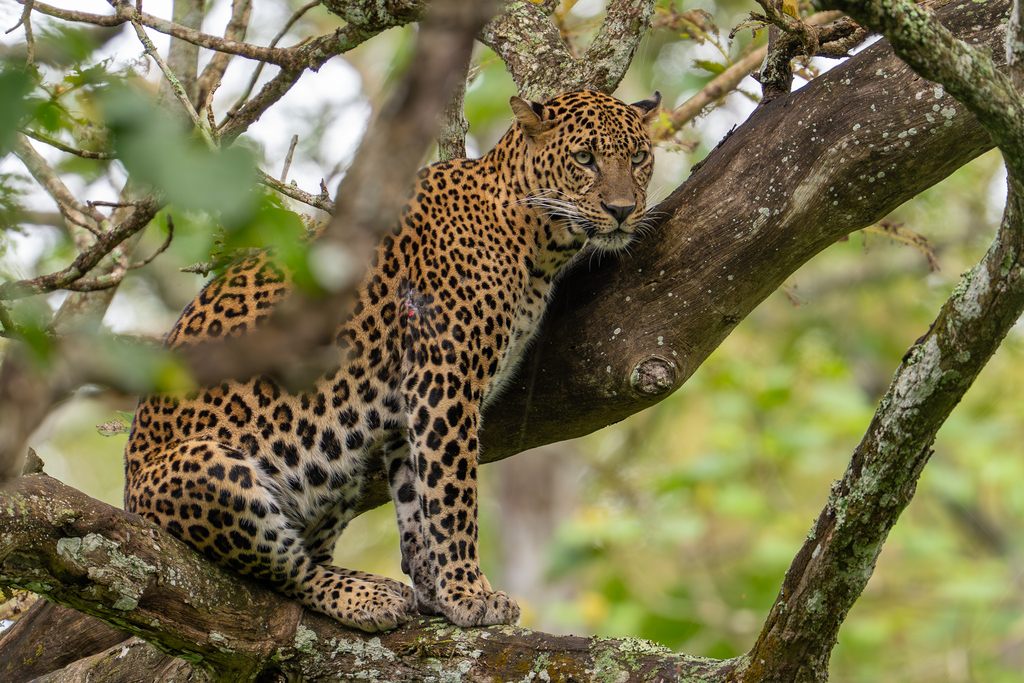
The leopard is one of the five species in the genus Panthera and is instantly recognizable by its pale yellowish to dark golden fur marked with dark spots arranged in distinctive rosettes. Its body is slender and muscular, measuring 92–183 cm in length with a 66–102 cm tail and shoulder height of 60–70 cm. Males are substantially larger than females, typically weighing 30.9–72 kg compared to females at 20.5–43 kg, making size a useful field indicator of sex.
Range & Habitat
Today, leopards are found across a wide range in Africa and Asia, with eight recognized subspecies distributed throughout these continents. However, their historical range was far more extensive: leopards were formerly present across Europe before becoming extinct in the region around the end of the Late Pleistocene to early Holocene period. The species initially evolved in Africa during the Early Pleistocene before migrating into Eurasia around the Early–Middle Pleistocene transition.
Leopards are remarkably adaptable and occupy diverse habitats ranging from rainforest to steppe, including arid and montane areas. This ecological flexibility has been key to their survival across such varied landscapes and climates.
Behaviour & Diet
Leopards are solitary animals except during the mating season and when females are raising cubs. They are opportunistic predators that hunt mostly ungulates and primates, relying on their spotted pattern for camouflage as they stalk and ambush their prey. A characteristic behavior is their tendency to drag killed prey up into trees, likely to protect it from scavengers.
Females typically give birth to litters of 2–4 cubs once every 15–24 months. Both males and females reach sexual maturity at 2–2.5 years of age. Currently listed as Vulnerable on the IUCN Red List, leopard populations are threatened by habitat loss and fragmentation, with numbers declining across much of their global range.
Best Time & Places to See It
While leopards are found across Africa and Asia, specific timing and locations depend on which of the eight subspecies you wish to encounter. The source material does not provide detailed seasonal or location-specific recommendations, so consult regional guides for your intended destination to maximize your chances of observing this elusive cat.
Photography Tips
The leopard's spotted rosette pattern and golden coat provide striking photographic subjects, particularly in dappled light where their camouflage can be beautifully highlighted. Their solitary nature and preference for ambush hunting mean patience and early morning or late afternoon sessions offer the best opportunities. The contrast between their pale fur and dark markings renders them visually dramatic, especially when framed against natural vegetation or rocky terrain.