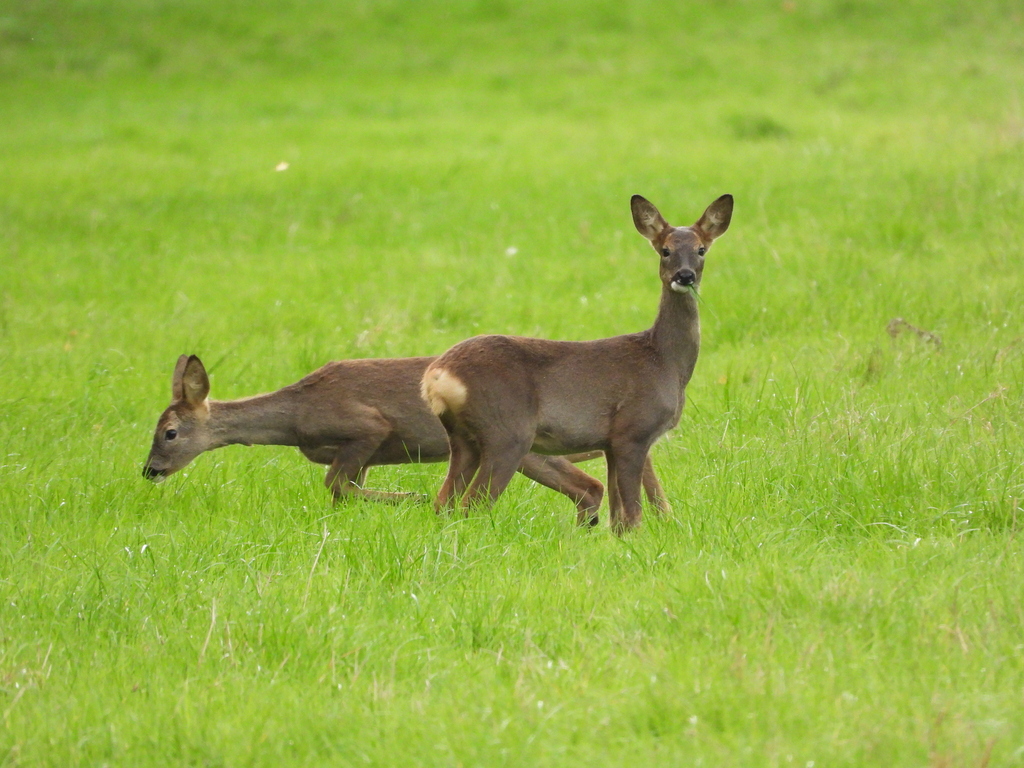
Western Roe Deer
Capreolus capreolus
Photo © Stephen Matthews
Photo © Stephen Matthews — CC0 1.0 — Source: iNaturalist photo #238440955ABOUT
Subspecies of Western Roe Deer
European Roe DeerItalian Roe DeerMorisco Roe DeerCaucasian Roe Deer
Identification
The western roe deer is a small, elegant deer easily distinguished by its compact build and distinctive colouration. Adults display a reddish and grey-brown coat that varies seasonally, providing excellent camouflage in their woodland habitats. Males, known as roebucks, are typically larger than females, though the species remains one of Europe's smallest deer. The roe deer's delicate frame and alert posture make it instantly recognizable to experienced wildlife watchers.
Body length ranges from 95–135 cm, with a shoulder height of 63–67 cm, making them considerably smaller than many other European deer species. Their well-adapted physiology reflects millions of years of evolution in cold environments, equipping them to thrive across diverse European landscapes from Mediterranean regions to the far north.
Range & Habitat
The western roe deer is widespread throughout Europe, with populations ranging from the Mediterranean in the south to Scandinavia in the north. Their distribution extends from Scotland in the west to the Caucasus in the east, and as far south as northern Iran. This remarkable geographic spread demonstrates the species' adaptability to varied climates and habitats across the continent.
These deer are well-suited to cold environments, inhabiting forests, woodland edges, and scrublands where they can find shelter and forage. Their presence across such diverse regions—from Mediterranean scrub to Nordic forests—testifies to their ecological flexibility and resilience as a species.
Behaviour & Diet
The western roe deer is a cautious and elusive animal, typically active during dawn and dusk when visibility is low. Like other deer species, they communicate through various vocalizations, with fawns, females, and males each producing distinct calls. Their nervous temperament and tendency to remain hidden in dense vegetation make them challenging subjects for casual observation.
As herbivores, roe deer browse on vegetation appropriate to their woodland habitats, feeding selectively on leaves, shoots, and other plant matter. Their small size requires them to be efficient foragers, moving through their territories in search of quality food sources throughout the day and night.
Best Time & Places to See It
Western roe deer are most active during the early morning and late evening hours, making these the optimal times for wildlife observation. Patient watchers positioned near woodland edges or forest clearings stand the best chance of encountering them. The species' wide distribution across Europe means that suitable habitat in forested regions from the Mediterranean to Scandinavia offers potential viewing opportunities.
Success requires patience and stealth, as roe deer are naturally wary and quick to flee when disturbed. Visiting protected forests, nature reserves, or managed woodlands in regions where populations are known to be healthy will significantly improve your chances of observation.
Photography Tips
Photographing roe deer demands patience, early starts, and careful stalking. Their small size and tendency to remain in dense cover present challenges, but also rewards those who invest time in understanding their movements and behaviour. Dawn and dusk provide the best natural lighting and the highest probability of encounters, though the low light may require fast lenses or high ISO settings.
Position yourself downwind of likely feeding or crossing areas, and remain motionless for extended periods. The roe deer's alert nature means sudden movements or noise will send them bounding away. A telephoto lens is essential to maintain safe distance while capturing fine details of their distinctive colouration and elegant form.
HIDES
Sort by
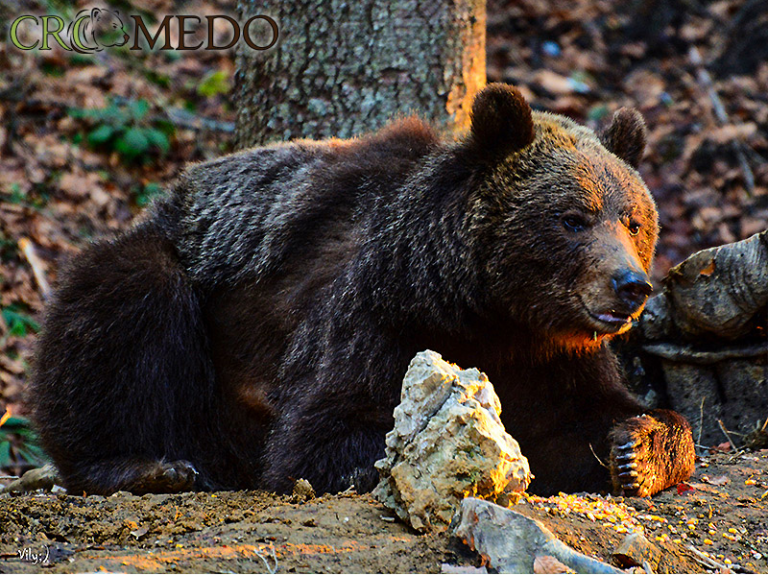
Bear photo hunting for photographers
CroMedo Bearwatching·Čabar·Croatia
Brown Bear · Western Roe Deer+3
21 max.Apr–Oct
240 €/ personfrom 180 €
Book nowNothing matches these filters.
STAYS
Sort by
Nothing matches these filters.
HOTSPOTS
Country
Type
Sort by
National Park
Abruzzo, Lazio and Molise National Park
Pescasseroli·Italy
+139 birds+18 mammals
National Park
Aggtelek National Park
Szin·Hungary
+119 birds+13 mammals
Natural Park
Alpilles Regional Nature Park
Saint-Rémy-de-Provence·France
+219 birds+37 mammals
National Park
Appennino Tosco-Emiliano National Park
Ventasso·Italy
+86 birds+8 mammals
National Park
Åsnens National Park
Kronoberg County·Sweden
+141 birds+8 mammals
Natural Park
Avesnois Regional Nature Park
Saint-Hilaire-sur-Helpe·France
+206 birds+40 mammals
National Park
Bannau Brycheiniog National Park
Powys·United Kingdom
+178 birds+36 mammals
Natural Park
Baronnies Provençales Regional Nature Park
Sahune·France
+135 birds+30 mammals
National Park
Bavarian Forest National Park
Germany
+127 birds+18 mammals
Nothing matches these filters.
COMMUNITY
Share your photo of this species
Sort by
0
Observed by
0
Hotspots reported
0
Countries
No community observations of this species yet.