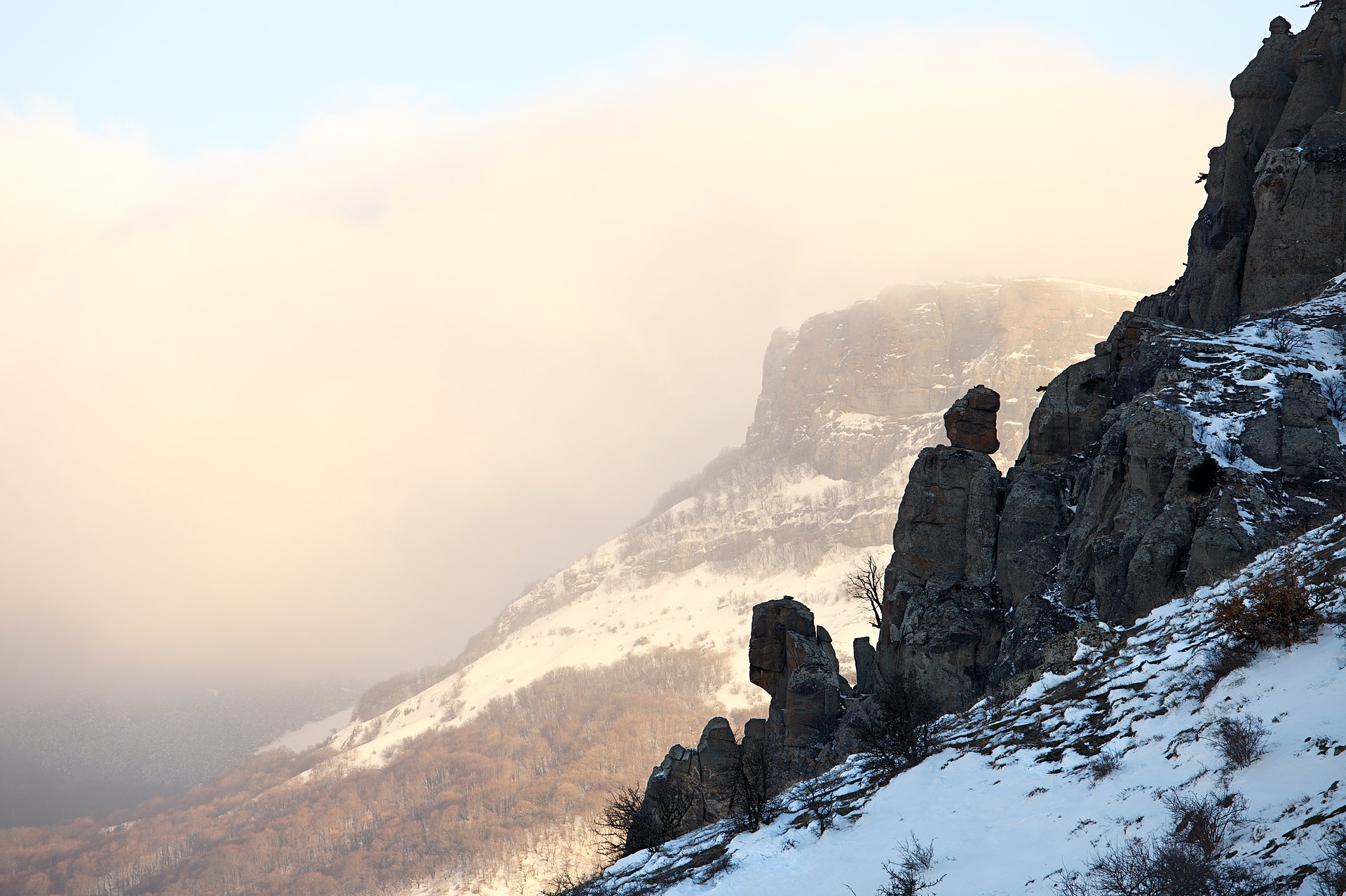
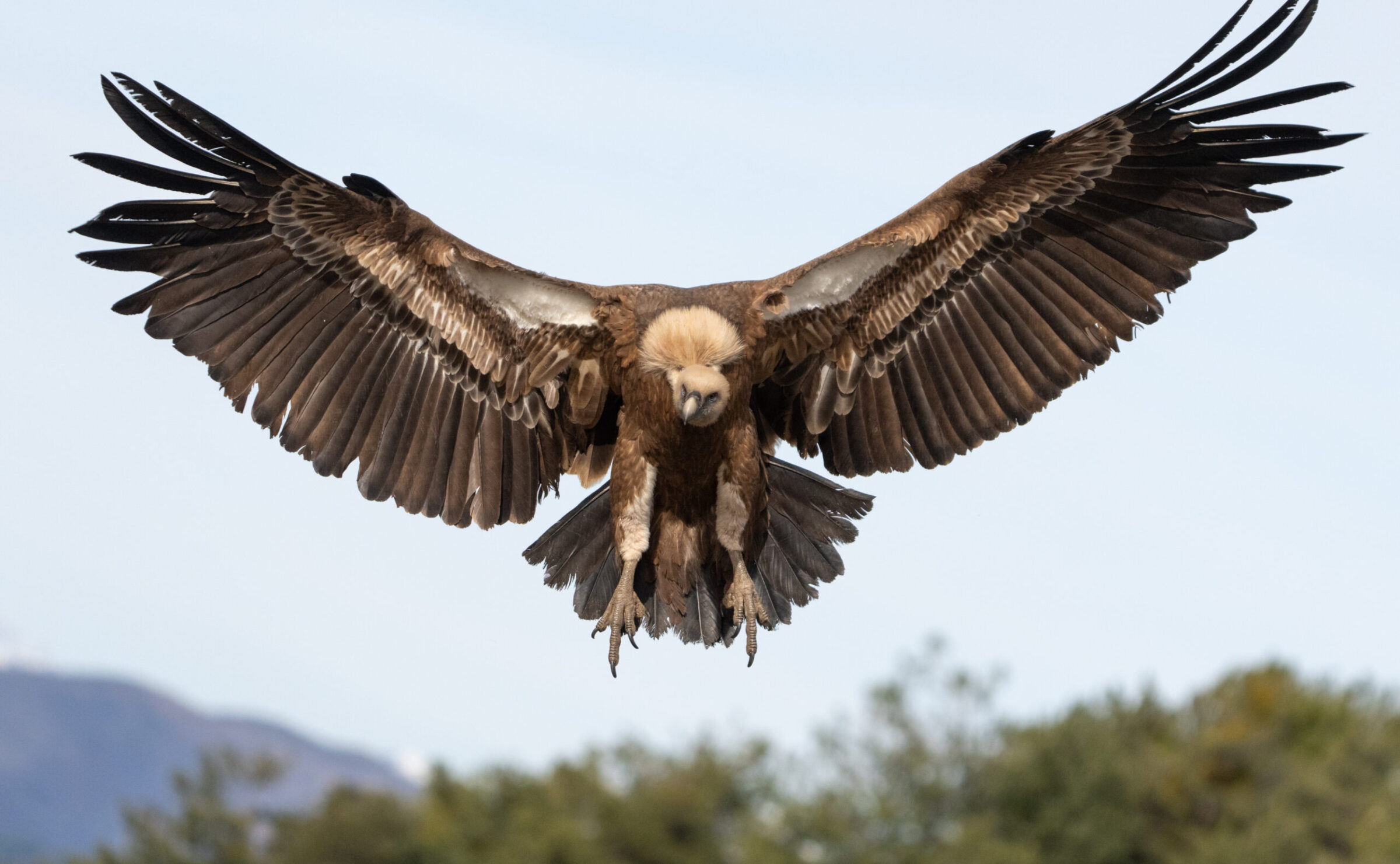
Across the sun-scorched limestone slopes of the Yalta district, a landscape of ghostly rock formations rises where erosion has carved the mountainside into a labyrinth of pale, anthropomorphic pillars and weathered stone towers. This approximately one-square-kilometre expanse within the national park protects a uniquely fragmented habitat where bare rock faces alternate with scrubland and sparse woodland, creating an intricate mosaic that supports wildlife adapted to extremes of exposure and aridity. The rocky outcrops provide ledges and crevices for birds of prey and cliff-nesting songbirds, while the intervening shrub zones—dominated by low Mediterranean and subalpine scrub—shelter small mammals, lizards, and ground-feeding birds that forage among the sparse vegetation. Seasonal water seepage through fissures sustains pockets of moss and lichen that in turn support invertebrate communities; these rocky canyons and sheltered gullies create microclimates where specialist insects and spiders thrive. The geological drama itself—ancient stone shaped by millennia of weather—is as much a part of this ecosystem as the creatures that inhabit it, and the harsh vertical architecture of the Valley of Ghosts creates refugia for species that have evolved to tolerate this unforgiving terrain.
The combination of dramatic topography, sharp light, and ecological rarity makes this compact national park an exceptional destination for wildlife photographers and birdwatchers seeking an off-the-beaten-path experience in the Crimean mountains. The pale limestone reflects intense sunlight, offering exceptional image clarity during early morning and late afternoon hours when rock shadows deepen the three-dimensional drama of the formations. Spring and early summer bring migratory birds to the cliffs and open ridges, while resident cliff-dwelling raptors and their smaller neighbours remain year-round, rewarding patient observers with sightings across all seasons. The relatively compact scale of the protected area—walkable in a single day—allows visitors to explore multiple habitat zones and elevation gradients within a concentrated circuit, maximizing encounters with the distinct communities that occupy each microhabitat. Access to the site is straightforward, and the surreal landscape itself transforms a birding or wildlife-watching excursion into an unforgettable voyage through time and stone.