Identification
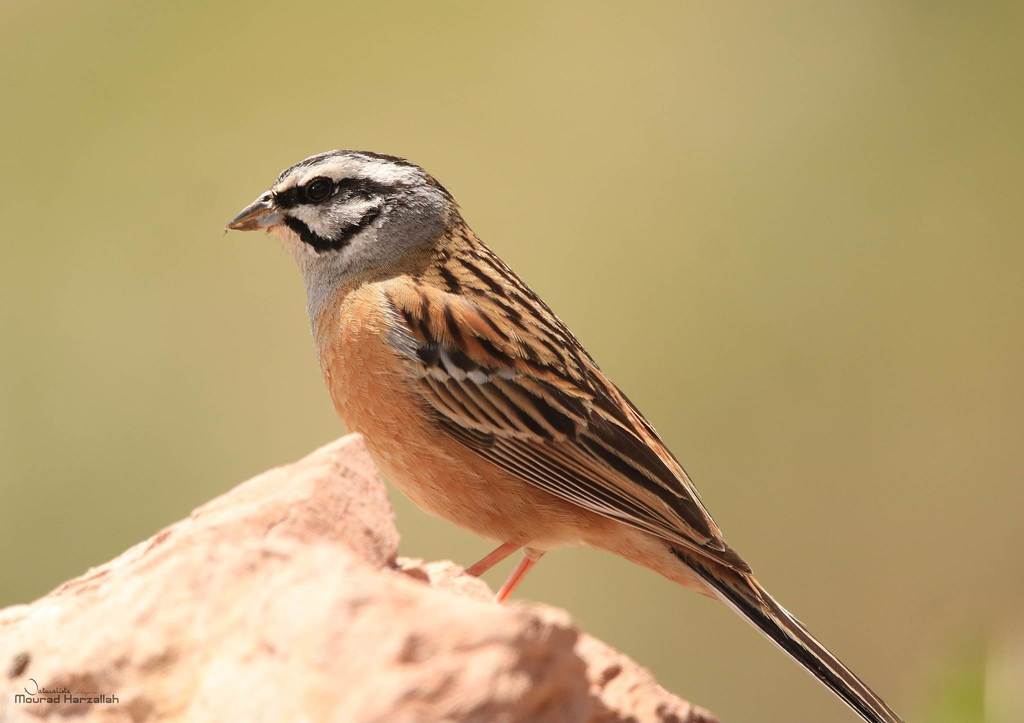
The rock bunting is a compact passerine measuring 16 cm in length, making it a small but distinctive mountain bird. The breeding male is particularly striking, with chestnut upperparts contrasting sharply against a pale grey head boldly marked with black striping. The underparts are an unmarked deep buff, creating a handsome, clearly defined plumage pattern. The female is a more subdued version of the male, featuring a grey-brown back, paler underparts, and a less contrasted head pattern. Juveniles resemble females but display a streaked head. Four subspecies exist with varying plumage shades, though only the European, African, and western Turkish race shows distinctive white wing bars.
Range & Habitat
The rock bunting has a broad range spanning northwest Africa, southern Europe, and eastward through central Asia to the Himalayas, with local breeding populations in central Europe. The species is partially migratory, with northern populations moving south for winter, typically remaining within the breeding range of the resident southern populations. It is only a rare wanderer to western Europe, making sightings outside its core range unusual.
This species is highly specialized for open, dry, rocky mountainous terrain, where it finds the arid, exposed conditions it favours. Such landscapes provide the sparse vegetation and rocky outcrops essential for both breeding and foraging.
Behaviour & Diet
Rock buntings are ground nesters, laying three to five greyish eggs in a lined nest constructed either on the ground or occasionally in a low bush. Their diet varies seasonally: when rearing young, they rely heavily on insects to provide essential protein, but outside the breeding season they subsist primarily on seeds.
The rock bunting is a vocal species. Its call is a sharp, distinctive tseee, while its song is a characteristic twittering churrrr-chirrriiii-itt—sounds that ring across rocky slopes and draw the attention of attentive birdwatchers.
Best Time & Places to See It
To encounter rock buntings, travel to open mountainous regions in their core range across southern Europe, northwest Africa, and central Asia. The Himalayas and upland areas of the Mediterranean region offer excellent opportunities. Spring and summer are ideal for locating breeding birds, when males are most vocal and conspicuous. Winter movements may bring northern populations to lower elevations, potentially widening viewing opportunities in those seasons.
Photography Tips
The rock bunting's striking head pattern and contrasting plumage make it a rewarding subject for photographers. The bold black striping on the pale grey head is particularly photogenic. Early morning light on rocky mountainsides will highlight the warm chestnut tones of the upperparts and the subtle buff of the underparts. Patience is rewarded—watch rocky outcrops and sparse vegetation where these birds forage and perch. The bird's preference for open terrain means relatively unobstructed photography opportunities, though the harsh, reflective nature of rocky habitats demands careful exposure metering to capture the delicate head markings.