Identification
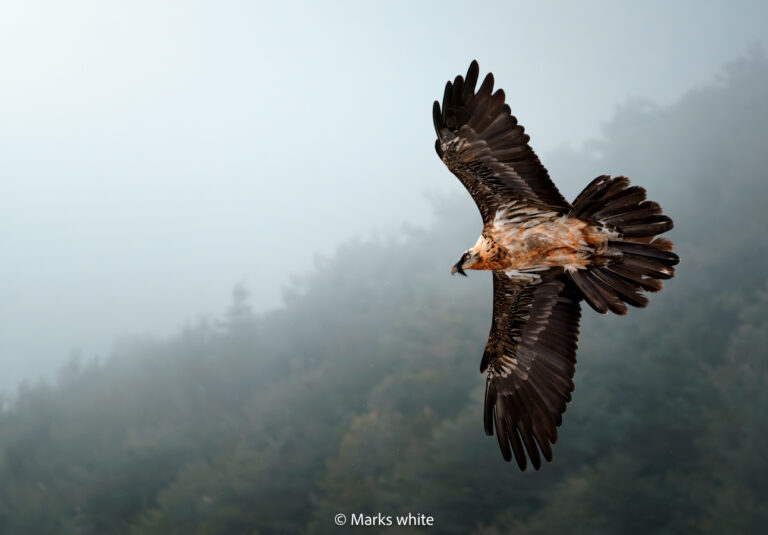
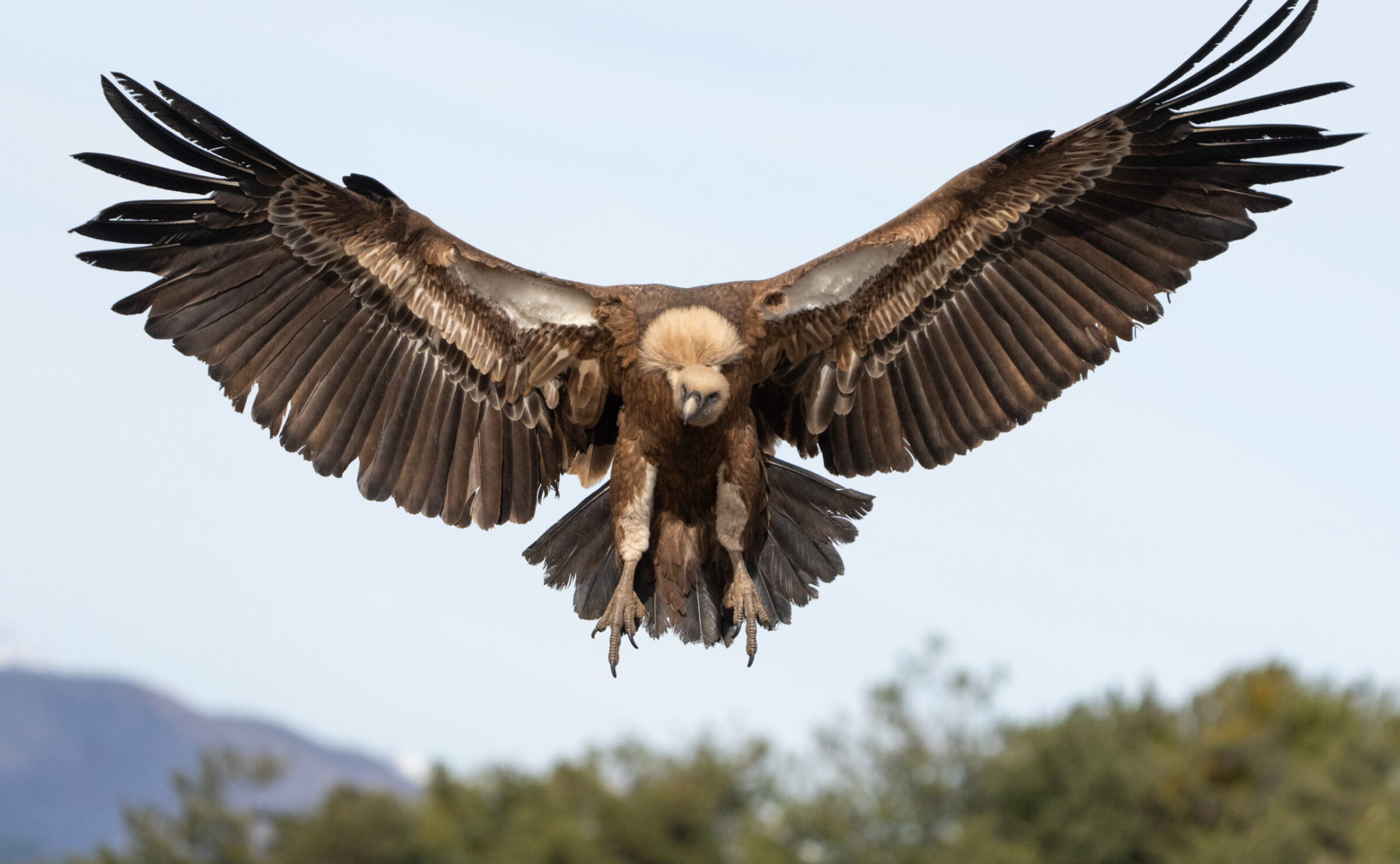
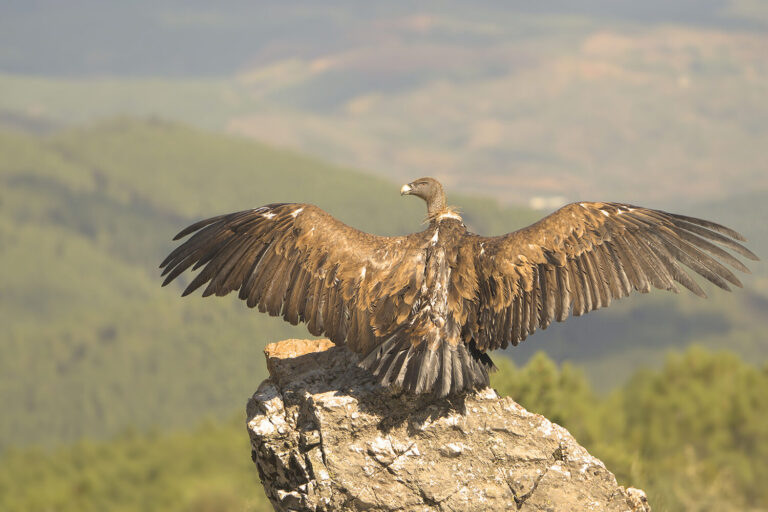
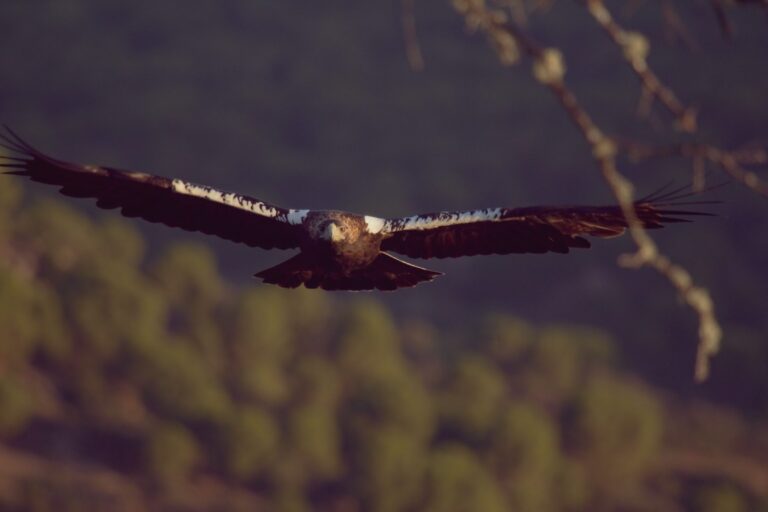
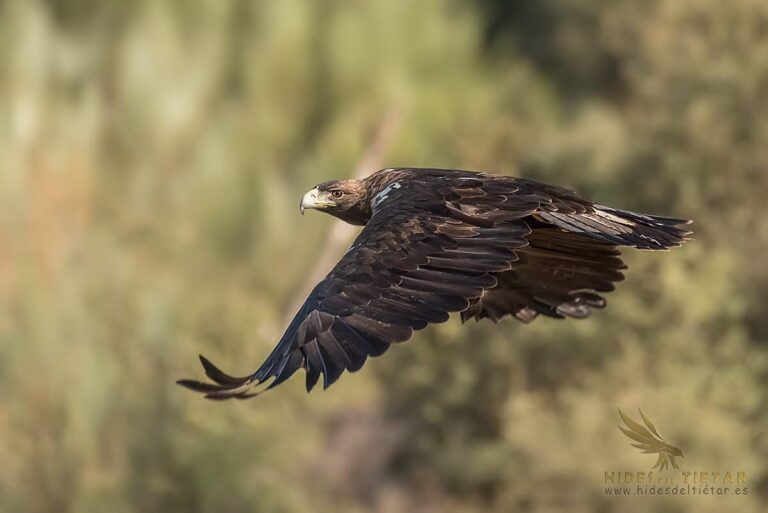
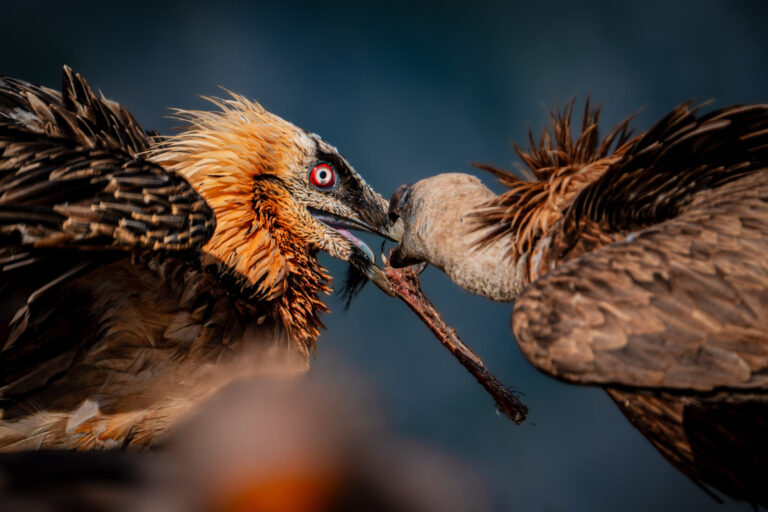
The Griffon Vulture is a massive bird of prey, measuring 93–122 cm in length with an impressive wingspan of 2.3–2.8 m. Adults typically weigh between 6.2 and 10.5 kg, making them formidable soarers of the sky. The species is unmistakable in appearance: a white head and neck ruff contrast dramatically with a buff-coloured body and wing coverts, while the dark flight feathers and short tail feathers are characteristic of Old World vultures. The yellow bill and broad wings complete this distinctive silhouette, easily recognisable even at great distances.
Range & habitat
The Griffon Vulture is distributed across a vast range spanning southern Europe, North Africa, and Asia, from the Iberian Peninsula through the Alps, Caucasus, and Iranian plateau to the Tian Shan and Altai Mountains. Spain hosts the species' largest population and serves as its primary European stronghold, with the Spanish population representing more than 90% of the European total. In 2018, Spain was estimated to have 30,946 breeding pairs, with major concentrations in Castile and León and Aragon. Portugal maintains several hundred pairs, primarily in the Douro International Natural Park, while smaller populations persist in Croatia, Serbia, Greece, Cyprus, and Armenia. The species breeds on mountain crags and inhabits mountainous terrain throughout its range.
Behaviour & diet
Griffon Vultures are mostly resident birds that breed on crags, typically laying a single egg per season. They often form loose colonies, with density-dependent breeding success influenced by eyrie quality; protected locations such as caves and sheltered ledges produce more fledglings than exposed ledges. The maximum recorded lifespan in captivity is 41.4 years. These vultures are renowned for their exceptional soaring ability, expending only about 1.43 times their basal metabolic rate during flight—far more efficient than other birds. They possess remarkable thermoregulatory adaptations, using their bald heads to regulate temperature by adjusting posture to change bare skin exposure from 7% to 32%, allowing them to tolerate extreme temperatures while minimizing water and energy loss.
Best time & places to see it
Spain offers the most reliable viewing opportunities, particularly in Castile and León, Aragon, and the Hoces del Río Duratón Natural Park, which hosts the largest known colony. Portugal's Douro International Natural Park provides excellent chances to observe these vultures, especially during the breeding season. Greece, particularly Crete with its insular population of nearly 1000 birds, offers another outstanding destination. Croatia's Cres island near the town of Beli features accessible breeding populations at low elevations, allowing close observation. The breeding season is the best time to locate these birds at their nest sites, though the mostly resident populations mean year-round viewing is possible in core areas.
Photography tips
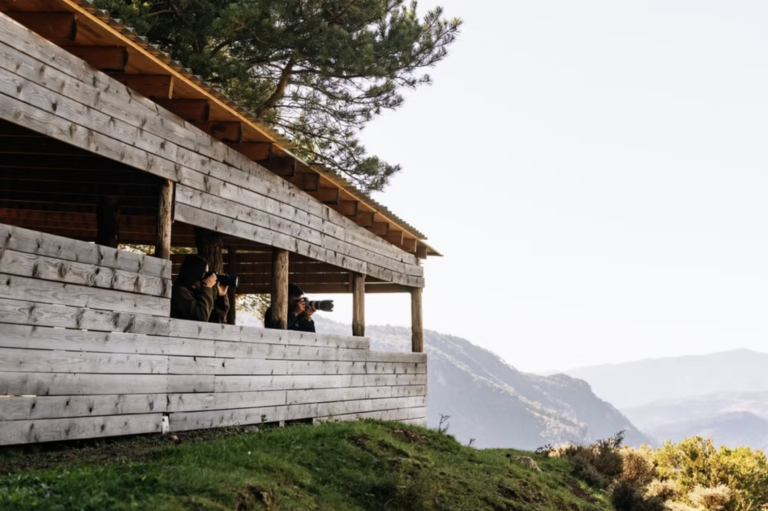
Photographing Griffon Vultures rewards patience and positioning. Their efficient soaring behaviour means you'll often find them riding thermals high overhead; a telephoto lens of at least 400–600 mm is essential for capturing detail at distance. Early morning and late afternoon provide optimal lighting for photography. Visit known colonies or breeding sites during the breeding season for the best opportunities to capture perched birds and behaviour. The stark contrast between the white head and buff body provides striking compositional opportunities. Remember that these birds often venture considerable distances from breeding colonies, so coastal reserves and mountain passes can yield unexpected encounters, particularly during post-breeding dispersal.