Identification
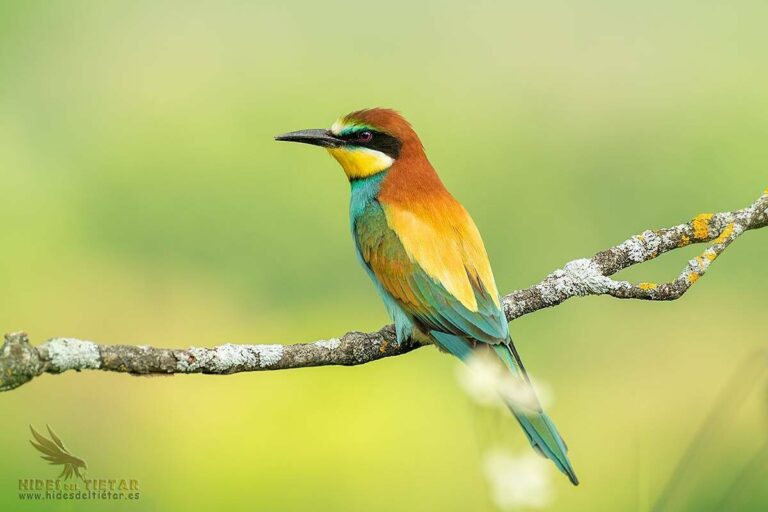
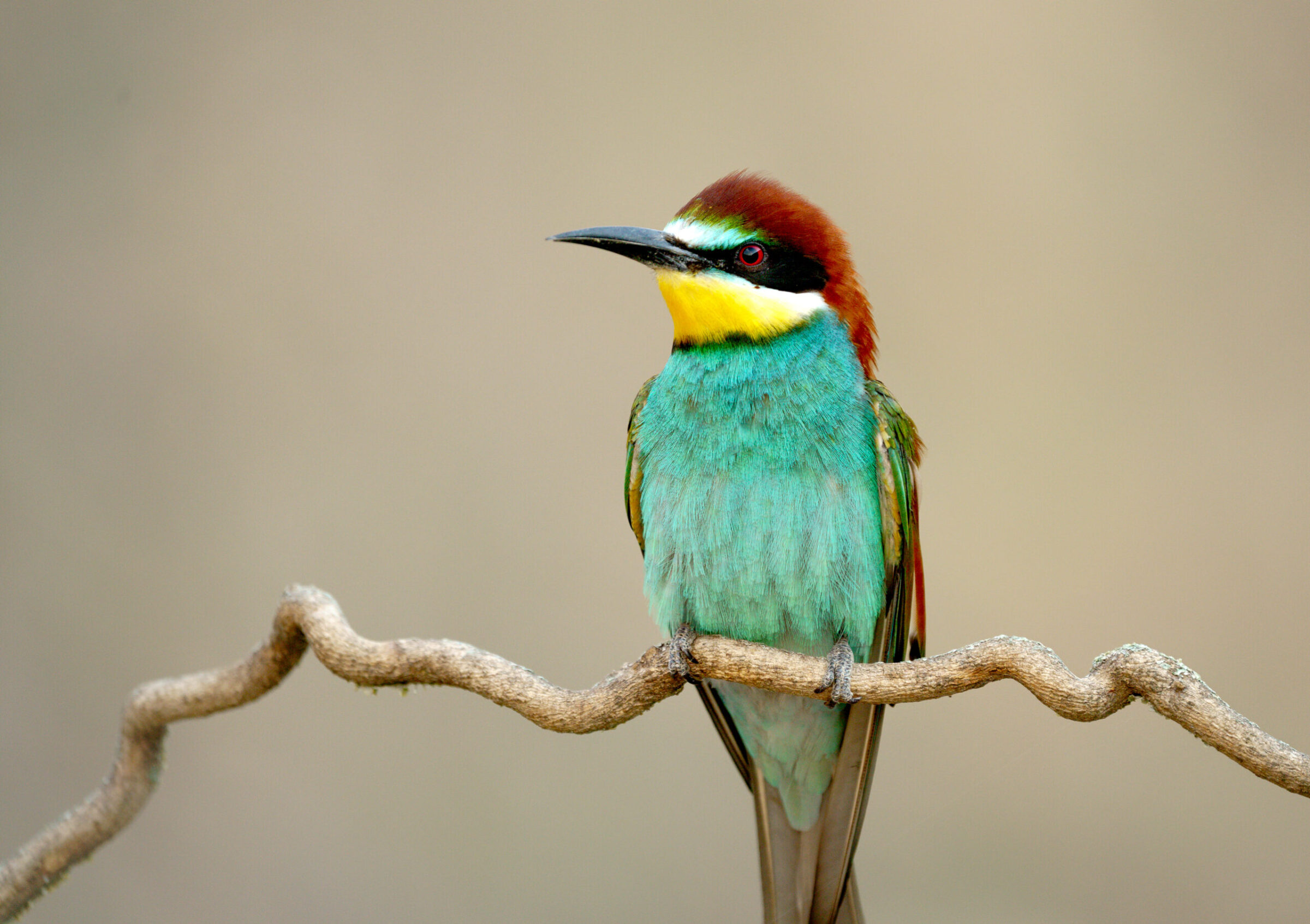
The European bee-eater is a strikingly coloured and slender bird, measuring 27–29 cm in length and weighing around 52 g on average. In breeding plumage, it displays rich brown and yellow upper parts with distinctive green wings and a black beak. Two elongated central tail feathers extend beyond the rest of the tail in breeding birds. Females tend to have greener rather than gold feathers on the shoulders compared to males, though the sexes are otherwise alike. Non-breeding plumage is considerably duller, featuring a blue-green back and lacking the elongated tail feathers. Juveniles resemble non-breeding adults but with less variation in feather colours.
Range & Habitat
The European bee-eater breeds across southern and central Europe, northern and southern Africa, and western Asia. Except for the resident southern African population, the species is strongly migratory, wintering in tropical Africa. Occasional spring overshoots occur north of the usual range, with rare breeding recorded in northern Europe. These birds favour open country in warmer climates, and they breed colonially in sandy banks, preferably near river shores.
Behaviour & Diet
European bee-eaters are highly gregarious birds that breed colonially, typically beginning nesting in early May. They excavate relatively long tunnels in sandy banks where they lay five to eight spherical white eggs around the beginning of June. Both parents incubate the eggs for approximately three weeks and feed the young communally. They also roost together as a group. During courtship, males feed larger food items to females while consuming smaller ones themselves. Most males are monogamous, though occasional bigamy occurs. Their distinctive call is described as a mellow, liquid and burry "prreee" or "prruup."
As their name suggests, these birds predominantly eat insects caught in flight from open perches, with bees, wasps, and hornets forming the bulk of their diet. Studies in Spain found that Hymenoptera—particularly European honey bees—comprise 69.4% to 82% of their diet. European bee-eaters can consume around 250 bees daily, removing the sting by repeatedly hitting the insect against a hard surface before eating it. Remarkably, they eat less than 1% of worker bees in areas where they live, and they convert food to body weight more efficiently when consuming a mixture of bees and dragonflies rather than either prey type alone.
Best Time & Places to See It
To observe European bee-eaters, visit their breeding grounds in southern and central Europe, northern Africa, or western Asia during the breeding season, typically from May onwards. Colonial nesting sites near sandy riverbanks offer the best viewing opportunities, where birds can be seen hunting insects in flight from open perches. Spring and autumn migration periods may also present sighting opportunities as birds move between European breeding grounds and African wintering territories.
Photography Tips
The European bee-eater's vibrant plumage—featuring striking combinations of brown, yellow, and green—makes it a rewarding photographic subject. Photograph birds during breeding season when they display full breeding plumage with elongated tail feathers. Capture them in flight as they sally out to catch insects, which showcases their aerial agility and the bright colours of their wings. Colonial nesting sites provide opportunities to photograph multiple birds interacting. Early morning light will best reveal their rich coloration, and a longer lens will help you photograph birds from open perches without disturbing the colony.