Iberian Magpie
Cyanopica cooki
Photo © Christoph Moning
Photo © Christoph Moning — CC BY 4.0 — Source: iNaturalist photo #484105558ABOUT
Identification
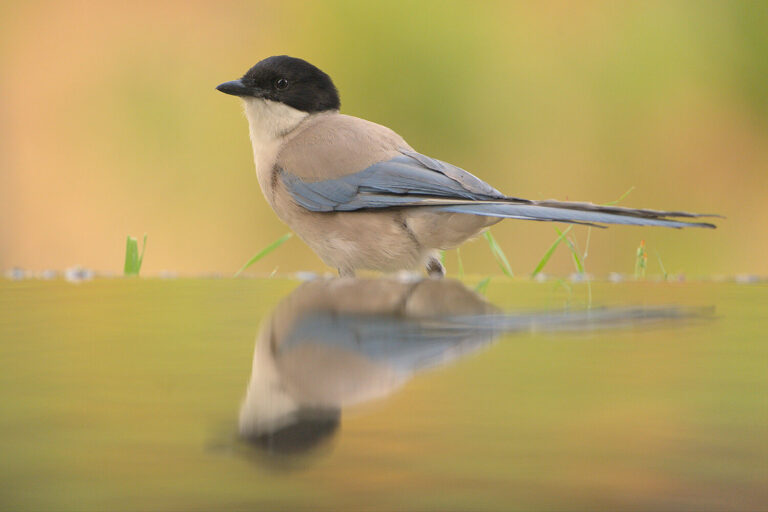
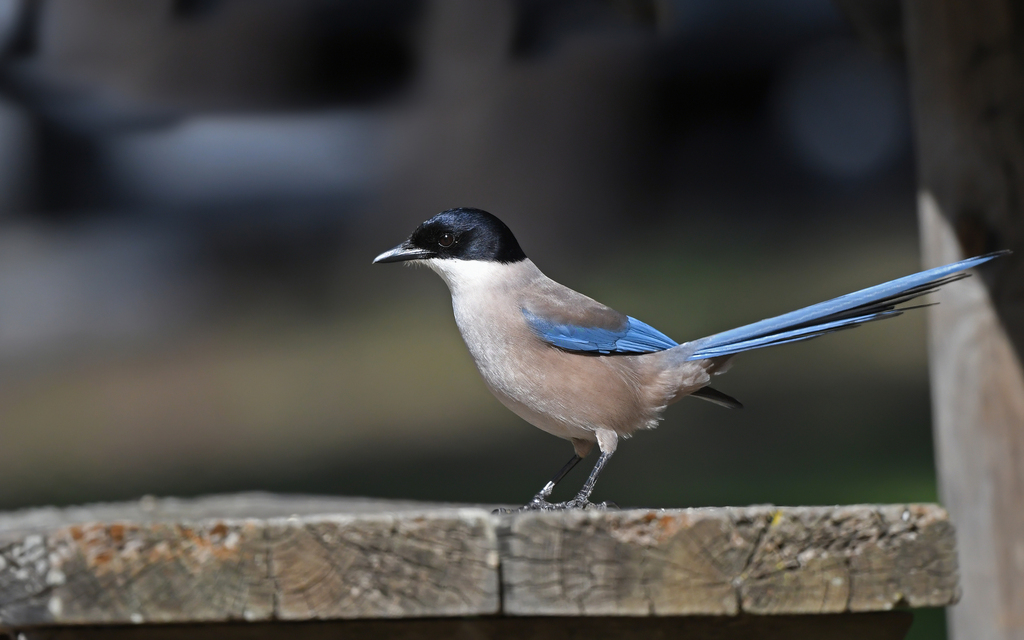
The Iberian magpie is a striking corvid measuring 31–35 cm in length. It shares the overall body shape of the Eurasian magpie but appears noticeably slenderer with proportionately smaller legs and bill. The most distinctive features are its glossy black crown, white throat, and light grey-fawn underparts and back. The wings and long tail—measuring 16–20 cm—are a brilliant azure blue, a feature that earned it the alternative name "azure-winged magpie." This combination of colours makes it an unmistakable and beautiful bird in its range.
Range & Habitat
The Iberian magpie is found in southwestern and central parts of the Iberian Peninsula, occurring in Spain and Portugal as its core range. Sightings have occasionally been reported in southwestern France and, more recently, in northwestern Italy, suggesting the species may be expanding its distribution. The bird inhabits a variety of coniferous and broadleaf forests, with pine forests being particularly favoured. In the eastern parts of its range, it has adapted well to human-modified landscapes, regularly visiting parks and gardens.
Behaviour & Diet
Iberian magpies are highly social birds, often foraging together in family groups or loose aggregations. They form flocks that can number up to 70 individuals, with the largest congregations occurring after the breeding season and throughout winter. Their diet is varied and opportunistic: acorns and pine nuts form the staple, but they extensively supplement these with invertebrates and their larvae, soft fruits, berries, and readily accept human-provided scraps in parks and towns.
The species nests in loose, open colonies with typically one nest per tree. Average clutch size is 6.2 eggs, though breeding success is modest, with only 32% of nesting attempts resulting in fledged young—averaging 5.1 chicks per successful nest.
Best Time & Places to See It
Winter is an excellent time to locate Iberian magpies, when large flocks congregate and birds are more visible. The species is most readily found in pine and oak forests of central and southwestern Spain and Portugal. Urban and suburban parks and gardens in eastern populations offer accessible viewing opportunities, particularly where natural food sources or people provide scraps are available.
Photography Tips
The Iberian magpie's striking azure-blue wings and tail are best captured in clear, bright light that emphasises the colour contrast with its dark crown and pale underparts. Since these birds often forage in flocks and visit gardens, patient observation in suitable habitat can yield numerous opportunities. The long tail is a defining feature—try to compose shots that showcase its length and brilliant colouration. Early morning light is ideal for revealing the glossy quality of the black crown feathers.
HIDES
Badajoz · Spain
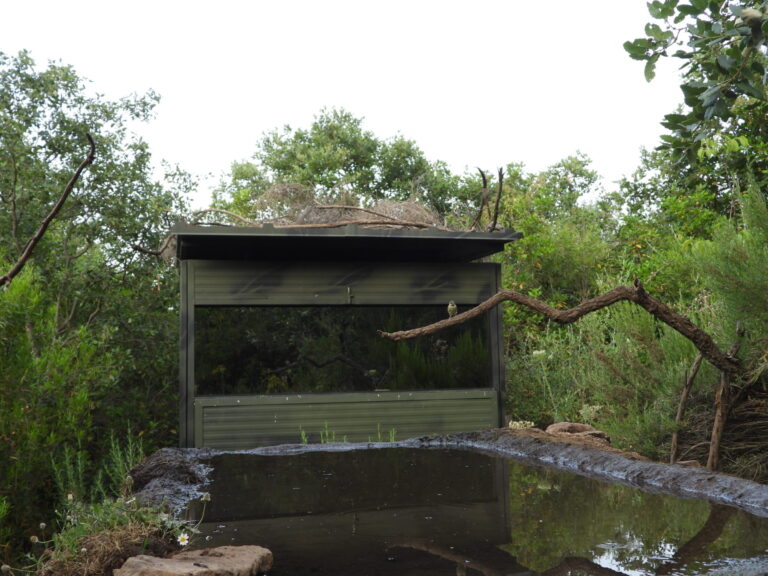
Hide el Venero de los Rabilargos
Hide el Venero de los RabilargosTarget species: Great Spotted Woodpecker, Iberian Magpie, Egyptian Mongoose, Common Hoopoe +31
From
80 €
View Hide
HOTSPOTS
National Park
Monfragüe National Park
Torrejón el Rubio, Spain
+219 birds+10 mammals
Where the Tagus River cuts through limestone plateaus in central Extremadura, Monfragüe National Park rises as a fortress of Mediterranean and Atlantic woodland, its dramatic rocky…
VIEW NATIONAL PARKNatural Park
Cañón del Río Lobos Natural Park
Santa María de las Hoyas, Spain
+136 birds+2 mammals
Where the Río Lobos carves its relentless path through the Iberian plateau, limestone cliffs rise in dramatic ramparts above a ribbon of water that has spent…
VIEW NATURAL PARKNatural Park
Sierra Mágina Natural Park
Bélmez de la Moraleda, Spain
+114 birds+2 mammals
Where limestone ridges rise abruptly from the Jaén countryside, Sierra Mágina unfolds as one of Andalusia's most underrated natural treasures. This protected landscape, anchored by the…
VIEW NATURAL PARKNational Park
Sierra Nevada National Park
Válor, Spain
+137 birds+7 mammals
Where granite ridges rise above 3,000 metres across the Alpujarra foothills, Sierra Nevada National Park crowns southern Spain's most dramatic mountain landscape. The park encompasses a…
VIEW NATIONAL PARKNational Park
Doñana National Park
Hinojos, Spain
+300 birds+13 mammals
Where the Guadalquivir River delta spreads into the Atlantic, vast marshes, cork woodlands, and coastal dunes converge to create one of southwestern Europe's most biodiverse wetland…
VIEW NATIONAL PARKNational Park
Tablas de Daimiel National Park
Daimiel, Spain
+246 birds+6 mammals
Where the Guadiana River spreads into a labyrinth of shallow lagoons and reed beds across the sun-baked plains of central Spain, Tablas de Daimiel National Park…
VIEW NATIONAL PARKNatural Park
Sierra de Tejeda, Almijara y Alhama Natural Park
Frigiliana, Spain
+128 birds+8 mammals
Where limestone ridges rise sharply from the Axarquía lowlands, the Sierra de Tejeda, Almijara y Alhama Nature Park unfolds across a dramatic landscape of white-rock massifs,…
VIEW NATURAL PARKNature Reserve
Parque-Reserva Natural de las Quinientas
Berlanga, Spain
+75 birds
Where Mediterranean scrubland rises and falls across the limestone plateaus of central Extremadura, the Parque-Reserva Natural de las Quinientas protects a landscape of profound ecological richness.…
VIEW NATURE RESERVENature Reserve
Lagunas de Archidona Nature Reserve
Archidona, Spain
+142 birds+4 mammals
Where shallow freshwater lagoons merge with reed beds and Mediterranean scrub, Lagunas de Archidona in Andalusia creates a wetland mosaic of profound ecological importance. These interconnected…
VIEW NATURE RESERVENatural Park
Cap de Creus Natural Park
Roses, Spain
+245 birds+23 mammals
Where the Pyrenees tumble into the Mediterranean, Cap de Creus Nature Park unfolds across 300 square kilometres of one of northeastern Spain's most dramatic coastal wilderness…
VIEW NATURAL PARKNational Park
Cabañeros National Park
Retuerta del Bullaque, Spain
+183 birds+8 mammals
Cabañeros National Park is one of Spain’s finest wildlife destinations and one of the best-preserved examples of Mediterranean forest and scrubland in Europe. Located in the…
VIEW NATIONAL PARKNational Park
Sierra de Guadarrama National Park
Rascafría, Spain
+179 birds+13 mammals
Where granite peaks rise abruptly from the central Spanish plateau, the Sierra de Guadarrama National Park unfolds across more than eleven hundred square kilometres of montane…
VIEW NATIONAL PARKNatural Park
Sierra de Cazorla, Segura y las Villas Nature Park
Las Canalejas, Spain
+176 birds+21 mammals
Where granite gorges slice through mountainous terrain in eastern Andalusia, the Sierra de Cazorla, Segura y las Villas Nature Park sprawls across more than 5,200 square…
VIEW NATURAL PARKNatural Park
Sierra de Andújar Natural Park
Our Lady of Cabeza, Spain
+198 birds+19 mammals
Where granite gorges slice through Mediterranean scrubland and cork forests cascade down Andalusian hillsides, one of Spain's most pristine wilderness areas unfolds across 74,000 hectares of…
VIEW NATURAL PARKNature Reserve
Sierra de Gredos Regional Park
Candeleda, Spain
+180 birds+18 mammals
Where granite peaks claw at 2,592 metres and alpine meadows give way to cork oak scrubland, Spain's central highlands reveal a landscape of remarkable vertical drama.…
VIEW NATURE RESERVENatural Park
Sierras Subbéticas Natural Park
Algar, Spain
+156 birds+10 mammals
Where limestone ridges rise abruptly from the Córdoba countryside, the Sierras Subbéticas Nature Park sprawls across nearly 583 square kilometres of one of Andalusia's most rugged…
VIEW NATURAL PARKNatural Park
Sierra de Huétor Natural Park
Huétor Santillán, Spain
+126 birds+3 mammals
Where limestone ridges pierce the Mediterranean sky above Granada, a 273-square-kilometre sanctuary of pine forest and alpine meadow rises to nearly 2,400 metres. This protected landscape,…
VIEW NATURAL PARKCOMMUNITY
Share your photo of this species
No community photos yet. Log in to add the first one.
0
Observed by
0
Hotspots reported
0
Countries
No community observations of this species yet.