Western Barn Owl
Tyto alba
Photo © Claude Kolwelter
Photo © Claude Kolwelter — CC BY 4.0 — Source: iNaturalist photo #585748553ABOUT
Subspecies of Western Barn Owl
African Barn OwlWestern Barn OwlCentral European Barn OwlErlanger’s Barn OwlErnest’s Barn OwlMadeiran Barn OwlSão Tomé Barn OwlCape Verde Barn OwlCanary Islands Barn Owl
Identification
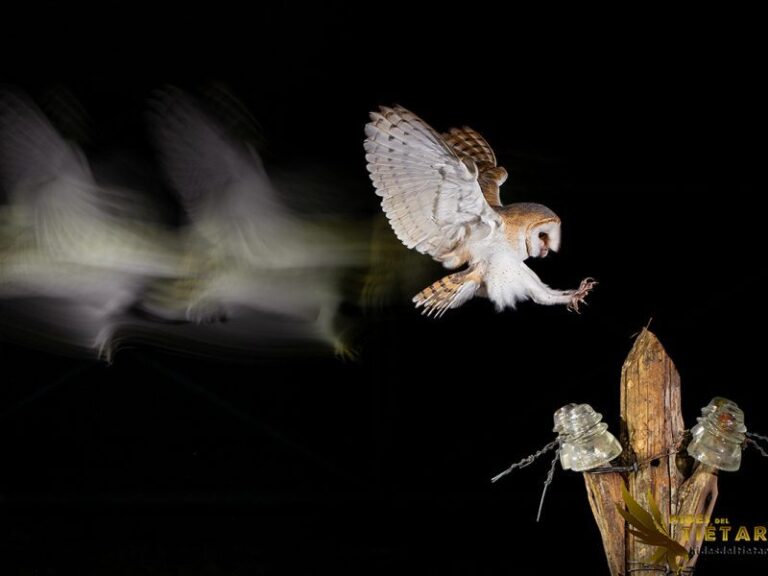
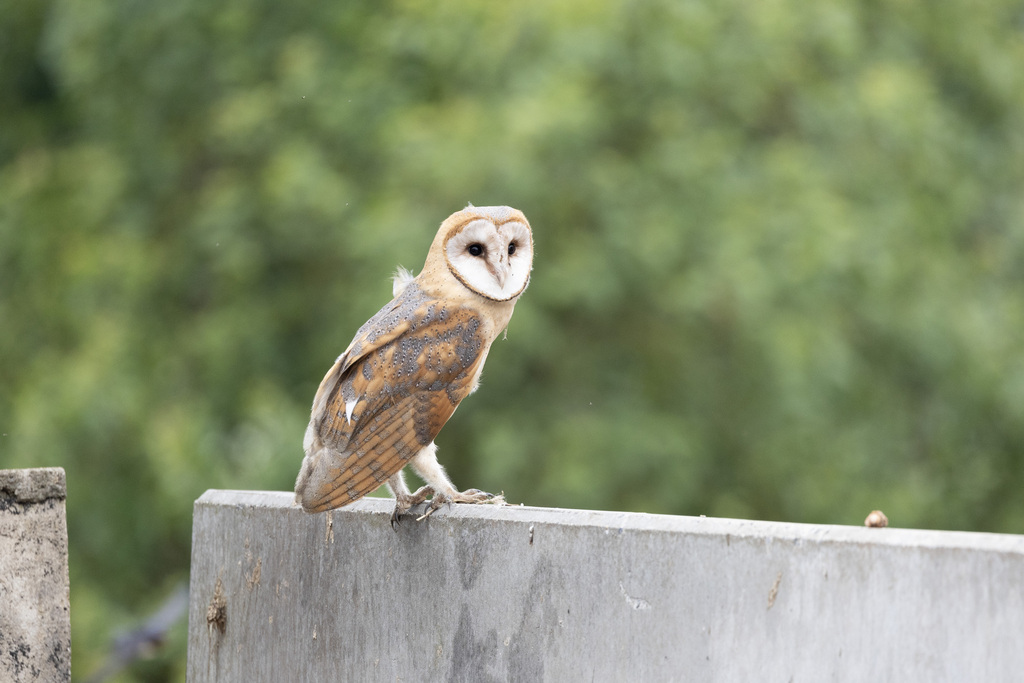
The western barn owl is a medium-sized, pale-coloured owl with striking features that make it unmistakable in the field. Measuring 33 to 35 cm in length with a wingspan of 80 to 95 cm, it is characterized by its distinctly large, heart-shaped facial disc, which is usually bright white in most subspecies. The head and back display mottled grey or brown plumage, while the underparts vary from white to reddish-buff, sometimes speckled with dark markings. In flight, look for the short, squarish tail, long wings, undulating flight pattern, and dangling feathered legs—features that distinguish it from typical owls. The pale face resembles a flat mask with large, oblique black eye-slits, giving the bird an otherworldly appearance often described as ghost-like.
Range & Habitat
The western barn owl is native to Europe, southwestern Asia, and Africa. This species was long thought to be a worldwide species, but recent genetic studies have revealed that what was previously classified as a single species actually comprises four distinct species, with the western barn owl now recognized as the European, southwestern Asian, and African population. The species utilizes a variety of nesting sites, including hollow trees, old buildings, and cliff fissures, making it adaptable to both rural and semi-urban environments.
Behaviour & Diet
The western barn owl is primarily nocturnal throughout most of its range, though in Great Britain it has adapted to hunting during daylight hours as well. These specialized hunters locate prey almost entirely by sound, possessing extraordinarily acute hearing that allows them to pinpoint small mammals in darkness or beneath vegetation. Nearly all of their diet consists of small ground-dwelling mammals. Barn owls typically mate for life, and breeding occurs at varying times depending on locality. Females lay an average clutch of about four eggs and undertake all incubation duties while males provide food. When small prey is abundant, barn owl populations can expand rapidly.
Best Time & Places to See It
Since the western barn owl is nocturnal over most of its range, evening and night hours offer the best viewing opportunities, particularly during the breeding season when hunting activity intensifies. In Great Britain, daytime observations are possible. Look for them hunting over open grasslands, agricultural areas, and rough ground where small mammal populations are healthy. The species' presence is often betrayed by its eerie, drawn-out screech rather than the hooting calls of other owls, making audio detection useful for locating birds.
Photography Tips
Photographing the western barn owl presents unique challenges due to its nocturnal habits. Night-vision equipment or thermal imaging may be necessary for most of the species' range. Focus on capturing the bird's distinctive heart-shaped face and pale plumage, which stand out dramatically against dark backgrounds. In Great Britain, daytime hunting opportunities offer better lighting conditions. The bird's characteristic undulating flight and dangling legs are diagnostic features worth documenting. The pale facial disc and black eyes create a striking portrait; position yourself to capture these defining characteristics that make this species instantly recognizable.
HIDES
EXPERIENCES
Country
Sort by
Birding TourEasy
Birds & Nature Tours
Private Full-Day Birdwatching Tour from Lisbon to the Tagus Estuary
1 day
4
EN · PT
Greylag Goose · Common Shelduck +103
250 €/ personfrom 108 €
Book now
Birding TourEasy
GAMBIA & SENEGAL BIRDS TOURS
Private Full-Day Makasutu Cultural Forest: Birdwatching, Wildlife & Cultural Heritage
Full day tour start at 6:30am and ends at 5.30pm
7
EN
Western Banded Snake Eagle · Violet Turaco +6
263,27 €/ personfrom 251,30 €
Book nowNothing matches these filters.
HOTSPOTS
Country
Type
Sort by
5,0 (1)
National Park
Bwindi Impenetrable National Park
Kanyashogi·Uganda
+603 birds+26 mammals
5,0 (1)
National Park
Lake Mburo National Park
Uganda
+505 birds+24 mammals
5,0 (1)
National Park
Murchison Falls National Park
Uganda
+608 birds+33 mammals
5,0 (1)
National Park
Queen Elizabeth National Park
Uganda
+672 birds+30 mammals
National Park
Aberdare National Park
Mweiga ward·Kenya
+394 birds+30 mammals
National Park
Abijata-Shalla Lakes National Park
Ethiopia
+438 birds+7 mammals
National Park
Agulhas National Park
Cape Agulhas Local Municipality·South Africa
+224 birds+13 mammals
National Park
Alta Murgia National Park
Bari·Italy
+168 birds+6 mammals
National Park
Amboseli National Park
Etonet/Lenkism ward·Kenya
+501 birds+43 mammals
Nothing matches these filters.
COMMUNITY
Share your photo of this species
Sort by
No community photos yet. Log in to add the first one.
0
Observed by
0
Hotspots reported
0
Countries
No community observations of this species yet.