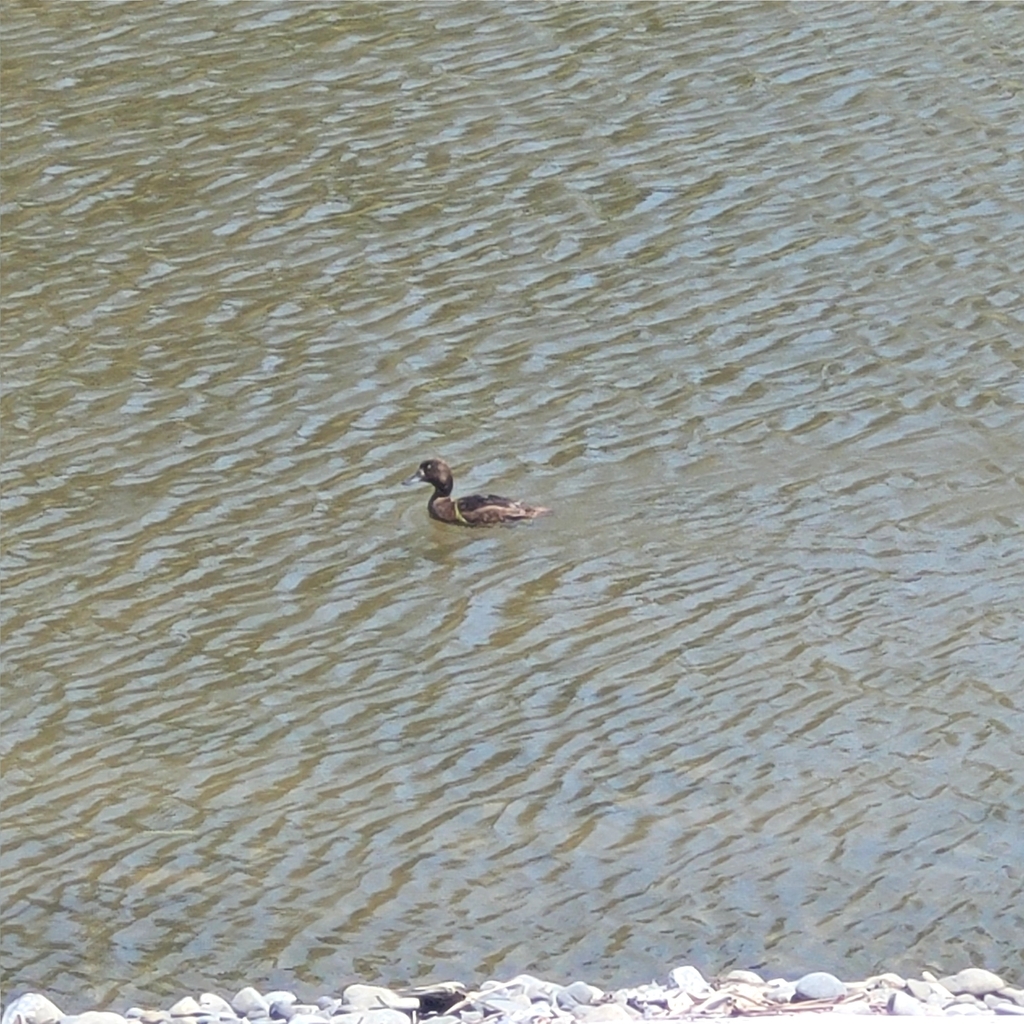
New Zealand Scaup
Photo © Julia Palmer
Photo © Julia Palmer — CC BY-SA 4.0 — Source: iNaturalist #145621887Identification
The New Zealand scaup is a small, round-bodied diving duck measuring around 40 centimetres in length and weighing approximately 650 grams. The sexes are easily distinguished: males display striking dark black-brown plumage with a distinctive greenish head and bright yellow eye, while females are duller chocolate brown with brown eyes and a characteristic white face patch during breeding season. Both sexes have grey bills, black legs, and webbed feet. A white wing bar visible in flight helps identify the species, and young birds resemble females but lack the white face marking.
Range & Habitat
Endemic to New Zealand, the New Zealand scaup is found throughout both the North and South Island in deep freshwater lakes and ponds, as well as in modern hydroelectric lakes and oxidation ponds. Though widespread, their distribution is patchy, with populations concentrated in areas such as Northland, the upper Waikato, Rotorua, Taupō, Hawke's Bay, the West Coast, North Canterbury, and the Southern Alps. Unlike other members of their genus, these ducks are non-migratory, though they will move to open water from high country lakes during winter freezing. Recent population expansion has occurred in Christchurch thanks to predator control initiatives and habitat improvements.
Behaviour & Diet
New Zealand scaups are gregarious, typically seen in flocks during autumn and winter, with gatherings of over 200 birds documented at traditional moulting and wintering sites. As diving ducks, they feed on aquatic plants, small fish, water snails, mussels, and insects, diving to depths of at least 3 metres for periods of 15–20 seconds, though some dives exceed a minute. They are sometimes observed alongside Australian coots, capitalising on food disturbed by the coots' foraging activities. Breeding occurs from September onwards, with females laying typical clutches of 6–8 eggs in well-concealed nests near water. Remarkably, ducklings can dive to feed immediately after hatching and remain under maternal care for approximately 75 days.
Best Time & Places to See It
Autumn and winter offer the best opportunities to observe New Zealand scaups, when they gather in flocks at traditional sites. Lake Rotorua, Lake Taupō, Lake Tūtira, the Bromley sewage ponds, and the Ashburton Lakes are reliable locations for sightings, particularly for photographers seeking larger congregations. September marks the departure from wintering sites as birds return to breeding territories, making this a transitional period of activity.
Photography Tips
The striking plumage differences between males and females make for compelling comparative photography. Males' bright yellow eyes and greenish heads create eye-catching portraits, while females present a more subtle, earthy palette. The white wing bar becomes visible only in flight, rewarding patient photographers who wait for takeoff moments. Large winter flocks offer opportunities for dramatic landscape and behavioural photography, while breeding season provides chances to capture territorial and courtship displays. The birds' diving behaviour, though brief, offers dynamic action shots worth pursuing.
Abel Tasman National Park
Aoraki / Mount Cook National Park
Arthur’s Pass National Park
Fiordland National Park
Kahurangi National Park
Mount Aspiring National Park
Nelson Lakes National Park
Paparoa National Park
Rakiura National Park
Nothing matches these filters.
No community photos yet. Log in to add the first one.
No community observations of this species yet.