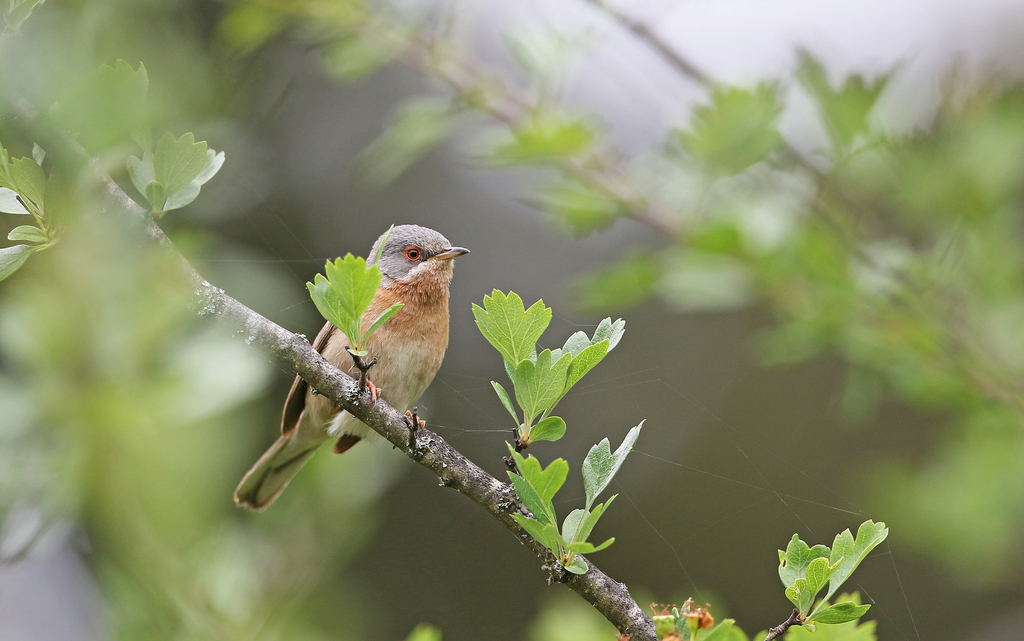
The western subalpine warbler (Curruca iberiae) is a small Sylviidae warbler which breeds in the southernmost areas of Europe and north-western Africa. Like most Curruca species, it has distinct male and female plumages. The adult male has a grey back and head, brick-red underparts, and white malar streaks ("moustaches"). The female is mainly brown above, with a greyer head, and whitish below with a pink flush. The subalpine warbler's song is fast and rattling, and is similar to the lesser whitethroat. This bird seems to be related to the Sardinian warbler–Menetries' warbler superspecies. They all have white malar areas, the heads being dark above in adult males, and naked eye-rings. These three species are related to a superspecies consisting of Rüppell's warbler and the Cyprus warbler, which also share the white malar area with blackish above (Shirihai et al. 2001, Jønsson & Fjeldså 2006 ). The subalpine warbler is divided into two distinct subspecies groups, which may possibly be sufficiently diverged to qualify as two separate species (Shirihai et al. 2001). The two groups have differing male plumages, distinctive calls, and are allopatric; further study is needed. In May 2020, the IOC world bird list the western and eastern subalpine…